

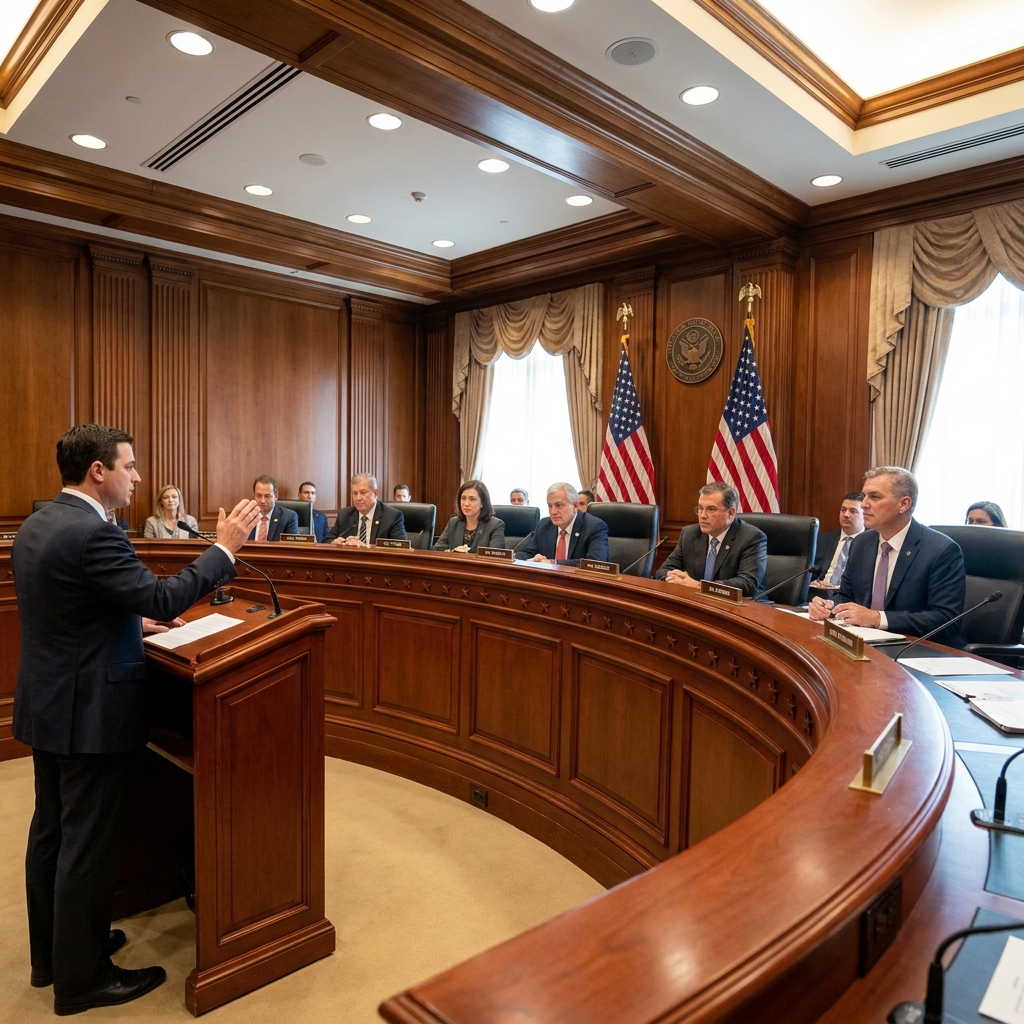
Helping students transition from casual social interactions to professional communication requires specific classroom instruction. While many students possess the intuitive ability to code switch between friends and teachers, they often struggle to apply these skills to formal presentations. Providing tools that bridge this gap allows them to present ideas with greater authority and clarity.
Teaching students to switch gears for professional speaking
Most eleventh graders have mastered the art of code switching between their friends and their teachers. They know the difference between the casual talk they use at lunch and the more measured tone they adopt when they need to request an extension on an assignment. However, translating that intuitive sense into a deliberate, polished presentation remains a significant hurdle. When students stand up to present a project, they often falter because they treat the classroom like a social setting rather than a professional space. They mumble, slump their shoulders, or rely on slang that strips their argument of its authority. This tension is where Adapting Your Voice for Success becomes a necessary tool for your classroom.
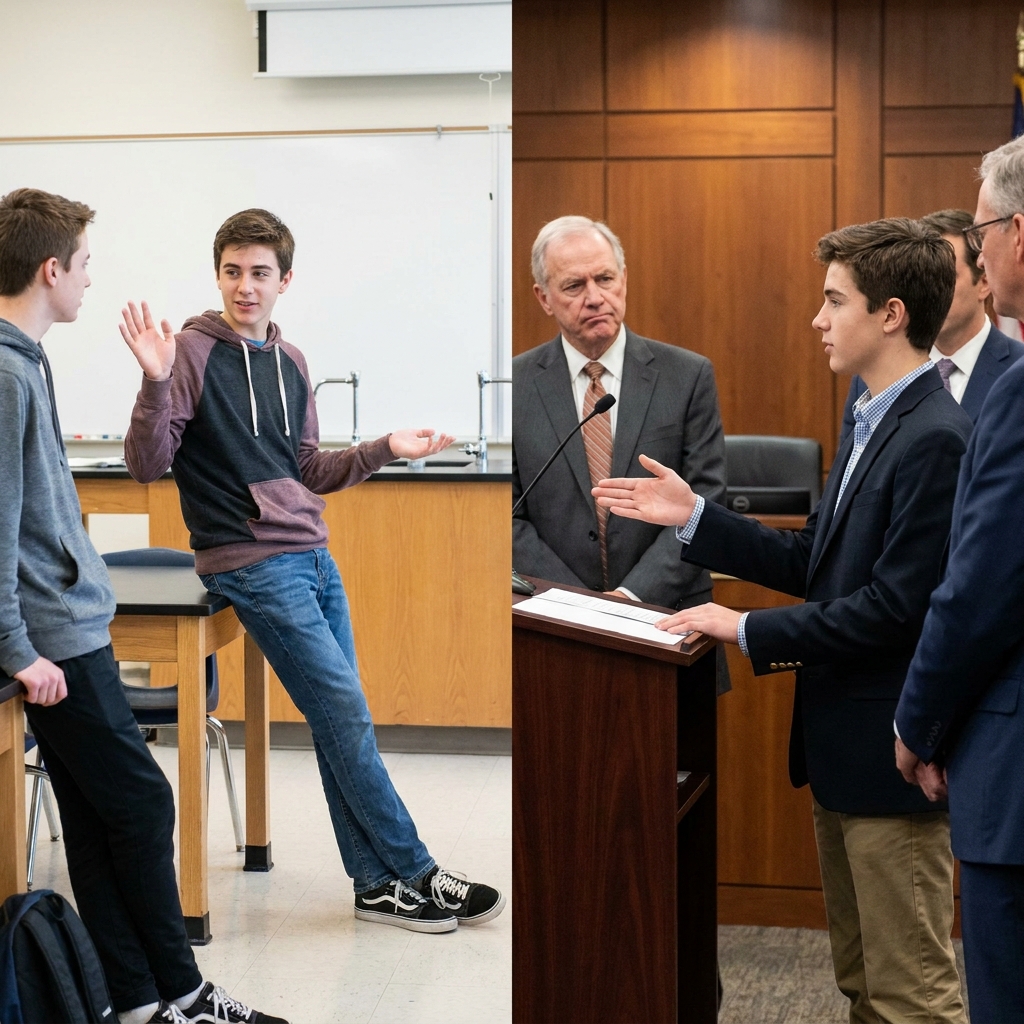
This lesson helps students move past that common error of treating every public speaking opportunity the same way. The material focuses on the reality that professional communication requires adjusting your delivery, including the formality of language and non-verbal cues, to be effective in different contexts. By walking through the foundational concept of register, students learn how the level of formality in their speech or writing must shift based on who they are talking to and why. The lesson provides a clear framework for identifying when to use formal English, which it defines as a style of language using standard grammar, precise vocabulary, and a professional tone suitable for public or academic settings. It also covers the importance of non-verbal cues, like gestures, posture, eye contact, and facial expressions, as these physical actions can either support or contradict the spoken message.
The lesson uses a practical approach to show students why this matters. It introduces an example of a witness giving legislative testimony, where the speaker needs to be precise. The passage provided says, The proposed legislation will increase fiscal transparency within the department. This specific example demonstrates that the speaker knows the topic and respects the committee purpose. This is a far cry from the casual language students use in their daily lives, and it helps them see how specific word choices carry weight in a formal environment. Following this, the guided practice asks students to step into the role of a community member presenting a plan about city infrastructure improvements at a town hall meeting. They have to persuade their neighbors that building new bike lanes is a good idea, which forces them to think about how they frame their arguments for an audience that might be skeptical.
Aligning practice with statewide expectations
When you use this high school speaking and listening lesson, you are addressing the core requirements set by the state for eleventh and twelfth graders. The lesson is built around CA.ELA.SL.11-12.6, which asks students to adapt speech to a variety of contexts and tasks while demonstrating a command of formal English when indicated or appropriate. The California-adopted standard, which is also identified in the lesson as CCSS.ELA-LITERACY.SL.11-12.6, emphasizes that students must use the techniques of an effective speaker, adapting language, gestures, and tone to various audiences, purposes, and settings. This approach to public speaking is consistent for students across the state, whether they are in the Sweetwater Union High School District, the Modesto City High School District, Williams Unified, or Mariposa County Unified.

The lesson takes about forty-five minutes to complete, making it a reliable choice for a whole-class assignment when you need to focus on presentation skills before a major project. It works well for a student who missed the week, as it provides a self-contained explanation of the relationship between audience and register. It also functions as a strong candidate for a substitute day because the instructions are explicit and the practice scenario is relatable. The beauty of this material is that it keeps the goal simple: the way you use your words and gestures determines how well your message is received. If you have students who are bright but lack a professional edge when they present, this lesson provides the exact vocabulary and practice they need to improve their delivery.
One caveat to keep in mind is that high schoolers might initially feel self-conscious when asked to practice their gestures or maintain steady eye contact. It is worth taking a moment to acknowledge that these non-verbal cues can feel artificial at first. I suggest having students practice in pairs or small groups before they speak to the whole class, as this lowers the stakes while they learn to control their posture and tone. Once they see that a professional register actually gives them more control over how others perceive their ideas, they usually stop resisting the practice and start using it to their advantage.
Related lessons

Building Stronger Collaborative Discussions, Strategies for managing productive and academic conversations between students

Integrating Diverse Information Sources, Techniques for synthesizing different perspectives into a cohesive argument

Evaluating Arguments and Rhetoric, Methods for analyzing persuasive language and logical reasoning structures