


Eighth grade math arrives at that point in the year where we need to bridge the gap between simple integers and the massive numbers involved in space or the tiny measurements found in biology. This Scientific Notation and Magnitude lesson hits the desk just when students are beginning to realize that base-ten notation has limits. If you have ever watched a student try to write out the mass of the Earth or the size of a virus with a string of zeros that runs off the side of their page, you know exactly why we need this tool. The lesson moves through the logic of powers of ten with a focus that makes sense for students who are already comfortable with exponents but might struggle with the sheer scale of the numbers they are handling.
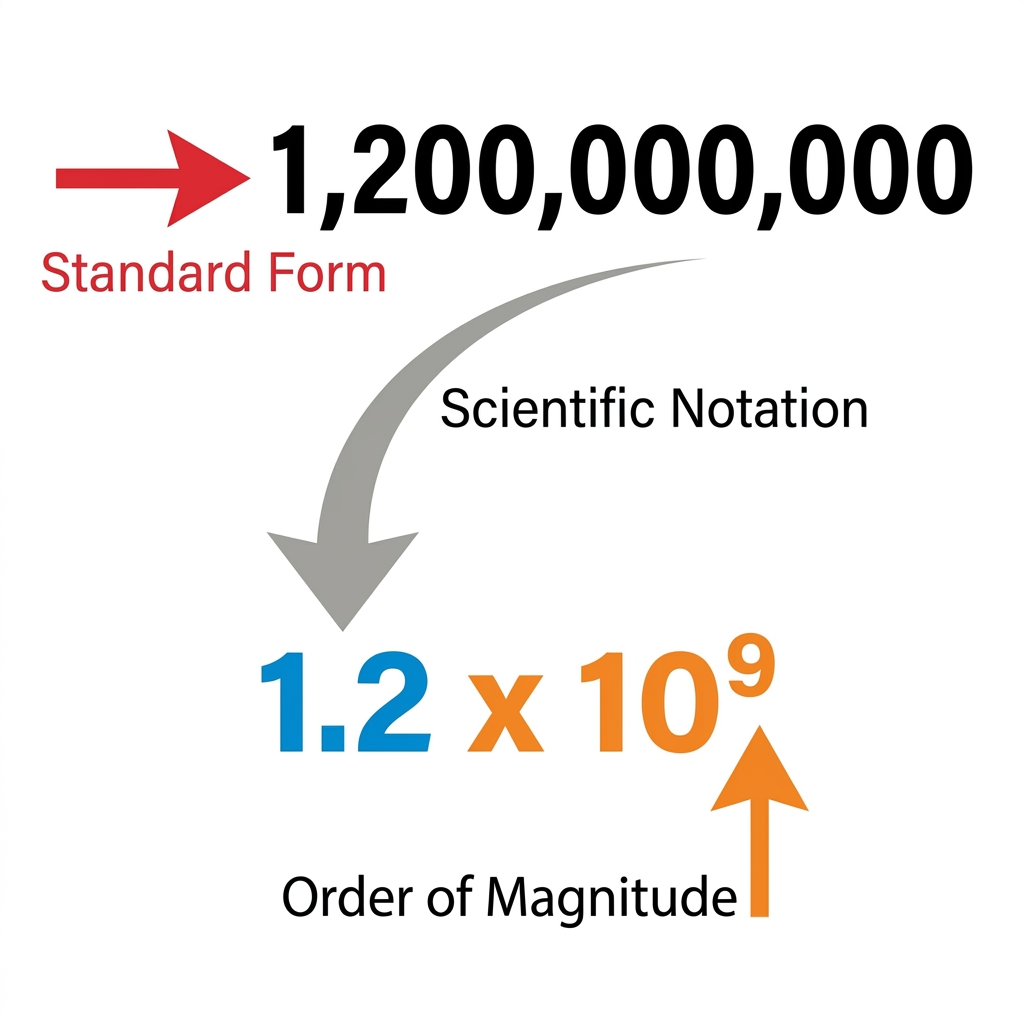
This material introduces the core concept of scientific notation as a way to rewrite very large or very small numbers as a single digit multiplied by a power of 10. It is a fundamental shift in how they view place value. The lesson begins by activating prior knowledge about how multiplying by 10 increases a number by one place value. It uses the distance of 150,000,000 kilometers as a realistic starting point to show why writing out full numbers is cumbersome and prone to error. When students see how the math gets easier once we group those zeros into a power of 10, they start to appreciate the utility of the notation. It is not just extra steps; it is a way to keep data readable.
Setting the stage with place value
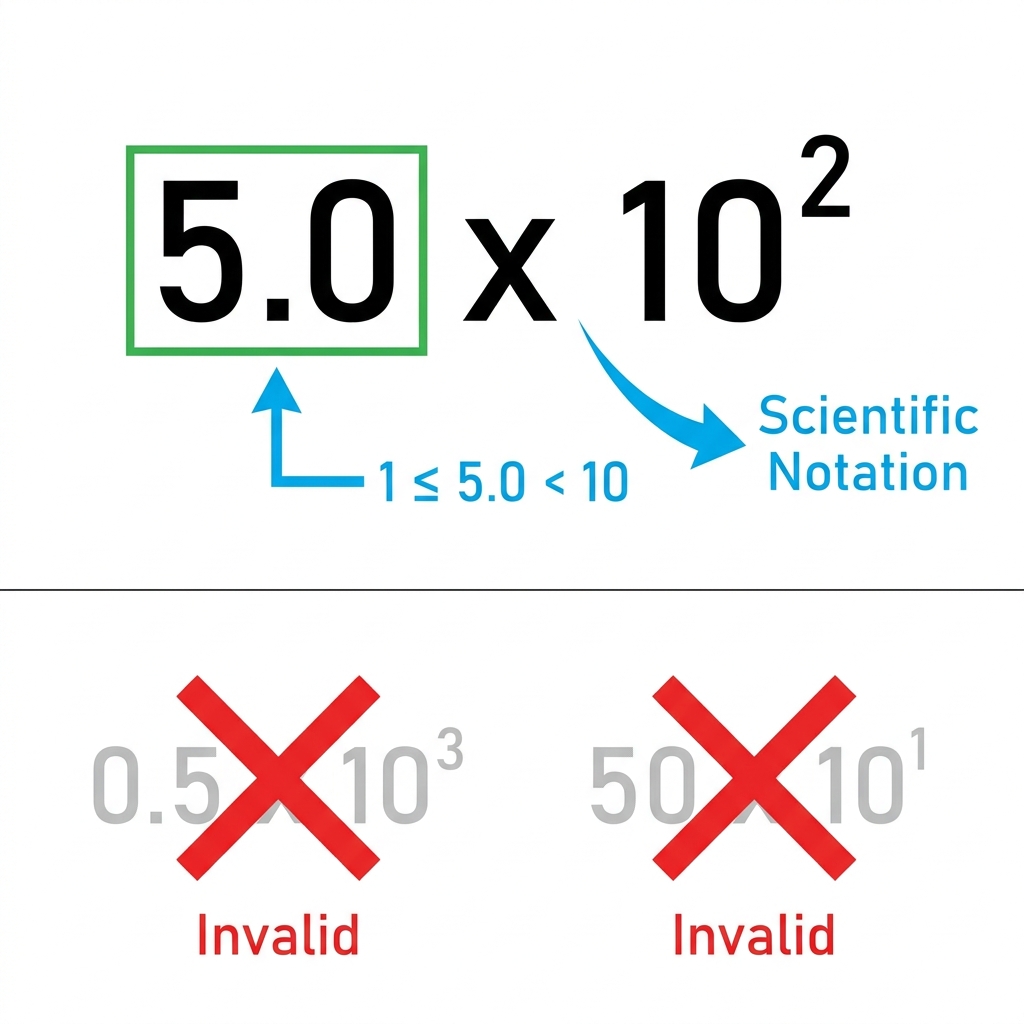
The core of this scientific notation lesson for eighth grade is the requirement that the first factor must be at least 1 and less than 10. The lesson provides a clear worked example: the mass of the Earth is approximately 6 times 10 to the power of 24 kilograms. This helps students anchor their understanding. They can see that the 6 fits the rule, and the 10 raised to the 24th power dictates the scale. I have found that students often try to put the whole number in the first factor position, so having this rigid rule stated plainly helps them correct their own work before it becomes a habit. It turns the process into a repeatable procedure rather than a guessing game.
The standard addressed here is CA.MATH.8.EE.3. This California-adopted standard asks students to use numbers expressed as a single digit times an integer power of 10 to estimate very large or very small quantities, and to express how many times as much one is than the other. It is the same standard used across the state by teachers in Anaheim Union High School District, Sweetwater Union High School District, Orange Unified, and Morgan Hill Unified. This standard is a bedrock for high school chemistry and physics later on, as students will eventually use these same principles to calculate molar mass or wavelength.
Breaking down the notation mechanics
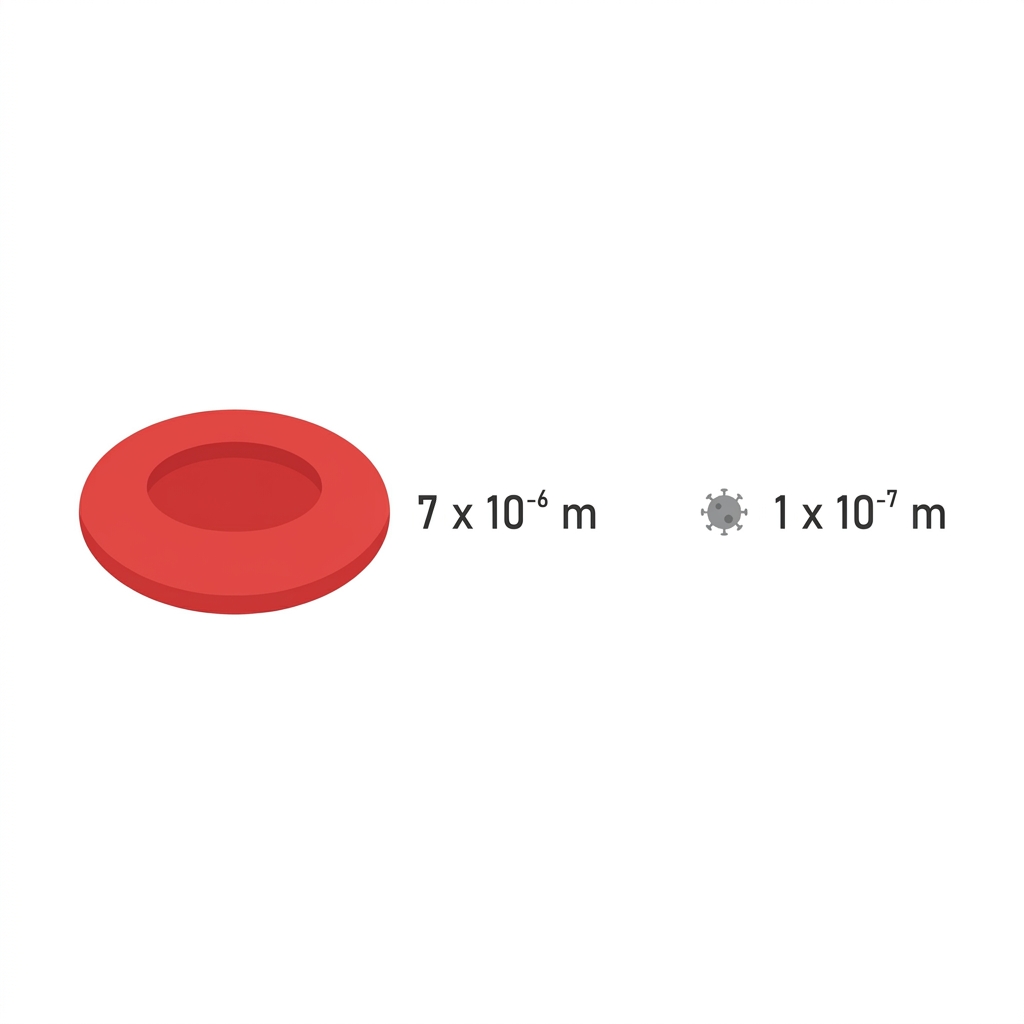
One detail I appreciate about this lesson is how it defines its terms. It explicitly identifies scientific notation as the way of writing numbers as a single digit multiplied by a power of 10, and it defines the order of magnitude as the power of 10 itself. By distinguishing these, it stops students from confusing the coefficient with the scale. The lesson material notes that on the microscopic scale, which is the range of measurements where objects are too small to be seen by the naked eye, it helps scientists use negative exponents to track tiny dimensions that are otherwise difficult to handle. This context is important because it connects the math to reality rather than leaving it as an abstract exercise on a worksheet.
The lesson does not just show them how to write the numbers; it asks them to compare them. The guided practice moves to a scenario where students look at the number of stars in a galaxy compared to grains of sand on Earth. This is a classic pedagogical maneuver because it forces them to look at the exponents rather than the coefficients. If a student can see that one exponent is significantly higher than the other, they realize they do not need to do heavy arithmetic to know which quantity is greater. This is a quick way to build confidence before we start asking them to perform actual division or multiplication with these numbers.
Applying the math to the macro and the micro
When you use this in the classroom, keep in mind that the leap to negative exponents is often where students stumble. They understand that 10 squared is 100, but they assume 10 to the power of negative 2 means a negative number, rather than 0.01. I usually suggest taking a moment during the lesson to walk through that specific jump on the whiteboard. The material explains that scientific notation is used in many fields, such as astronomy to measure distances between stars and in microbiology to measure the size of microscopic entities like bacteria or viruses. Having those two poles, the gargantuan and the infinitesimal, helps students see that the rules of scientific notation apply equally to both directions of magnitude.
This lesson fits well as a whole-class assignment for your primary instruction on exponents. If you have a student who missed the week or is working through independent study, this is also a clean, self-contained module that they can work through without needing a massive amount of back-and-forth communication. The structure is linear, so it acts like a script that a student can follow while they build their own notes. It also works as a substitute day task, provided the students have had a brief introduction to what an exponent is, because the definitions provided within the pages allow them to proceed without being left stranded.
This lesson is about simplifying the complex. We give students the tools to stop counting zeros and start thinking about scale. When you see them begin to naturally convert a standard number into scientific notation without having to look up the rule, you know they have moved past the initial struggle with the mechanics. They are beginning to think like people who actually use math to describe the physical world. It is a satisfying shift to watch in an eighth grade classroom.
Related lessons
Mastering Scientific Notation, Reviewing standard notation and exponent rules for very large numbers
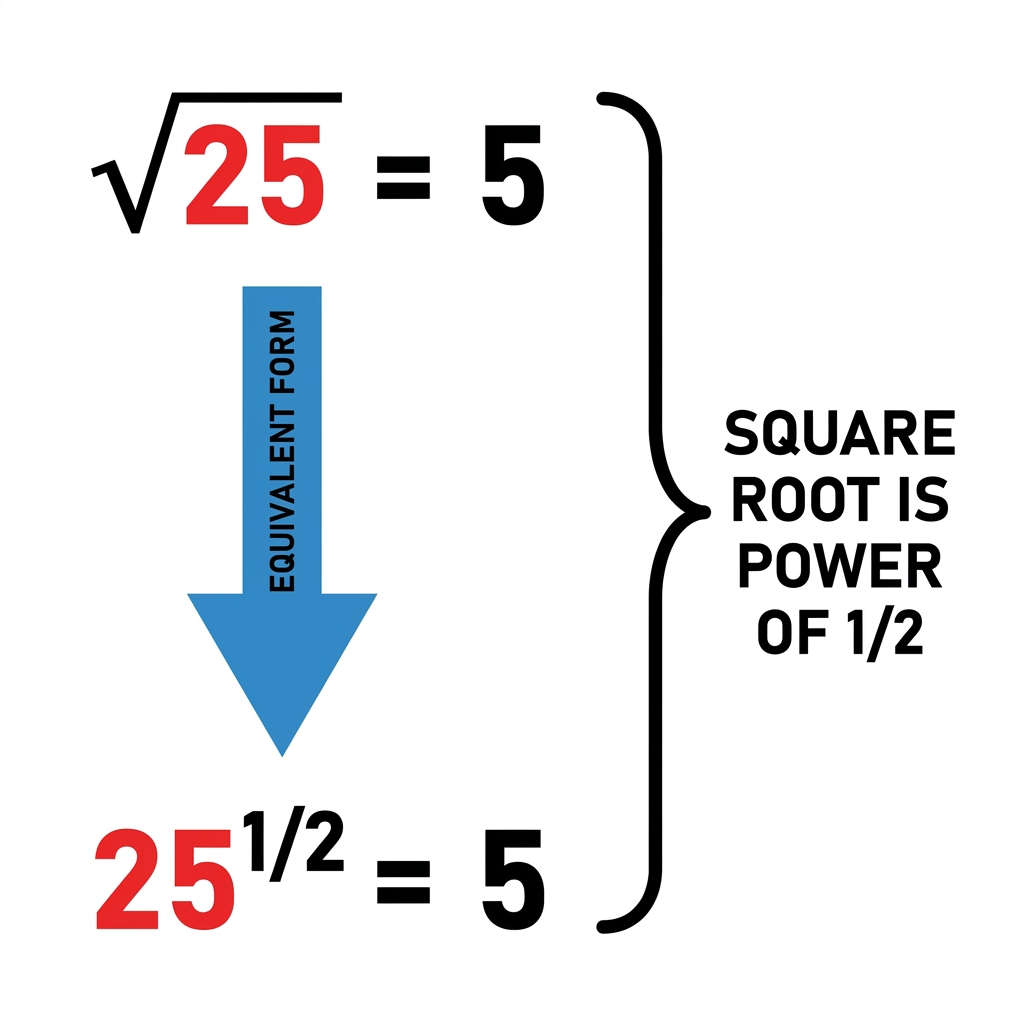
Solving Equations with Roots, Applying square and cube roots to algebraic equations and geometry
Understanding Proportional Relationships Through Slope, Analyzing linear equations to find constant rates of change