


This kindergarten English Language Arts lesson does not attempt to force five-year-olds into the rigid structures of formal expository writing. It does not demand that they draft paragraphs or master complex syntax before they are ready to express their thoughts out loud. Instead, it starts exactly where your students are today: with the people, places, and things they already know well.
By focusing on the Sharing Our World lesson, you give your students a dedicated space to practice oral language skills in a low-stakes, high-support environment. The lesson is designed to move beyond simple labels and helps children explain the qualities of their surroundings, which is a necessary building block for everything that follows in their academic lives.
Understanding the standard expectations
The core of this lesson is based on CA.ELA.SL.K.4. This standard asks students to describe familiar people, places, things, and events, and it requires them to provide additional detail when they have the right kind of prompting and support. In the California framework, this standard also includes a specific requirement to incorporate drawings or other visual displays as a way to supplement those descriptions. The standard recognizes that a child needs a bridge between their internal thoughts and their external expression. That bridge is often a combination of a teacher asking a leading question and a student drawing a picture to show what they mean.
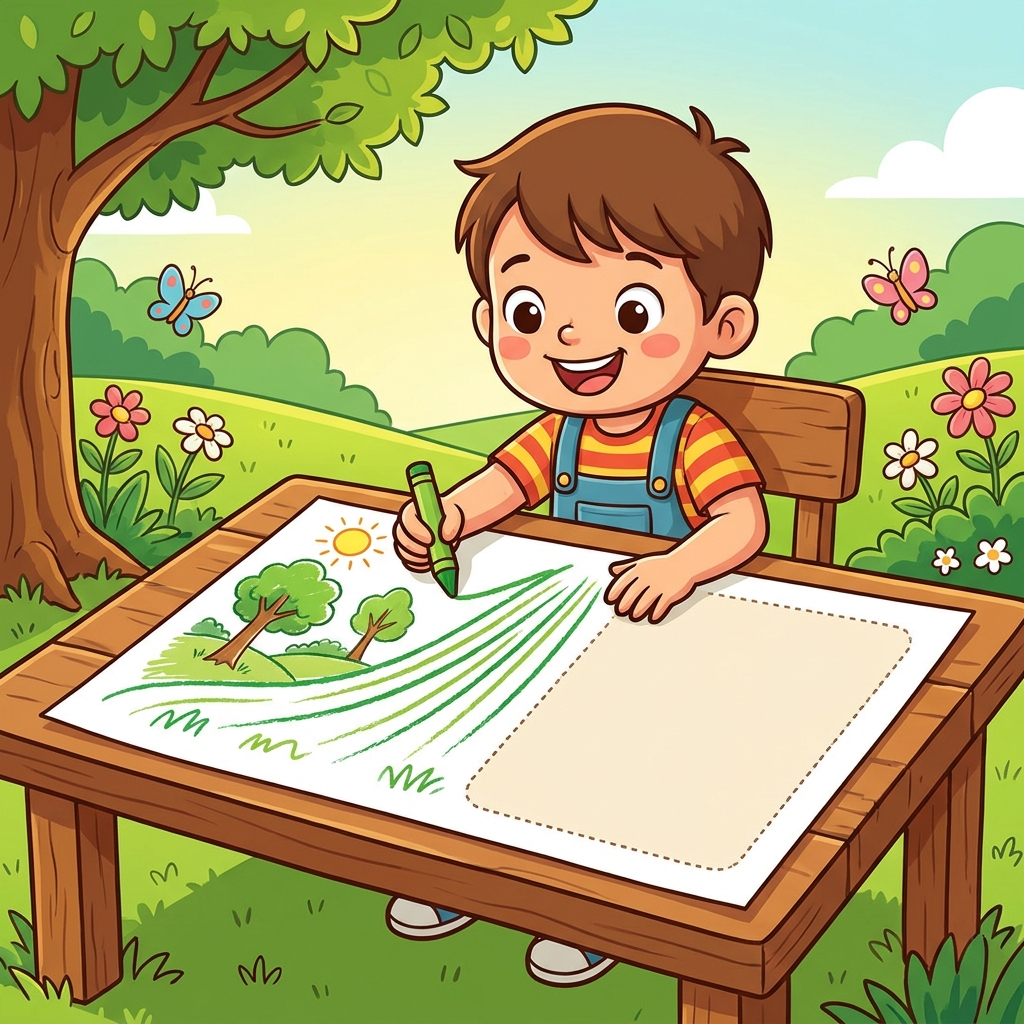
When we look at this standard, we have to recognize that the most difficult part for a kindergartner is moving from saying that a place exists to saying what that place is like. It is one thing to say, I know the park. It is a much more complex task to describe the park by mentioning the squeaky swings, the green grass, or the specific way the slide feels on a hot day. This standard identifies that growth by insisting on that additional detail. Teachers in San Juan Unified, Stockton Unified, Palermo Union Elementary School District, and Rim of the World Unified all use this same California standard to build these foundational speaking and listening abilities across our state.
How the lesson puts these skills into practice
The lesson asks students to identify a person or a place that is meaningful to them. This is not about abstract concepts. It is about a grandmother, a bedroom, a favorite playground, or a family pet. Because the topic is familiar, the cognitive load is reduced. The student does not have to search for knowledge; they only have to search for the words to describe what they already experience every day.
The prompt sequences within the lesson act as a scaffold. You start by asking the student to name the person or place. Then, you provide the prompt that encourages a descriptive word, such as what the person looks like, what they do, or why that place is a favorite spot to visit. The lesson then ties this into the California requirement for visual displays. By asking students to draw what they are describing, you provide a non-verbal outlet for their ideas. A student might draw the tall trees in the park they are talking about, which provides the visual support they need to feel confident enough to speak more clearly about those same trees.
Where this fits in your classroom
You can use this material in a few different ways depending on your daily rhythm. It works well as a whole-class assignment where you model the process in front of the group, and then students turn and talk to a partner about their own drawing. It also fits perfectly for a student who missed the week and needs a quick, effective way to catch up on speaking standards without feeling overwhelmed by a pile of worksheets. If you have students who need more individual attention, this is a natural choice for an intervention session because it allows you to sit with them and provide the exact amount of prompting they need to reach the objective.
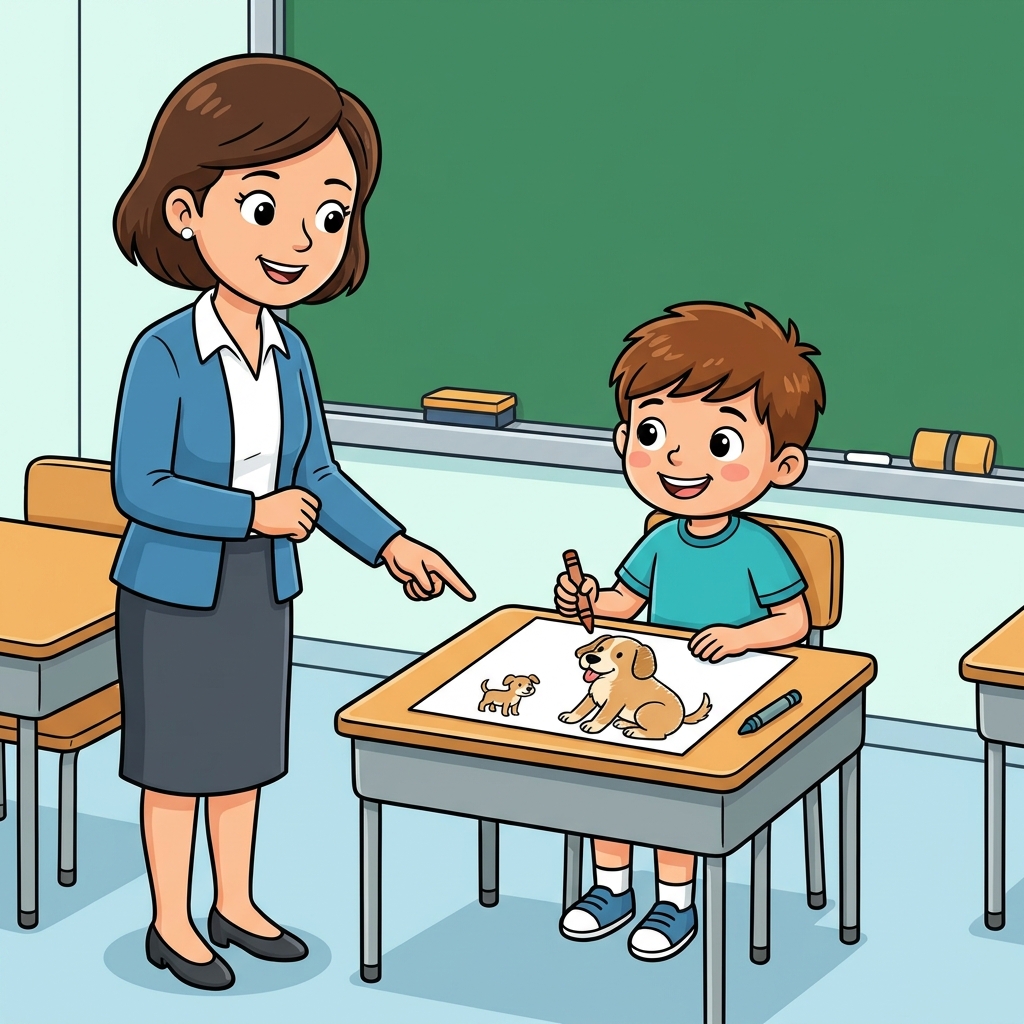
One piece of advice is to be patient with the silence that often occurs right after you ask for an additional detail. Most children need a moment to translate their image into a sentence. The silence is not a sign of confusion, but a sign of a brain working hard to form a complete thought. The goal is to let them find their voice at their own pace.
A note on teacher support
This kindergarten speaking and listening lesson is designed to be as clear as possible for you as the instructor. There is no complicated setup. You have the objective, the specific prompts to use, and a clear path toward the California standard. By keeping the materials simple, you can focus your energy on the conversation rather than on managing the activity itself. When you act as a conversational partner who is genuinely interested in what the student is describing, you provide the best possible incentive for them to elaborate on their ideas. It is a straightforward way to meet a requirement while building the type of classroom community where every student feels heard and understood.
Related lessons

Making Digital Art, Instruction on creating art through various digital software tools

Guessing What Happens Next, Practice making predictions based on stories and visual clues
New Words and Word Parts, Building vocabulary through understanding common word roots and parts