


Building strong reading habits early is essential for developing confidence in young learners. This post explores how a targeted lesson can help 2nd grade English Language Arts students master the foundations of reading accuracy and fluency.
How the lesson builds reading skills
The big bear walked through the woods, found a honey pot, and felt very happy. This simple scenario from the Reading with Accuracy and Fluency lesson perfectly captures what we want for our second grade English Language Arts students. It shows that being accurate means reading every word exactly as it appears on the page, while being fluent means reading it with a natural, human cadence rather than choppy, word-by-word sounds.

When I look at a 2nd grade student who is struggling to move beyond initial decoding, I check to see if they are actually paying attention to the words themselves. This lesson starts by grounding the student in this exact awareness, moving them from just calling out words to reading with the purpose of understanding. By incorporating the concept of self-correction, the lesson teaches students to notice when they make a mistake and have the patience to go back and fix it.
The standard and what it requires
This 2nd grade reading fluency lesson is built around CA.ELA.RF.2.4, which is the California-adopted standard for fluency. It is the same standard used in Sacramento City Unified, Newport-Mesa Unified, Castaic Union School District, and Adelanto Elementary School District to ensure consistent expectations across the state.
The standard is split into three manageable parts that form the backbone of this lesson. Part a asks the student to read on-level text with purpose and understanding. Part b pushes the student to read that same text orally with accuracy, a steady rate, and appropriate expression across successive readings. Part c covers the vital skill of using context to confirm or self-correct word recognition. It is a comprehensive framework that turns the mechanical act of reading into an act of comprehension.
Practical application for the classroom
I find this lesson especially useful for a student who missed the week of instruction or for an intervention setting where a student needs to shore up their foundational skills. It takes about 45 minutes to complete. The structure is clean and direct, moving from the initial practice of recognizing words on a page to a guided practice session involving a mystery story. The mystery element is a nice touch because it gives the student a specific reason to read carefully; they have to find clues to solve the puzzle, which naturally forces them to pay closer attention to the text.

The vocabulary provided is straightforward: accuracy, fluency, and self-correction. These are not just academic terms, but tools for the student to talk about their own progress. When a student can identify that they need to work on their fluency, they are already halfway to solving the problem. I appreciate that the lesson explains why this matters: just like a librarian reading to a group of children, the goal is to make the text accessible and smooth so that the story itself is the focus, not the struggle of decoding.
Reflections on student pacing
One caveat I have found with this type of lesson is that the quality of the reading depends on the student willingness to reread. Part b of the standard explicitly mentions successive readings. I always remind students that their first pass at a mystery story is for discovery, while their second pass is for mastery. If you have an independent study student who is rushing to finish, you might want to check if they are actually reading aloud. If they are just clicking through, the lesson does not serve its purpose. However, for a student who engages with the mystery scenario, the lesson provides exactly the kind of practice that builds confidence. It avoids unnecessary fluff and keeps the work focused on the mechanics of sounding like a reader who understands the story.
Related lessons
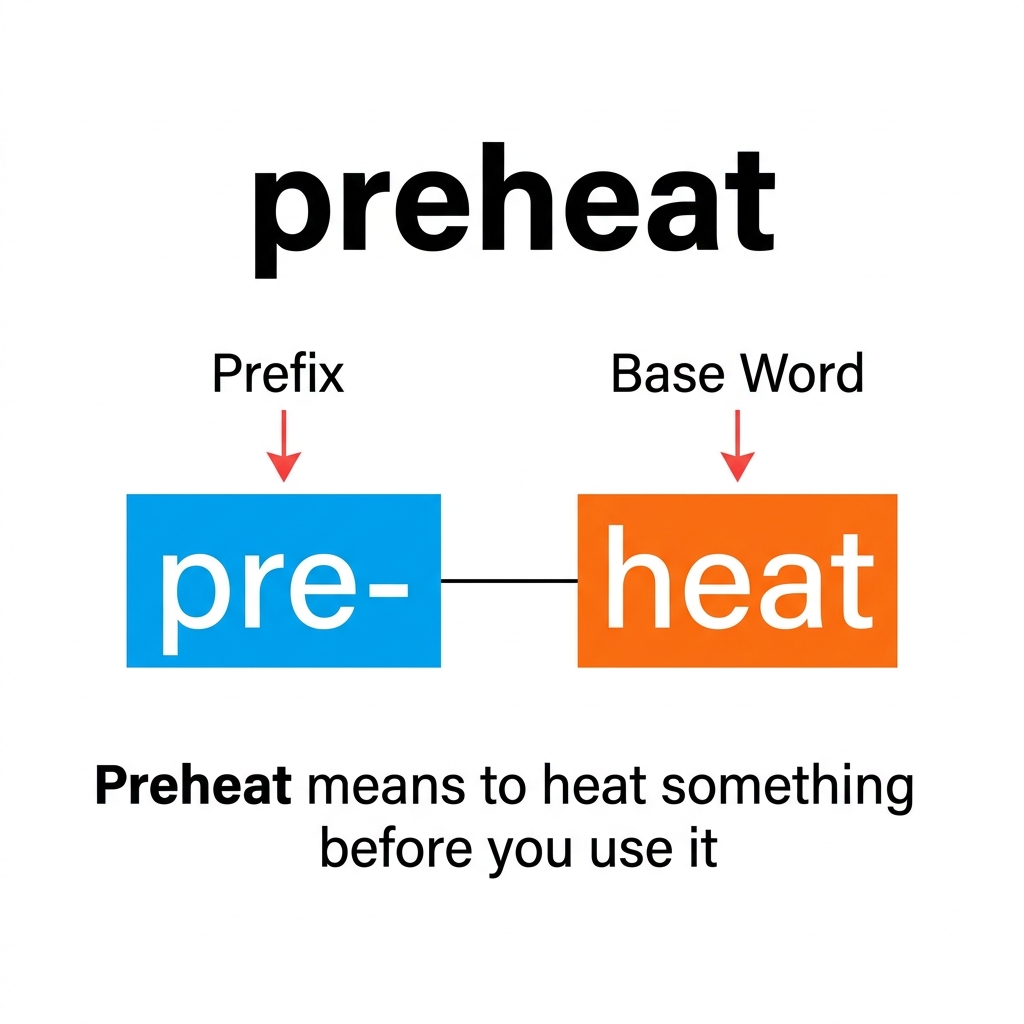
Decoding Words with Prefixes, Suffixes, and Tricky Sounds, Practice reading complex words by identifying structural parts