

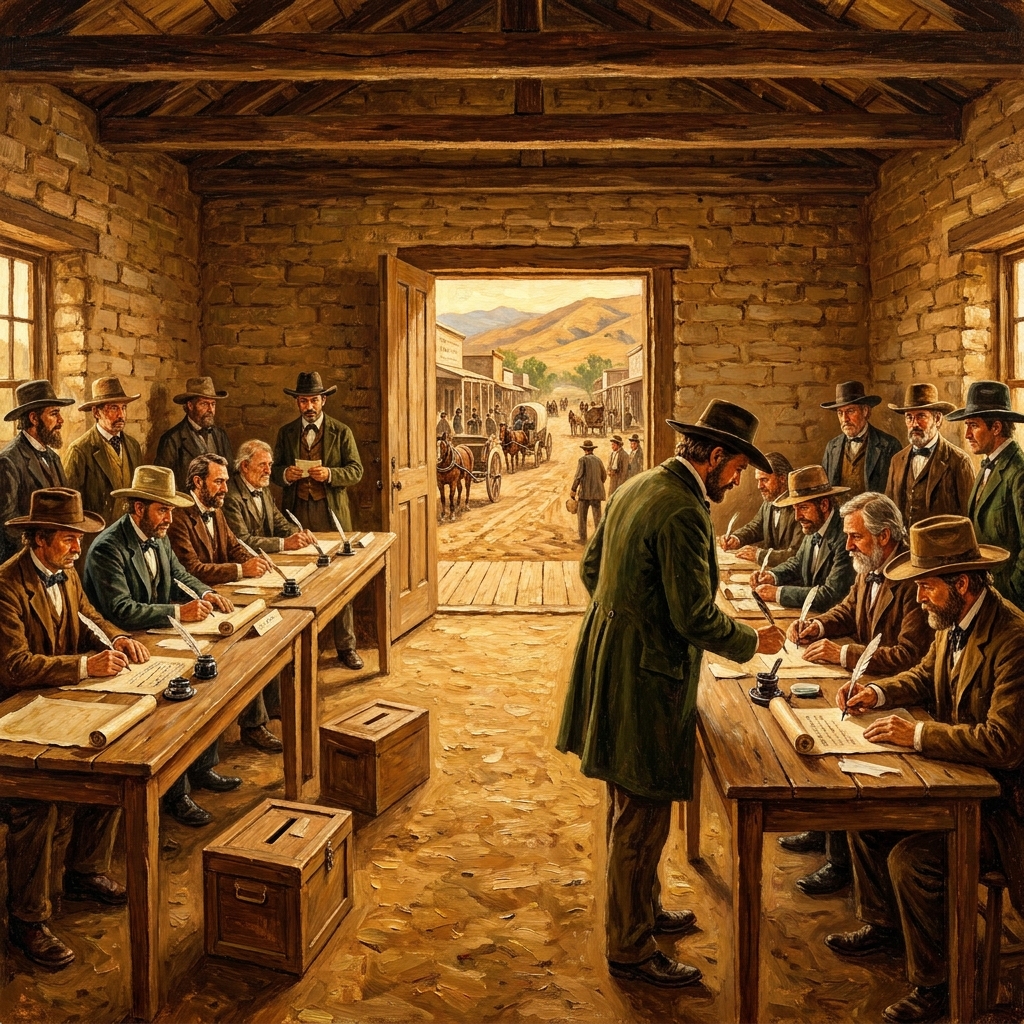
It always feels like this unit lands on the calendar just when the fourth-grade workload becomes heaviest.
By the time we arrive at the mechanics of state government, the year is moving fast, and there are never enough hours in the day to cover the standards thoroughly. We are juggling reading benchmarks, math interventions, and the constant ebb and flow of attendance, so having a self-contained digital resource is a relief. If you are looking for a fourth grade social studies lesson to get through this content effectively, this one is worth a look.
The objective of the lesson is straightforward: teach students how California’s government is organized and what roles its elected officials have. The material states: “State governments create laws to ensure that all citizens are treated fairly and that the state runs smoothly.” This opener sets the tone for why the work matters. The material introduces three core vocabulary terms: elected official, which is defined as a person who wins a public vote to hold a specific job in government and serve the people; representative, meaning a person chosen by a group to speak, advocate, and make decisions on their behalf; and branch, which is one of the three main parts of government that has its own specific job to do.
How the lesson handles the heavy lifting
The lesson uses the California State Capitol building as a central example, explaining that it serves as the home for many elected officials and the center of our state government. I appreciate that it does not get bogged down in abstract theory but instead points to specific structures. The guided practice moves to the California Supreme Court, where students examine how the court reviews laws to ensure they follow the state constitution. This approach helps students see the government as a functional system rather than just a list of vocabulary words to memorize.

This lesson is aligned with CA.HSS-4.5.4. This standard asks students to explain the structures and functions of state governments, including the roles and responsibilities of their elected officials. It is part of a larger cluster where students must understand how state, local, and federal governments function within the U.S. Constitution. Whether you are teaching in San Juan Unified, Sacramento City Unified, Santa Rosa Elementary School District, or Simi Valley Unified, the requirement remains the same across the state. The content is designed to make these roles and functions concrete, which is a significant help when you only have about 45 minutes to get the core concepts across.
Where to use this in your classroom
The most obvious use is a whole-class assignment, but I have found that lessons like How California’s State Government Works are also perfect for a student who missed the week or for independent study. If a student is out for a few days, giving them a structured, digital lesson allows them to catch up on the specific vocabulary and core concepts without requiring you to teach the entire lesson again during a busy afternoon. It is also a solid option for a substitute day because the instructions are clear and the content does not require much extra prep work.
I have one caveat: the lesson moves quickly through the branches of government, so if your class is new to the concept of checks and balances, you might want to spend an extra ten minutes priming the conversation before they start the screens. The why-it-matters section makes a strong point that understanding these roles helps students become informed citizens who can make their community a better place. It is a simple, direct reminder that the civics we teach today has a real impact on how they perceive their own participation in the state. If you are balancing a heavy social studies curriculum, this is a clean, focused way to address the standard without adding unnecessary weight to your plan book.
Related lessons

California's Changing Economy, Covers economic shifts and growth patterns within California history
Finding Your Way: Earth's Coordinate System, Teaches geographic coordinate systems and mapping on Earth

The U.S. Constitution: Our Nation's Rulebook, Explains foundational principles of the United States government