

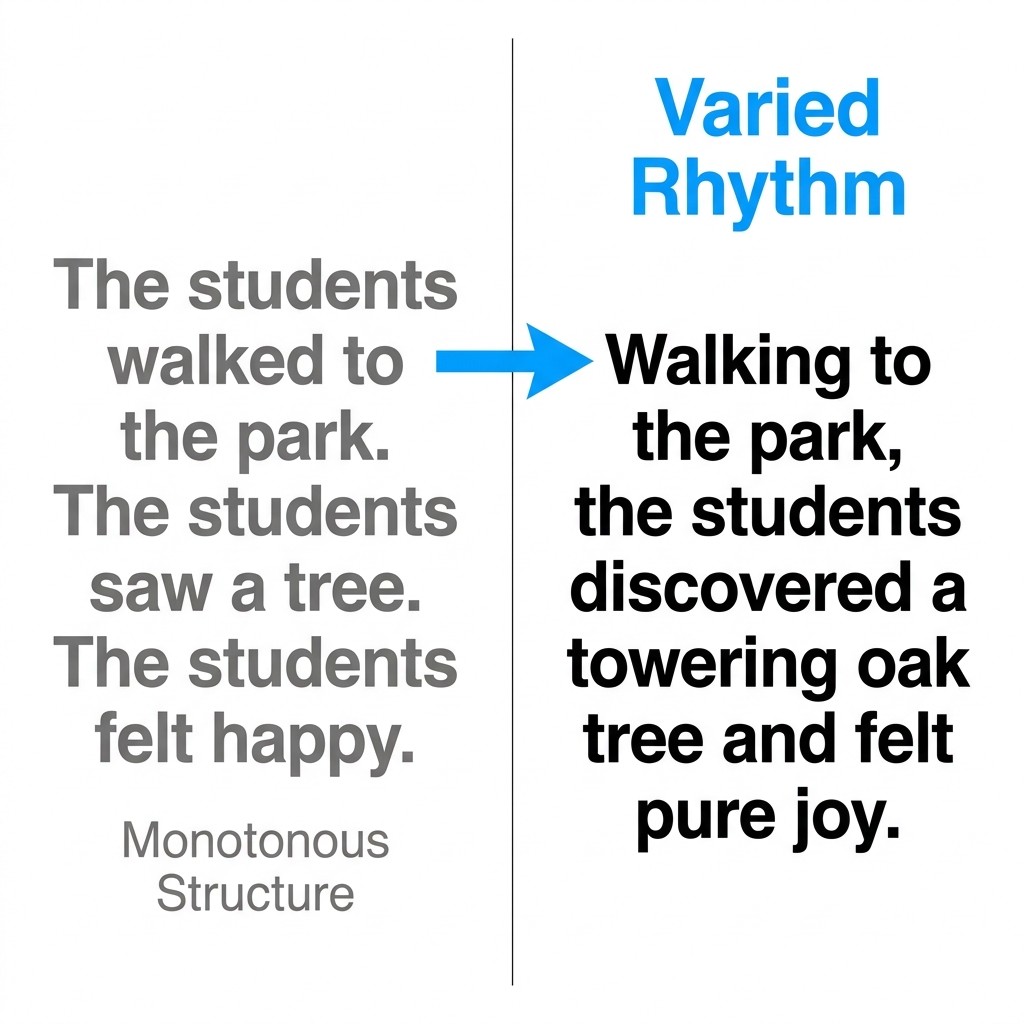
…and that is exactly why the transition from simple subject-verb structures to more complex patterns is the biggest hurdle for our middle schoolers. They have mastered the basics of grammar, but now they need to make that grammar work for them. Writing with Style and Variety is designed to get students over that hump by teaching them how to control the rhythm and attitude of their work.
This 6th grade English Language Arts lesson moves away from the flat, predictable sentences that often dominate early middle school writing. It focuses on the core concept of sentence variety and tone consistency. The objective is for students to learn how to keep their writing engaging by switching up how their sentences begin and how long they run. Students are given examples, such as starting a sentence with a prepositional phrase like ‘Deep in the woods’ to break the monotony of starting every single line with ‘The’. By the end of the 45-minute session, students have practiced writing a letter to a local official about a broken street light in their neighborhood, forcing them to maintain a consistent tone while varying their syntax.
What the lesson actually asks students to do
The material does a good job of showing students that these mechanics are not just busy work. Using the varying sentence patterns for 6th grade search term makes it clear that we are targeting a foundational skill for later argumentative writing. The vocabulary is kept simple: sentence variety is the practice of using different lengths and types to keep a reader interested, and tone refers to the specific attitude of the piece, whether formal or casual. Students examine a scenario about 20 kids heading to a park for a nature trip to see how rhythmic shifts change the feeling of a narrative.
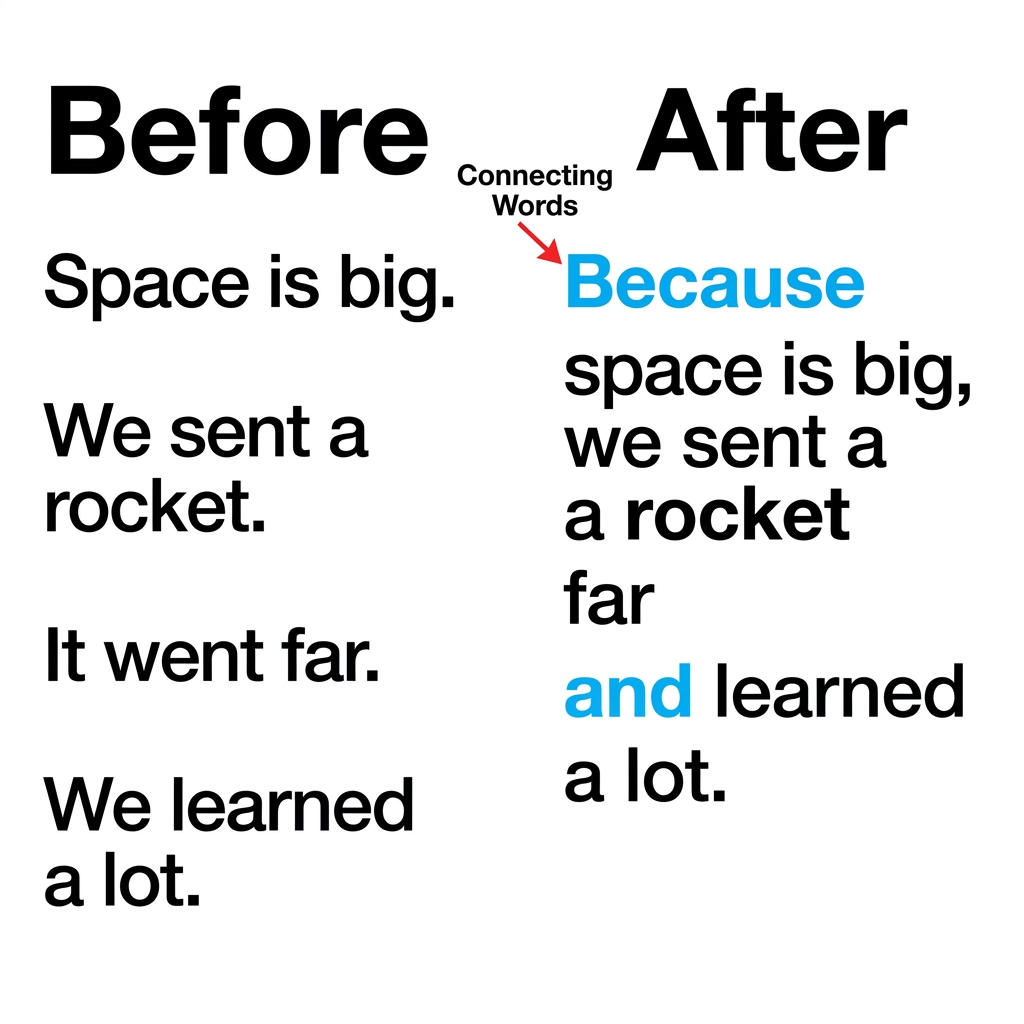
This work supports CA.ELA.L.6.3, the California-adopted standard that asks students to use their knowledge of language and its conventions when writing, speaking, reading, or listening. This means your students need to know how to vary sentence patterns to influence reader interest and keep their style and tone on point. The lesson also incorporates CCSS.ELA-LITERACY.L.6.3, which serves as the overarching framework for these skills. Teachers in Fremont Unified, Torrance Unified, Alpine Union Elementary School District, and Eureka Union School District all work toward these same benchmarks. If a student misses the mark here, you will see it show up later when they attempt to write persuasive essays or literary analyses, where their arguments will feel disjointed because they lack the control to flow from point to point.
Where students slip
I find that students often over-correct. Once they learn that they can start a sentence with a prepositional phrase, they tend to start every sentence that way. This lesson offers a good chance to talk about balance. It is not about writing long sentences; it is about writing sentences of different lengths to create a pulse. The example about the street light is a smart way to force that balance. You cannot complain to a city official using only short, choppy sentences, nor can you use one single run-on sentence for the entire complaint. They have to decide when a short, punchy sentence lands the point and when a longer sentence adds the necessary detail.
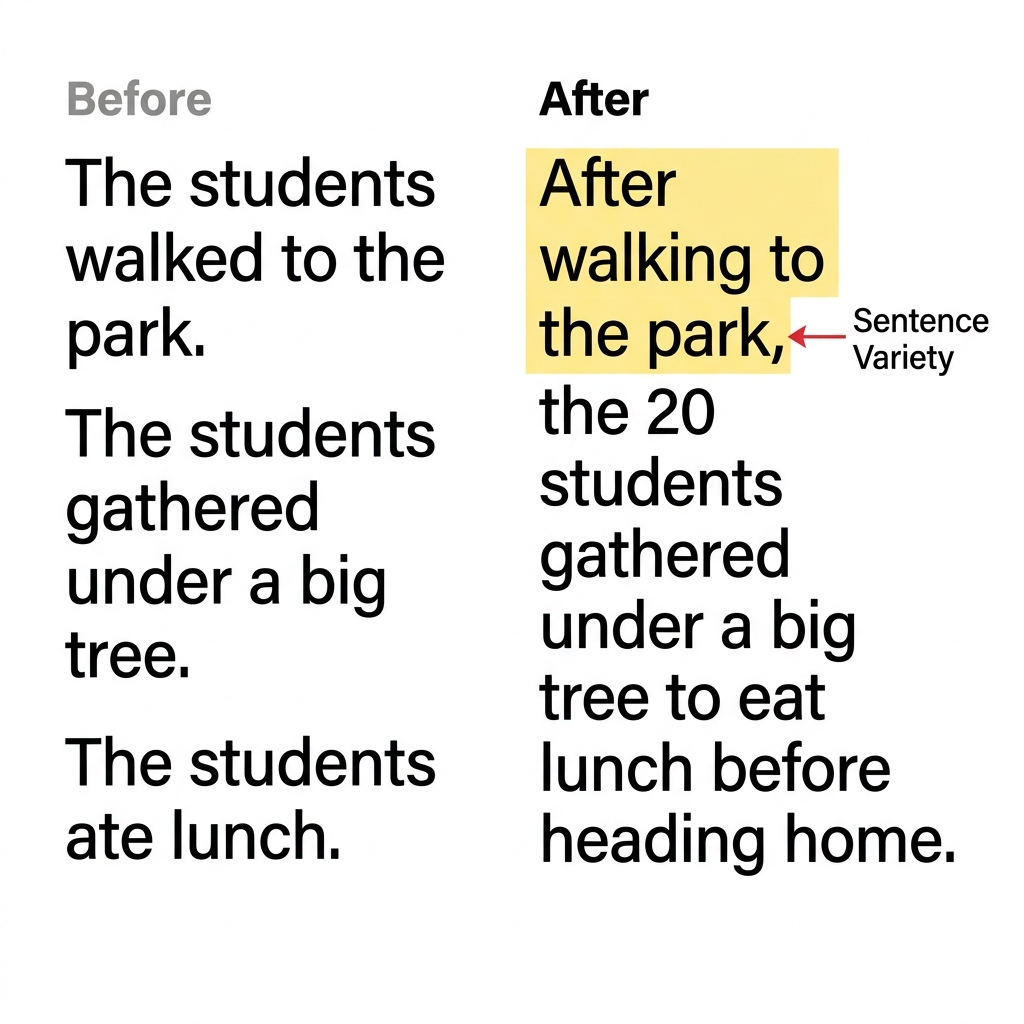
I recommend using this for a whole-class assignment when you notice the ‘story monotony’ creeping into their writing. It also works perfectly as a stand-alone for independent study or for a student who missed the week while the rest of the class was drafting. It is very concrete, which makes it a safe bet for a substitute day when you want the class to produce something productive without needing a complex guided discussion from an adult in the room. Just watch for that tendency to force variety rather than letting it happen naturally. The goal is flow, not a list of fancy sentence starters.
Related lessons
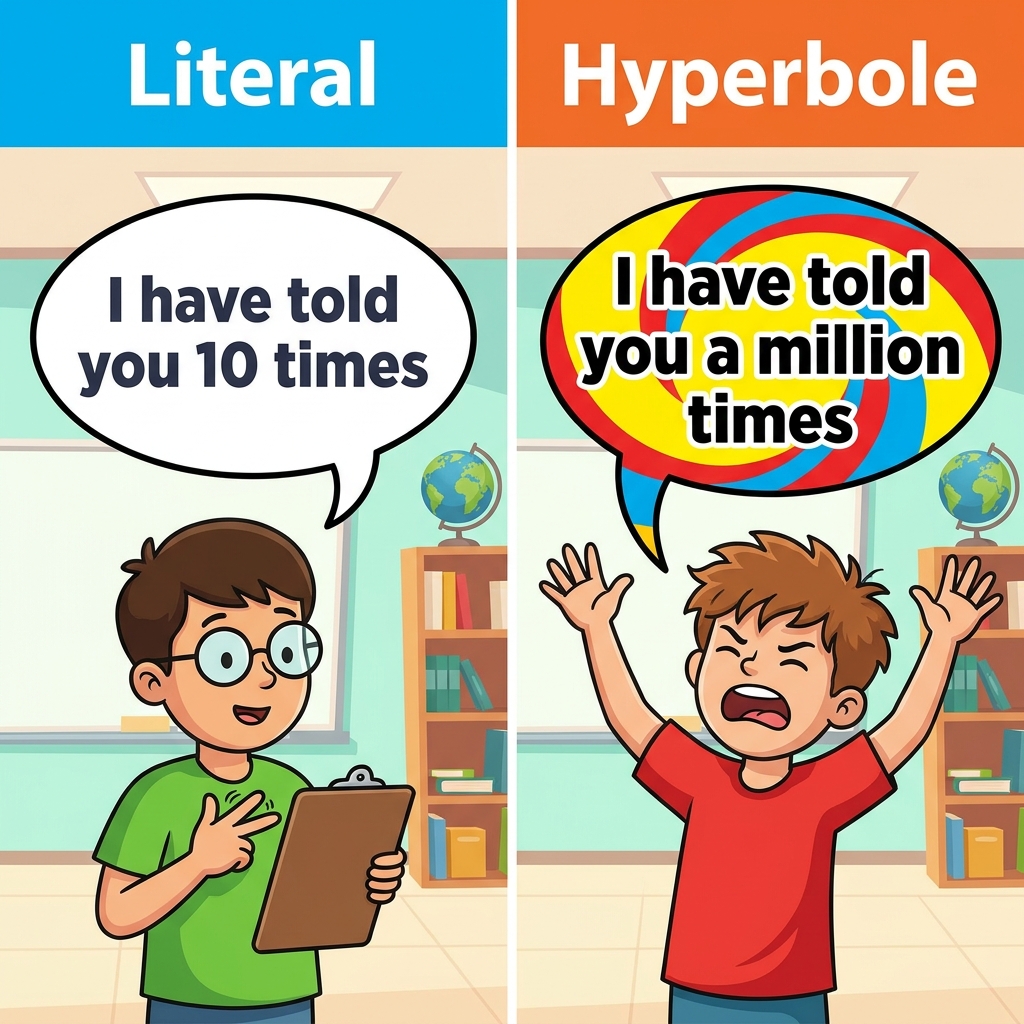
Understanding Figurative Language and Word Nuances, Explores how word choice and figures of speech build meaning
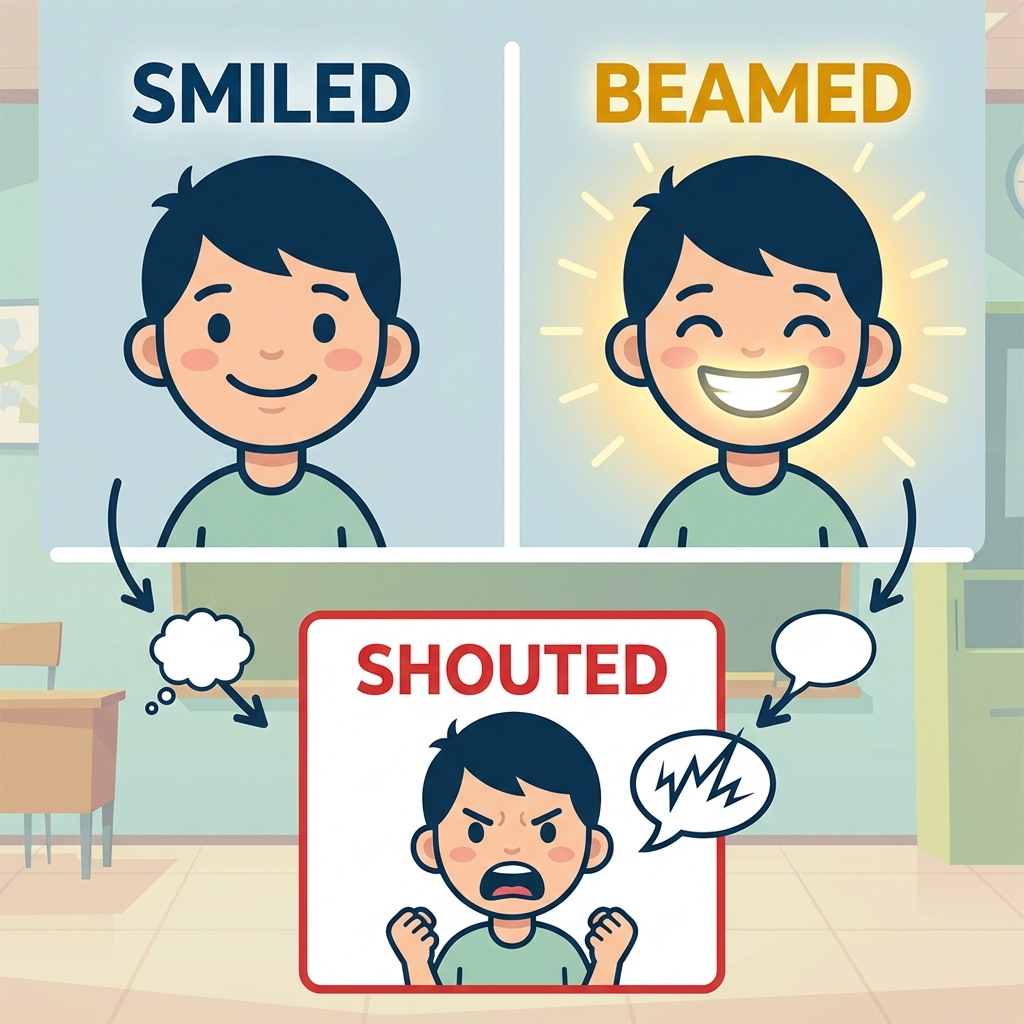
Choosing Precise Words for Better Writing, Focuses on selecting descriptive language to enhance student writing quality

Mastering Pronouns for Clear Writing, Teaches proper pronoun usage to improve clarity in student sentences