

Sixty miles on 2 gallons of gas. Ask a room of sixth graders for the unit rate and most will get to 30 quickly. Then ask a slightly different question, like how many gallons per mile, and a good third of the class will still write 30, because what they learned was “divide the big number by the small number,” not “figure out what one of something is worth.”
That habit is the wrong turn on this skill, and it is the reason I like how Solving Problems with Ratios and Rates is put together. It is a sixth grade math lesson from the Math 6 Ratios and Proportional Relationships course, it runs about 45 minutes, and its objective is plain: solve real-world problems by using ratios and unit rates.
Why students divide the wrong way
The division itself is never the problem. Sixth graders can divide 60 by 2. What trips them up is that a ratio has two quantities with two different units, and nothing about the arithmetic tells you which one goes on top. If a student does 2 divided by 60 and gets a small decimal, that is also a correct unit rate (gallons per mile). It just answers a different question. Students who were never asked to say the units out loud have no way to tell those two answers apart, so they pick the one that looks friendlier, which is usually the whole number.
There is a second, quieter mistake that shows up on the harder problems. Take the example built into the standard itself: if it took 7 hours to mow 4 lawns, how many lawns in 35 hours? Plenty of students reason additively. Thirty-five is 28 more than 7, so they add 28 lawns, or they do something else with differences. They are treating the relationship like a pattern of adding instead of a pattern of multiplying. That one is harder to spot on a worksheet because the student often shows confident work.
Both mistakes come from the same place. Students are doing operations on numbers instead of reasoning about what the numbers mean.
How the lesson is built to head that off
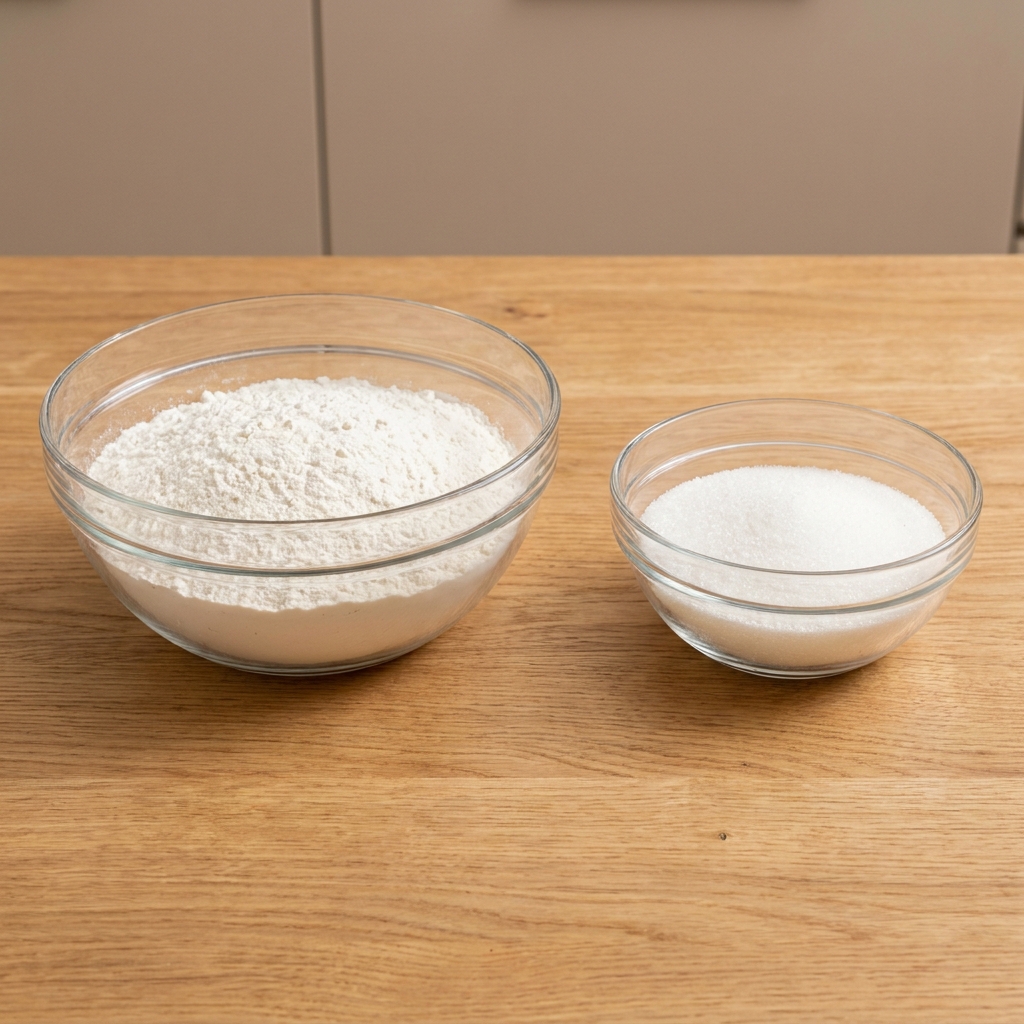
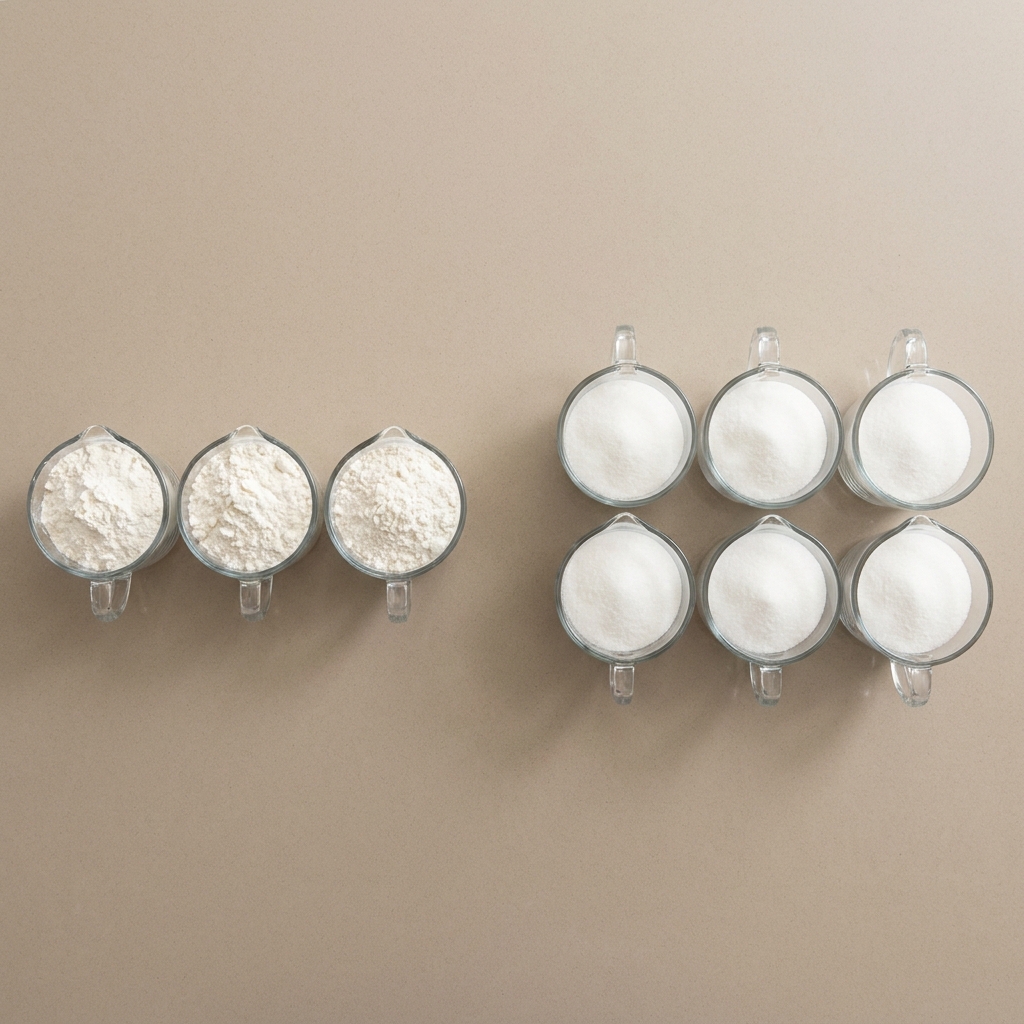
The lesson opens by reminding students what a ratio is before it asks them to do anything with one. The opener uses a baker who puts in 3 cups of flour for every 2 cups of sugar for a batch of cookies. No calculation yet, just two quantities being compared. I think that order matters more than it looks. A student who has just said “3 cups of flour for every 2 cups of sugar” in a full sentence is already carrying the units, and units are exactly what gets lost later.
The vocabulary is kept to two terms, and the definitions are short enough to actually stick:
- Ratio: a comparison of two quantities.
- Unit rate: a ratio that compares two different quantities where one of the quantities is 1.
That second definition is the one I would put on the board and leave there. The phrase “one of the quantities is 1” is the whole answer to the divide-the-big-number problem. You divide so that the thing you want “per” becomes 1. If you want miles per gallon, gallons becomes 1. If you want gallons per mile, miles becomes 1.
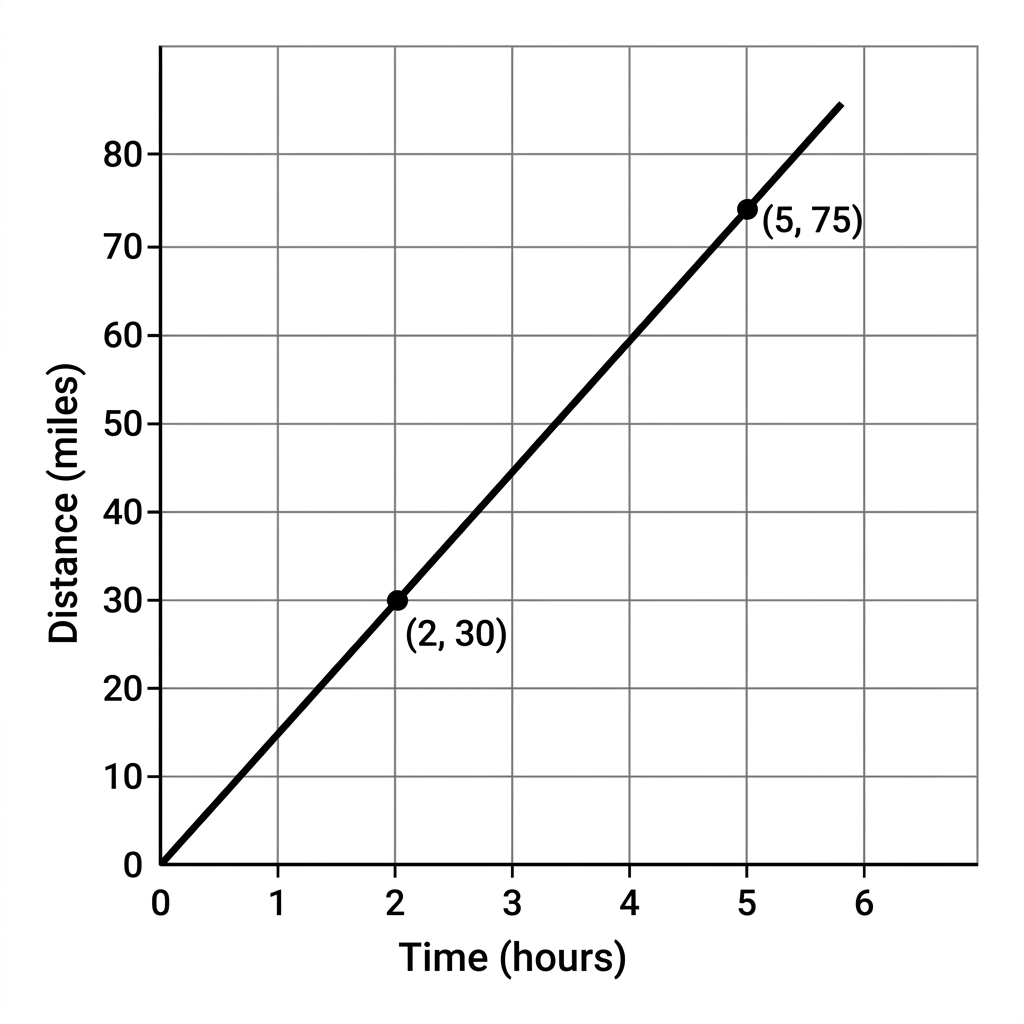
The worked example then makes that move explicit with the gas mileage scenario. In the lesson’s words: “This gives you 30 miles per 1 gallon, which is a unit rate.” Notice it says per 1 gallon, not just 30. Writing the 1 feels redundant to adults, but for an eleven-year-old it is the step that connects the arithmetic to the definition.
From there the guided practice hands the work to students with a lawn mowing scenario, the same context the standard uses. That is a smart choice because lawn problems almost always invite both kinds of unit rate (lawns per hour and hours per lawn), and both are reasonable answers depending on the question. It is a natural place to stop and ask the class which one the question actually wants. The lesson closes with why unit rates matter, pointing to unit prices at the store and to using speed to figure out how long a trip will take.
One honest caveat. The worked example in the lesson is solved by division, which is efficient and clear. If your students are still shaky, I would sketch a double number line or a quick table of equivalent ratios next to it (60 and 2, 30 and 1, 90 and 3) so they can see the multiplicative pattern instead of taking the division on faith. That visual is also the best fix I know for the additive error on the lawn problem.
The standard, and where this lesson fits
The lesson is aligned to CA.MATH.6.RP.3b, part of the California Common Core State Standards for math, in the Ratios and Proportional Relationships domain. The standard asks students to use ratio and rate reasoning on real-world and mathematical problems, using tools like tables of equivalent ratios, tape diagrams, double number line diagrams, or equations. Then it narrows to unit rate problems specifically, naming unit pricing and constant speed as the two big contexts. It sits under the cluster about understanding ratio concepts and using ratio reasoning to solve problems, and I read the word “reasoning” there as the heart of it. The standard is not asking for a procedure. It is asking students to know why they divided.
This is the same standard sixth graders work on in Torrance Unified, Sweetwater Union High School District, Glendora Unified, and Yucaipa-Calimesa Joint Unified, and in every other district in the state, since California adopted it statewide.
As for how to use it, three situations come to mind. It works as a whole-class lesson early in a ratio unit, right after students have met the idea of a ratio and before they start comparing rates. It is also a clean fit for a student who missed the week, because the lesson rebuilds the ratio idea from the baker example before it asks for any unit rates, so a student does not need the previous days to follow it. And for intervention, it is short enough to run in a small group in one period, with time left over to have students explain the 7-hours-4-lawns problem to each other. I would not use it as a first introduction to ratios for a student who has never seen the idea, though. The opener is a reminder, not a full teach.
If you are looking for a sixth grade unit rate lesson that spends its time on meaning rather than on drill, this one is worth opening before your next ratio unit. My suggestion: before the worked example, ask the class for gallons per mile first and see who still writes 30.
Related lessons
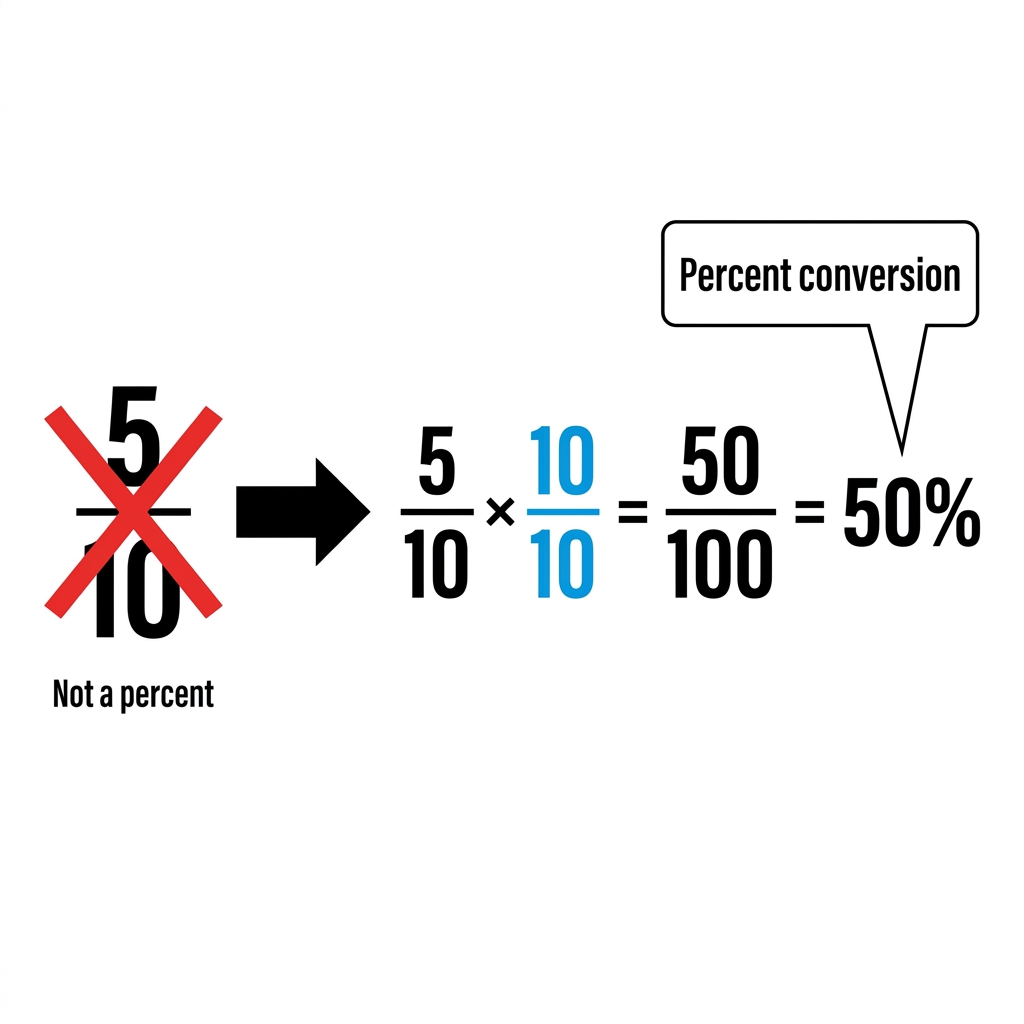
Understanding Percentages as Rates per 100, Treating percentages as a rate out of every 100
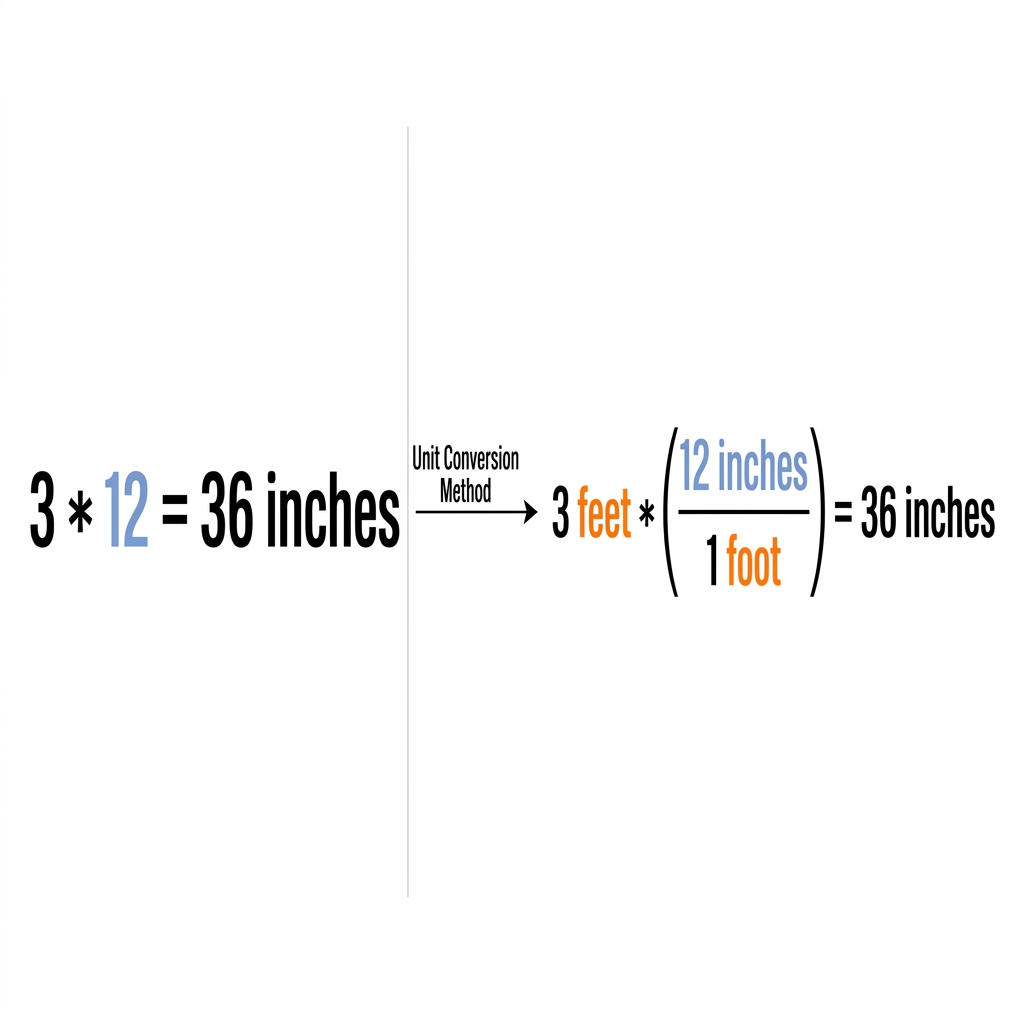
Understanding Ratios and Unit Conversions, Using ratio reasoning to convert between different units of measurement
Understanding Ratios and Graphs, Representing ratio relationships on graphs and reading them