

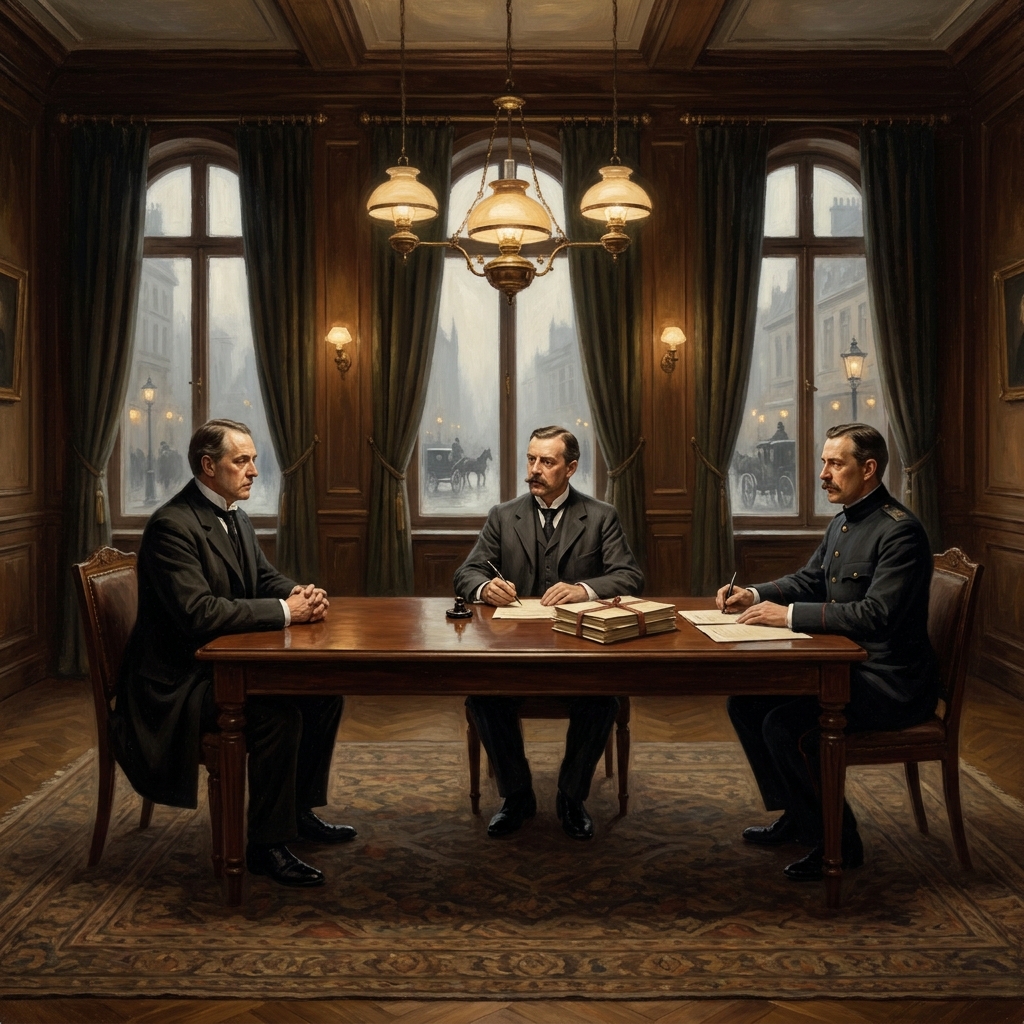
This lesson does not try to turn your students into military historians by having them memorize every troop movement or battle tactic of the early twentieth century. Instead, it aims to do something much more practical for high schoolers in a world history course. It asks students to look at the structural pressures that existed before the first shot was fired and understand why the Great War became inevitable. If you teach tenth grade social studies, you know the struggle of keeping students interested in the slow build-up of diplomatic tension. The Road to World War I helps bridge that gap by connecting abstract political concepts to a clear, logical sequence of events.
Students start by watching a physical demonstration involving a line of wooden blocks. When the first block is pushed, it knocks over the next one, demonstrating how a small force creates a chain reaction. This simple opener is excellent for helping students visualize what a systemic cause actually looks like. The lesson then moves into an analysis of the Triple Entente, which the materials describe as a security framework that serves as a systemic cause because it created a situation where each nation relied on the others for their defense. By walking through these mechanics, students can see how the architecture of alliances made peace increasingly fragile.
The lesson covers the requirements of the California-adopted standard CA.HSS-10.5. This standard asks that students analyze the causes and course of the First World War. It requires more than just knowing dates or names of leaders, it asks students to unpack the specific conditions that made such a massive conflict possible in the first place. This expectation is exactly the same for students across the state, whether they attend schools in Corona-Norco Unified, Porterville Unified, Piedmont City Unified, or Willows Unified.
What the lesson actually asks students to do
To reach the level of analysis required for The Road to World War I, students spend time building their grasp of key terms that define pre-war Europe. The vocabulary list is manageable but dense with the concepts needed to argue a point about the war: Militarism, Alliances, Imperialism, Nationalism, Systemic cause, Catalyst, and Mobilization. Students learn these terms not by rote memorization, but by applying them to the diplomatic crises that defined the era. For example, they examine the annexation of Bosnia in 1908, treating it as a case study for how tension between Austria-Hungary and Serbia served as the foundation for later declarations of war.

The lesson emphasizes that a catalyst is an event or person that precipitates or causes an important change, acting as the immediate trigger for a larger conflict. This distinction between the long-term systemic causes and the immediate spark is where I find most of my students struggle. They often want to point to the assassination of Archduke Franz Ferdinand as the only reason for the war. This material forces them to look at the structural weaknesses beneath that event. It asks them to evaluate the state of military readiness, or mobilization, and how nationalistic fervor prevented any easy diplomatic off-ramps.
Where students slip and how this helps
The trap I see most often in my own classroom is that students treat these pre-war tensions as if they were inevitable, as if history was simply marching forward on rails. This lesson does a good job of pushing back against that deterministic mindset. By labeling specific agreements as a security framework, it allows students to debate whether those agreements were meant to keep the peace or whether they actually guaranteed that a regional scuffle would turn into a total war. It forces them to look at the trade-offs of diplomacy.

I suggest using this for a whole-class assignment when you are starting your unit on the twentieth century, but it also works very well for a student who missed the week or needs to handle this topic during independent study. Because it is self-contained and takes about 45 minutes, it is a great choice for a substitute day when you want the class to continue moving through the curriculum without you there. When you need them to practice this high school world history lesson, it provides enough structure that they can actually finish the work and walk away with a firmer grasp on the material.
The lesson concludes by connecting these past events to the present day. It asks students to consider how citizens can identify when a single event is being used as a pretext for a larger conflict. I think this is the most valuable part of the experience because it turns the study of 1914 into a tool for reading international news today. It turns the academic exercise of analyzing causes into a habit of mind for informed citizens.
Related lessons

The Rise of Totalitarianism after World War I, Covers the growth of authoritarian regimes following the First World War
Enlightenment Ideas and Democratic Revolutions, Examines political ideas that sparked major democratic movements in history

From Exclusion to Genocide: The Holocaust, Analyzes the progression from social exclusion to the systemic genocide