

I know how it feels when the curriculum calendar starts to sprint away from us. By the time we hit the post-WWI era in high school world history, we are usually juggling end-of-semester pressure and the sheer density of the material. Whether you are in Grossmont Union High School District, West Contra Costa Unified, Alvord Unified, or Gateway Unified, the pace often feels the same. We all hit that moment where a student who missed the week needs to catch up quickly, or you realize you need a self-contained high school world history lesson that doesn’t require a mountain of prep work to keep the class on track.
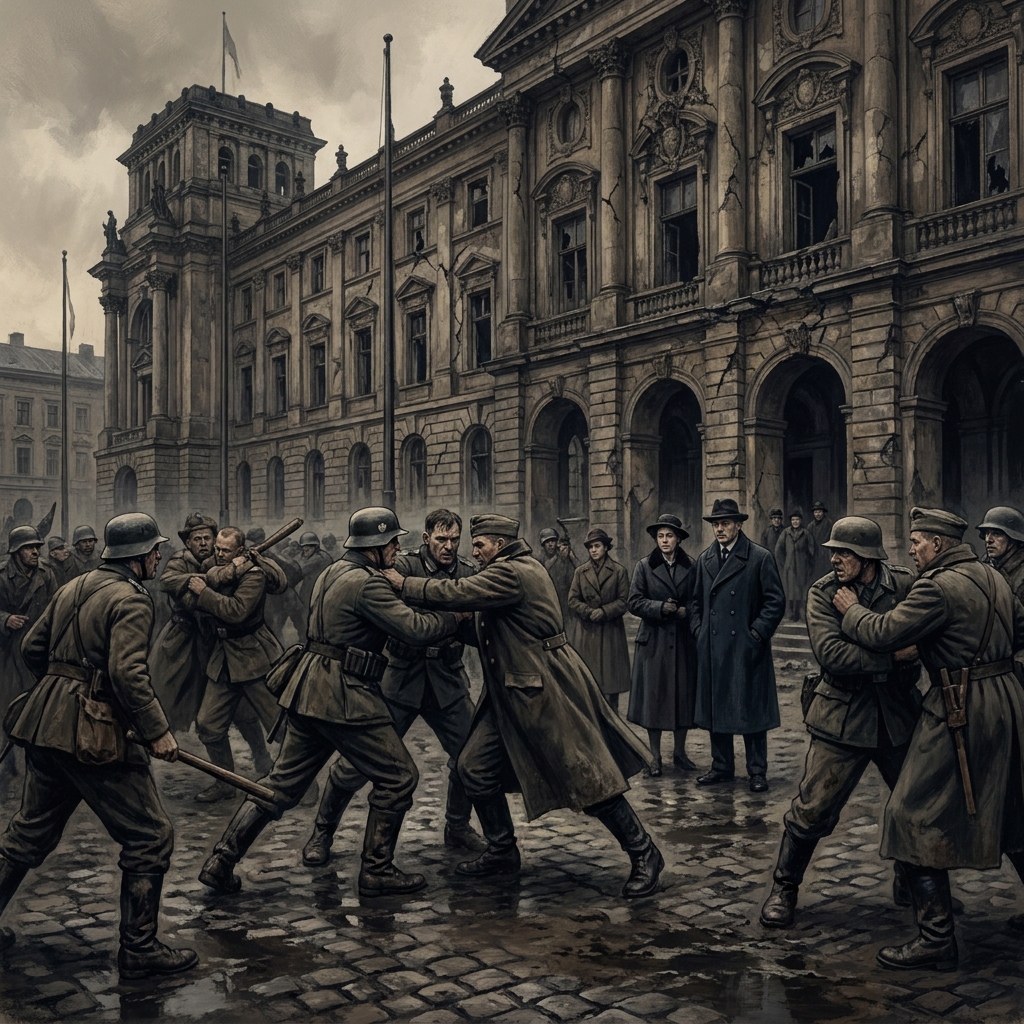
The lesson, The Collapse of Trust: Post-WWI Europe and the Rise of Totalitarianism, hits the ground running by grounding abstract political shifts in concrete student-friendly scenarios. It defines the core concept of a power vacuum by contrasting the relative stability of the 19th-century constitutional monarchy with the chaotic, violent reality of the Weimar Republic. It brings home the human element by talking about the two million soldiers who returned home to economic ruin and a sense of betrayal. When the government cannot keep the streets safe or provide basic jobs, the foundation of public trust begins to crack. That is where this material starts.
What the lesson actually asks students to do
Students work through the fundamental definitions of disillusionment and totalitarianism. The lesson makes it clear: “When a government can no longer meet the basic needs of its people, the people stop believing in the institutions they once trusted.” It does not just ask students to memorize dates or treaties. Instead, it asks them to analyze how that loss of faith creates an opening for radical change. You will find that students grasp the concept of a power vacuum much faster when they see it framed as a state losing its ability to exert influence or maintain order.

This lesson directly addresses the state requirement known as CA.HSS-10.6.3. This specific California-adopted standard requires students to understand the widespread disillusionment with prewar institutions and authorities that left a void for totalitarians to fill. It is a dense, heavy standard to cover, but by focusing on the loss of legitimacy, the lesson prevents the topic from feeling like a list of disconnected facts. I have found that framing history this way makes for much more grounded classroom discussions than just reading from a textbook.
Where students slip
The biggest hurdle for students is usually the jump from abstract political theory to the reality of the Weimar Republic. It is easy for them to miss why the Treaty of Versailles carried such emotional weight for veterans. The guided practice here clarifies that these men saw the treaty as a surrender of their national pride, not just a diplomatic agreement. If you have students who are struggling to grasp why democratic institutions fail, this specific focus on the emotional toll of the war is incredibly helpful.

I recommend this for a whole-class assignment when you have that one day where the schedule is tight, or for independent study for a student who missed the week. It works well as a self-contained review because it provides the vocabulary and the context within the same forty-five-minute window. You are not just dumping facts on them; you are showing them a pattern of political instability that still matters today. It forces them to consider why democracies rely on maintaining the public trust to survive, which is a powerful way to end a high school history unit.
Related lessons

The Geography of New Imperialism, Mapping the expansion and influence of colonial empires across regions

The Shattered World: Art and Intellect After WWI, Changing cultural expressions and intellectual movements in postwar European societies
Capitalism and Its Critics, Economic systems and the rise of opposing political ideologies globally