

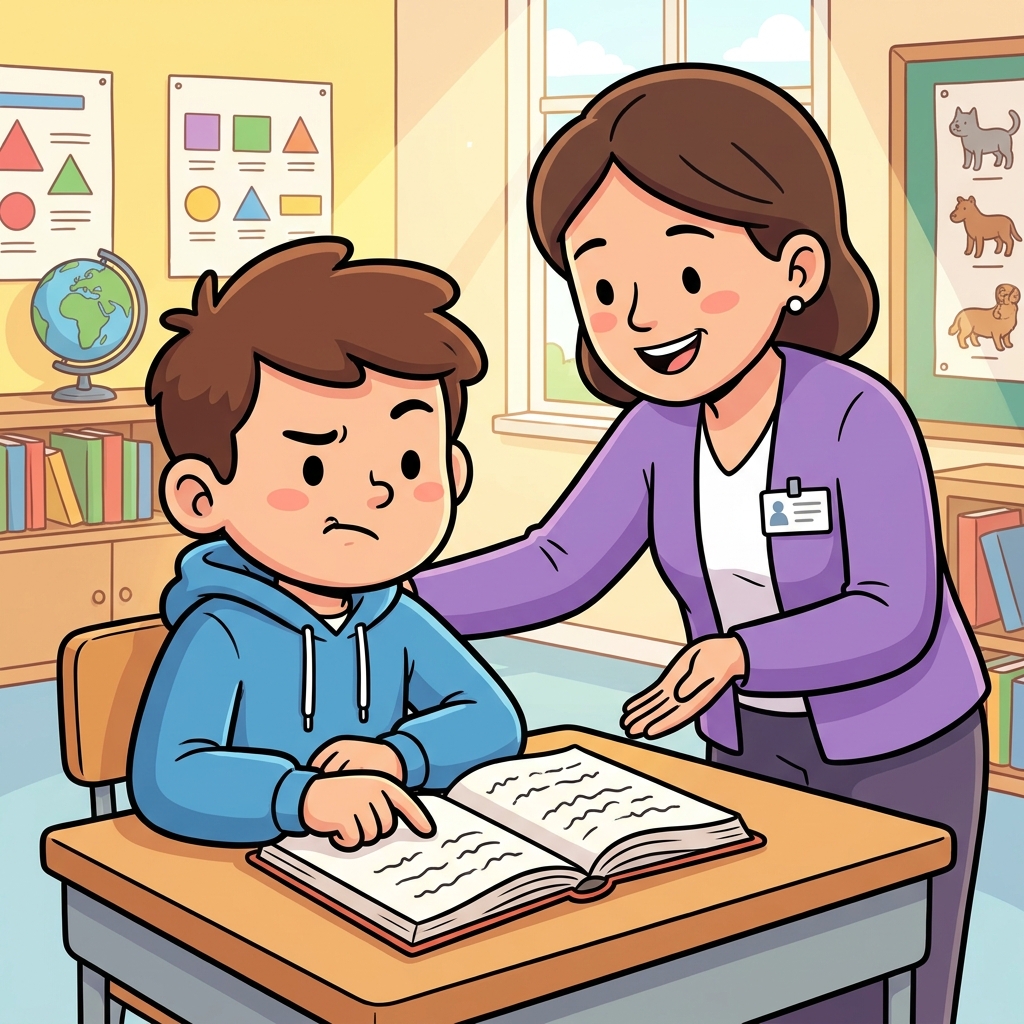
Developing the ability to decode unknown words is a fundamental skill for young readers, particularly when they encounter informational texts. This kindergarten English language arts lesson focuses on building that capacity through practice and support. By learning to stop when a word is unfamiliar and seeking its meaning, students build the foundational skills necessary for their academic growth and independent reading.
Keeping word discovery on track
This kindergarten English language arts lesson does not try to teach every complex vocabulary word in the dictionary or replace your direct instruction on phonics. Instead, it offers a focused way to practice the specific skill of stopping when we encounter a word we do not recognize and finding out what it means. When we are racing to cover our state-mandated curriculum, vocabulary work often gets pushed to the sidelines. This is a real shame because the way a five-year-old learns to ask about an unknown word is the foundation for all the reading they will do for the rest of their lives.
Students in West Contra Costa Unified, Stockton Unified, Glendora Unified, and Madera Unified all work toward these same requirements, but the pace can be unforgiving. If you have fallen a bit behind or have a student who missed the week of foundational practice, Learning New Words is a manageable way to get that specific content in front of them without demanding an hour of your direct supervision. It is straightforward and fits well for a quick intervention, a student who needs to catch up, or even a day when a substitute teacher is managing the room.
What the lesson actually asks students to do
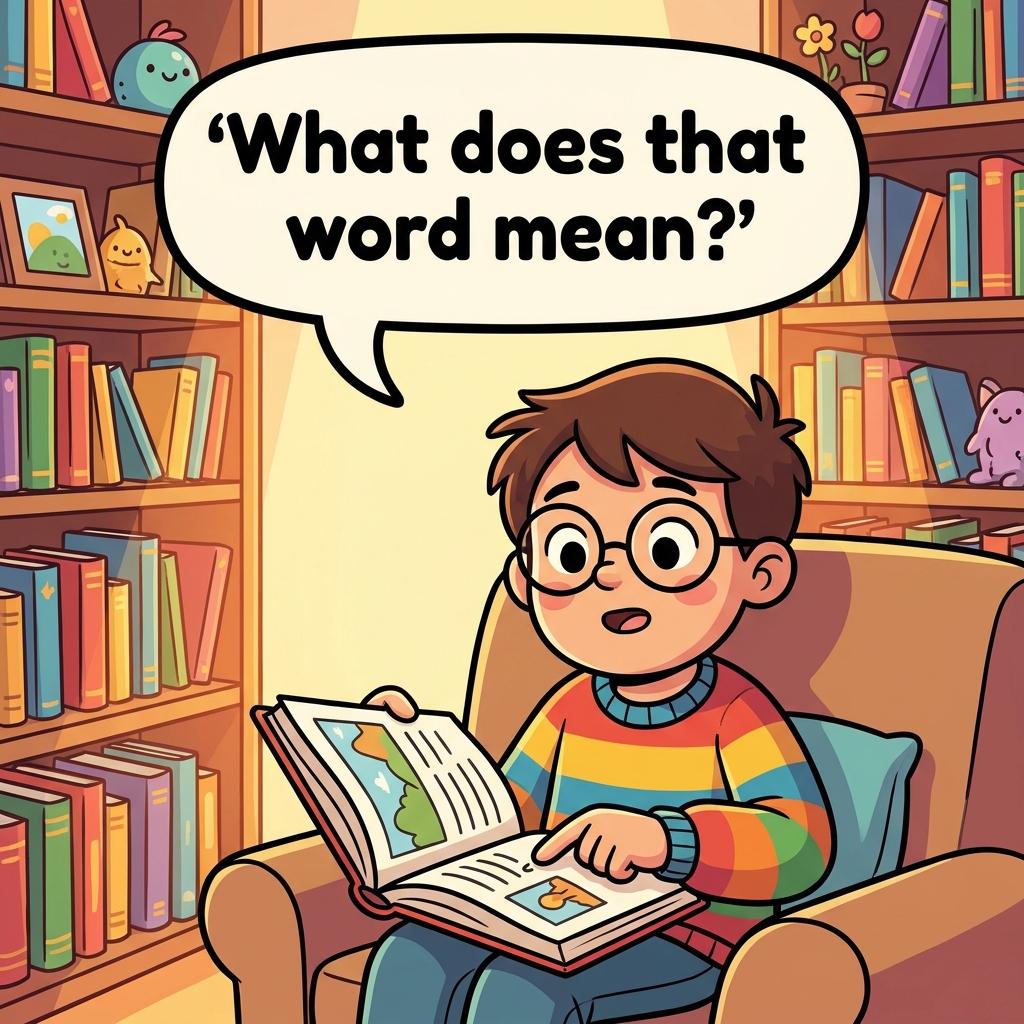
The core objective here is simple and direct: I can find the meaning of words I do not know. The lesson walks students through the process of identifying a word that is unfamiliar and then utilizing the surrounding text or pictures to decode its meaning. It is a kindergarten vocabulary lesson that respects the developmental reality that children need support and prompting to realize that they have the agency to stop and ask for help when a word stumps them. They engage with examples that prompt them to stop, look at the clues provided by the informational text, and ask an adult or a peer for clarification if the meaning remains elusive.
The lesson centers on the language of informational text. It does not treat words as isolated items to memorize but as pieces of information that help the student understand the world around them. When a kindergartener encounters a tricky term, the lesson encourages them to use the visual aids and context clues provided in the text. This is a vital habit to build early because once they start reading longer passages, they will need this self-monitoring behavior to prevent them from skipping over critical words that define the entire meaning of a paragraph.
The standard at the heart of the work
The lesson is built to address CA.ELA.RI.K.4, which is the California-adopted standard asking for students to ask and answer questions about unknown words in a text with prompting and support. This standard falls under the Reading: Informational Text domain and the Craft and Structure cluster. It is not just about identifying a word that looks funny; it is about having the curiosity and the tools to make sense of it. The standard also includes additional expectations from the Grade K Language standards 4 through 6, which add a layer of depth by ensuring students are not just identifying unknown words but are actively building their range of general academic and domain-specific vocabulary as they move through the school year.
I have found that while the standard sounds manageable, students often try to plow through a book without stopping. They feel pressured to finish a page or a passage. This lesson is a great reminder for the class that reading is a process of thinking, not just a race to the final page. It forces them to slow down, point to a word, and actually voice the fact that they need help.
Where students slip
The biggest hurdle I see with this standard is student reluctance to admit they do not know a word. Some children fear they will look less intelligent if they speak up. This is where the digital lesson excels: it provides a low-stakes, safe environment to practice that interaction. It shows them that asking about a word is a strength, not a weakness. When a student uses this lesson, they are rehearsing the social and cognitive moves required for a deeper conversation with you later.
If you have a student who is struggling with self-advocacy or who seems to be guessing at meaning without checking their work, assign this as an independent activity. It acts as a bridge between your whole-class reading and the student’s own internal monologue as they look at a page. Use it for a quick attendance recovery task or for a student who needs extra practice before they move on to more complex texts. It is not designed to replace your library of books or your read-alouds, but it gives you a clean way to ensure the foundational skill is locked in for everyone.
Related lessons

Being a Good Writer, Teaches fundamental skills for becoming a more effective writer
New Words and Word Parts, Focuses on identifying parts of words to build vocabulary

Learning to Write About Our World, Helps students express their observations through written language