

It is common for 6th grade science teachers to struggle with how to introduce the concept of evolutionary relationships through skeletal remains.
When you start your unit on biological evolution, you want a clear way for your students to move beyond simple memorization. The Comparing Anatomy to Understand Evolution lesson provides a straightforward path to help them visualize how scientists use bone structures to trace ancestry. By the time students finish this 45-minute block, they should understand why a sea lion flipper and a harbor seal limb share internal bone arrangements.
What the lesson actually asks students to do
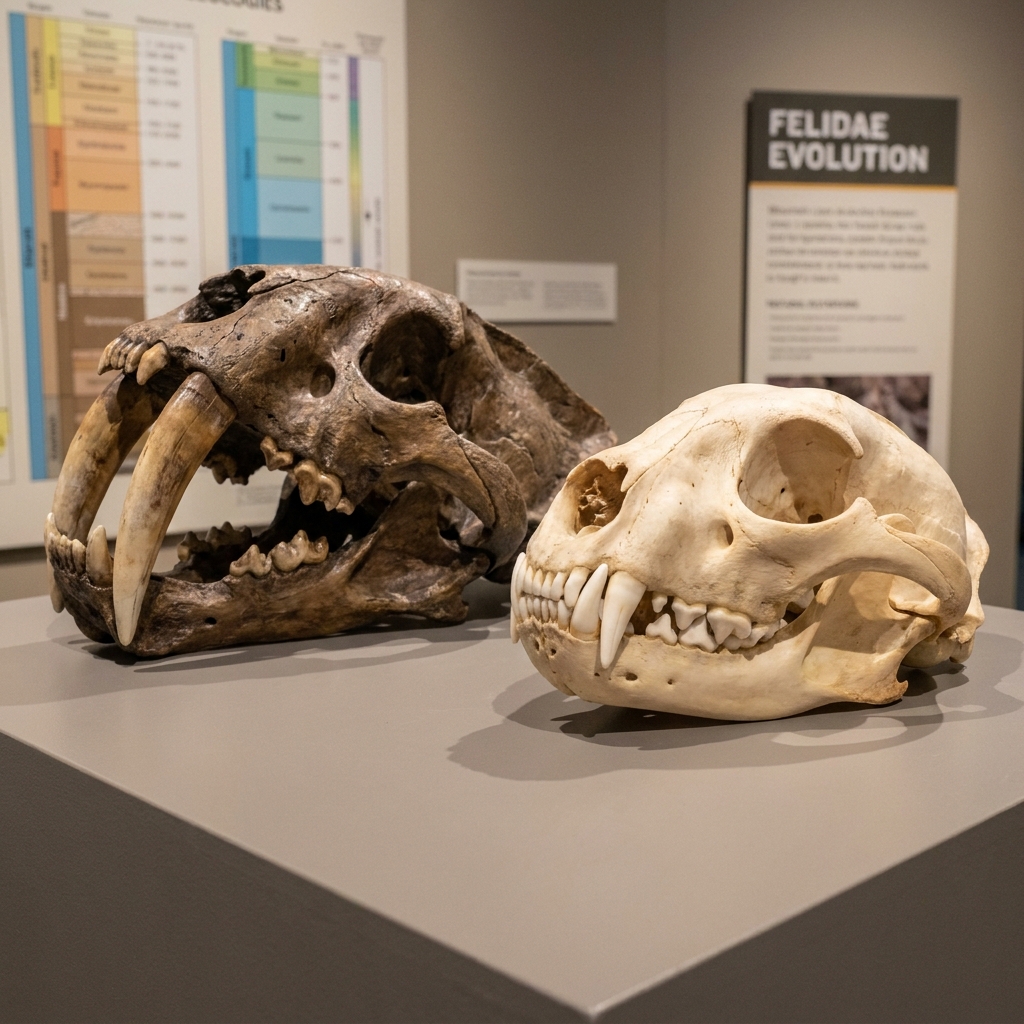
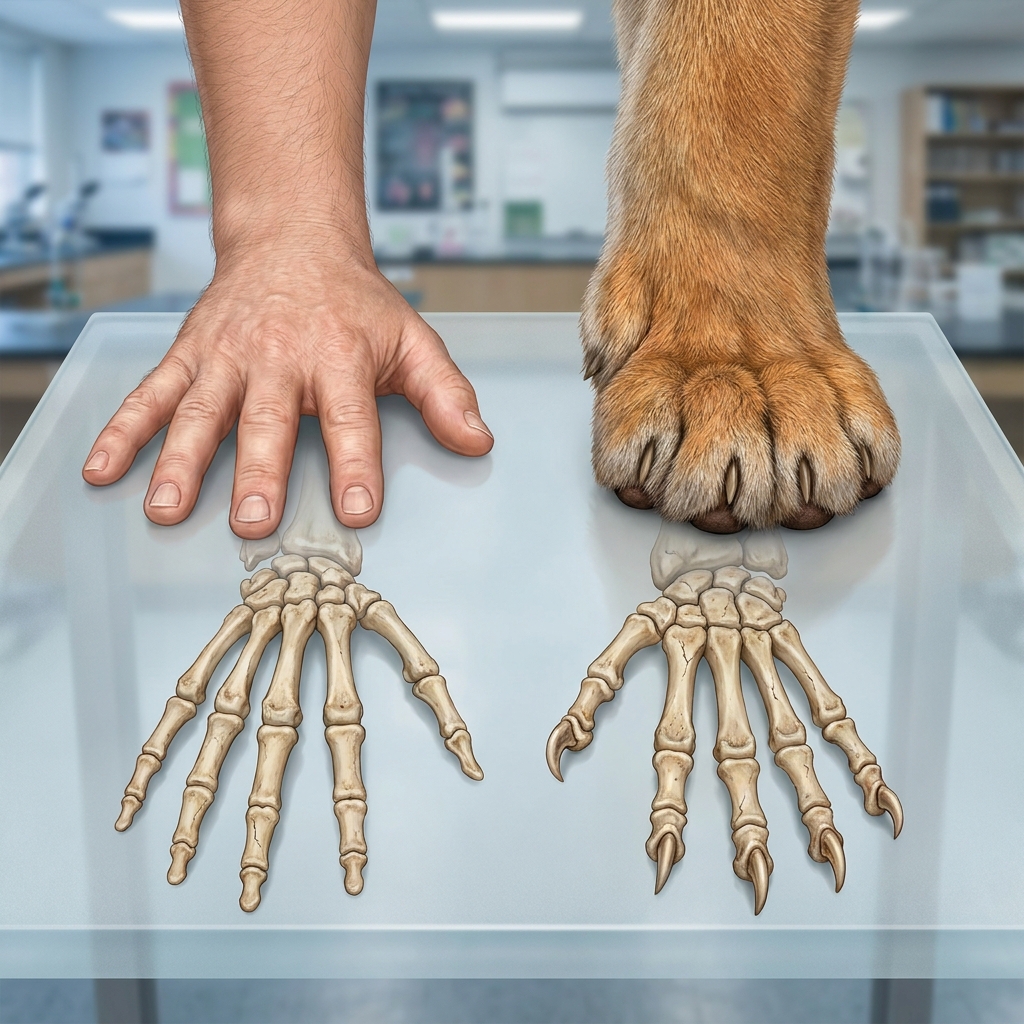
This middle school evolutionary anatomy lesson focuses on evidence-based explanation. Students spend their time analyzing the shapes and positions of bones to infer relationships between organisms. The material uses concrete examples like the extinct Smilodon and the modern mountain lion to illustrate how large canine teeth and jaw structures indicate shared ancestry. It also introduces two key vocabulary terms: homologous structures and analogous structures. Homologous structures are defined as body parts in different species that have a similar internal bone structure because they were inherited from a common ancestor. Conversely, analogous structures perform similar functions but lack the shared internal bone structure of a common ancestor.
This material fulfills CA.MS-LS4-2. This standard, which is the California-adopted standard, asks students to apply scientific ideas to construct explanations for anatomical similarities and differences among modern organisms and between modern and fossil organisms. This standard remains the same whether you teach in Sweetwater Union High School District, San Juan Unified, San Gabriel Unified, or Piedmont City Unified. Because California uses an integrated model for middle school science, this work is contextualized with local phenomena, such as shark teeth found in the Temblor Formation, which acts as a chronological map of past life in our state.
Where students slip
The primary area where I see students lose focus is the distinction between homology and analogy. They often assume that if two animals move through water in a similar way, they must be closely related. When you observe the guided practice section on shark teeth, ask your class to pause and identify why the internal bone arrangement is the deciding factor, not just the external function. This is the moment where students move from observation to scientific inference. The lesson works well as a whole-class assignment, but I have also used it for independent study when a student has missed the week of instruction. It provides enough scaffolding that a student can work through the comparison of the mountain lion and Smilodon skeletons without needing constant check-ins.
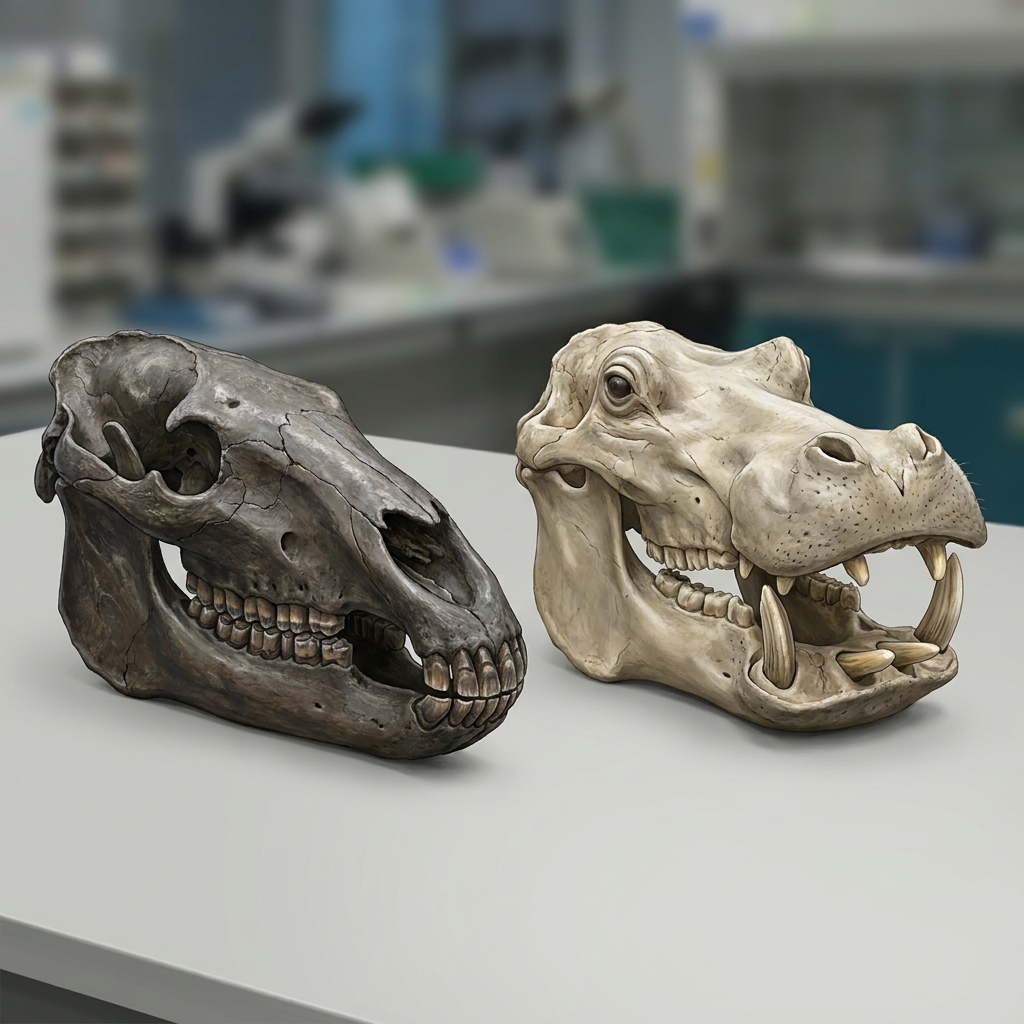
I find that the strongest part of this content is the connection to the California fossil record. It gives the students a sense of place. When they read about fossils in their own state, they start to view the geological archive of rock layers not just as a list of facts, but as a map of how species have changed over millions of years. If you need a substitute day activity or an intervention piece to solidify the concept of common descent, this is a solid choice. Just watch for the tendency to jump to conclusions before analyzing the bone data. Remind them that the bones are the evidence, and their explanation must be built on that evidence alone.
Related lessons

Resource Availability and Ecosystem Populations, Studies how resources affect the size of animal populations
How Food Powers Your Body, Explains how animals convert food into usable body energy

The Building Blocks of Life, Introduces the basic cellular structures found in all organisms