

When we look at our eleventh grade English curriculum, the move toward complex informational text can often leave students feeling untethered from the material. If you have been looking for a way to ground those heavy readings in concrete causality, I found that Analyzing Historical Causation and Impact provides a very clear path forward. It is a solid choice for an independent study module or as a supplemental activity when a student misses the regular seminar.
This lesson centers on the primary requirement of CA.ELA.RI.11-12.3. This standard asks students to analyze a complex set of ideas or a sequence of events to explain how specific individuals, ideas, or events interact. The California-adopted version adds an expectation that students evaluate various explanations for these actions, determining which accounts best fit the textual evidence while acknowledging where the text leaves matters uncertain. Teachers from Oxnard Union High School District, Fremont Unified, Mountain Empire Unified, and Chawanakee Unified all use this same standard to bridge the gap between simple reading comprehension and true historical analysis.
The lesson structure and historical focus
The arc of the lesson starts with a simple premise: understanding history requires looking at how leaders and their specific choices ripple out to change the world. It uses the rebellion of the 25 barons against King John as a starting point to illustrate this idea. By moving from this specific example to the broader concept of causality, students see how individual agency drives historical change before they tackle the more challenging texts in your syllabus.

You will see three terms defined early on: causation, defined as the relationship where one thing leads to another, historiography, the study of how history is written, and evidence, which refers to the specific details or facts from a text that support an interpretation. These are the tools students need to work through the reading informational text lesson and succeed in their independent analysis.
Applying the skill to major events
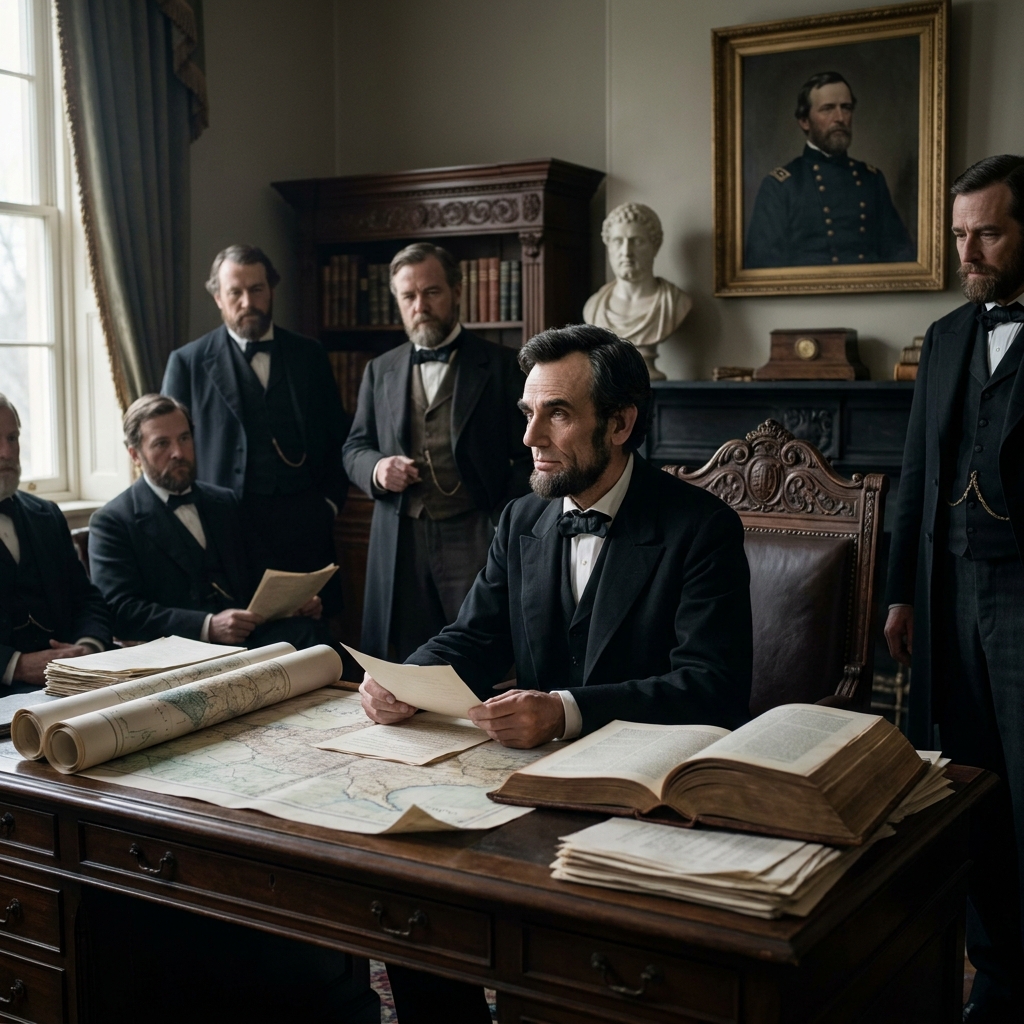
The lesson moves into a worked example involving Abraham Lincoln and the American Civil War. It does a nice job of highlighting how Lincoln’s views on emancipation were not static. The text tracks his shift from prioritizing the preservation of the Union to his later realization that ending slavery was a moral and strategic necessity. This helps students move away from seeing historical figures as one-dimensional icons and start seeing them as actors making decisions in a fluid, changing environment.
I appreciate how the guided practice section brings this back to the present context by focusing on the 19th Amendment. Students have to look at how suffragette leaders used activism to shift public policy. This allows them to apply the same critical lens they used on the Civil War example to a more modern political struggle. If you have a student who missed the week or needs intervention, this specific sequence provides enough scaffolding that they can work through it without needing constant input from you.
Why this matters for your students
The real value here is the closure. The lesson concludes by connecting this work to their personal lives. It argues that understanding causation helps students interpret news and evaluate political arguments in their daily lives. By learning to look for the evidence that connects a specific action to a broader outcome, they are gaining a survival skill for media literacy.
The standard also incorporates CCSS.ELA-LITERACY.RI.11-12.3, which echoes the core expectation that students must identify how ideas and events interact over the course of a text. While I find the lesson quite effective for most students, be aware that some may struggle with the nuanced distinction between a correlation and a true cause. It is worth spending a few minutes ensuring they understand that specific pieces of evidence must exist in the text to support their claims. It is a straightforward approach that respects the students’ intelligence and hits the standards right on the mark.
Related lessons

Analyzing Word Meaning and Refinement in Challenging Texts, Focuses on identifying precise language and structural word choice in complex texts

Analyzing Interacting Central Ideas, Teaches students how separate ideas develop and influence each other throughout text
Evaluating Arguments in U.S. Advocacy, Covers assessing the strength and logic of claims in persuasive writing