

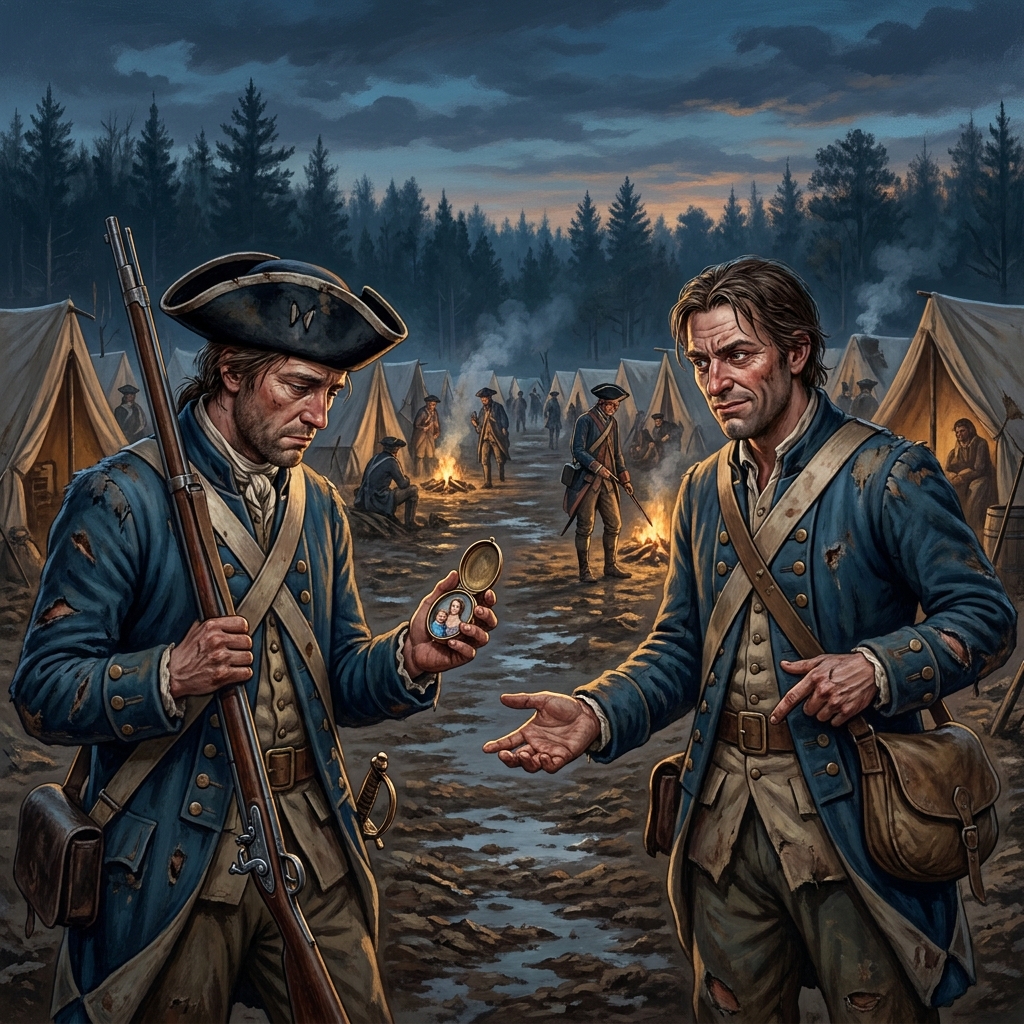
The California standard CA.ELA.RL.5.3 asks students to “Compare and contrast two or more characters, settings, or events in a story or drama, drawing on specific details in the text (e.g., how characters interact).” That sounds clear enough on paper, but it really demands that a student moves beyond just noticing plot points. It requires them to hold two things in their head at once, identify the bridge between them, and then use that observation to build an argument about the story’s deeper meaning. This is a tall order for ten and eleven-year-olds who are often just trying to follow the narrative flow.
In 5th grade English Language Arts, this exact standard is taught across California, from the classrooms of West Contra Costa Unified and San Ramon Valley Unified to those in Palo Verde Unified and Eureka Union School District. It is a benchmark skill that teachers use to push students toward higher-level analysis. When you use Comparing Characters and Settings, the lesson provides the scaffolding necessary for students to stop looking at characters as static images and start seeing them as reactive participants in a plot.
How the lesson builds analytic depth
The core of this lesson is rooted in the idea of character interaction. Rather than just asking students to list traits in a bubble map, the material explains that interaction is the give-and-take between characters, where one person’s words or actions directly trigger a response from another. By observing how these exchanges evolve, students start to see character relationships as dynamic things. The lesson uses a concrete worked example involving the American Revolution, contrasting two soldiers: one who fights to protect his home and another who fights to earn a paycheck. This example makes the abstract concept of motivation tangible. Students can easily grasp that one is driven by familial love while the other is driven by financial necessity.

The lesson asks students to define three key vocabulary terms: Compare, meaning to look for similarities; Contrast, meaning to identify differences; and Evidence, which is the specific dialogue or action from the text used to support an analysis. Having these terms defined at the start helps students move away from vague summaries and toward using the text as proof for their ideas. You will find that this material works quite well for a whole-class assignment where you are just beginning your unit on literature, or for a student who missed the week and needs a quick way to catch up on the foundational expectations for literary analysis.
Where students slip
Most 5th graders are pretty good at identifying how characters are different, but they often struggle to explain why those differences matter to the story as a whole. They might tell you Soldier A is nice and Soldier B is greedy, but they stop short of linking those traits to the plot’s development. This is where CA.ELA.RL.5.3 really hits home. The lesson includes a guided practice section that forces students to focus on how characters react to a specific conflict. By narrowing the focus to how a character treats another in a specific scene, the lesson prevents the analysis from becoming too broad.
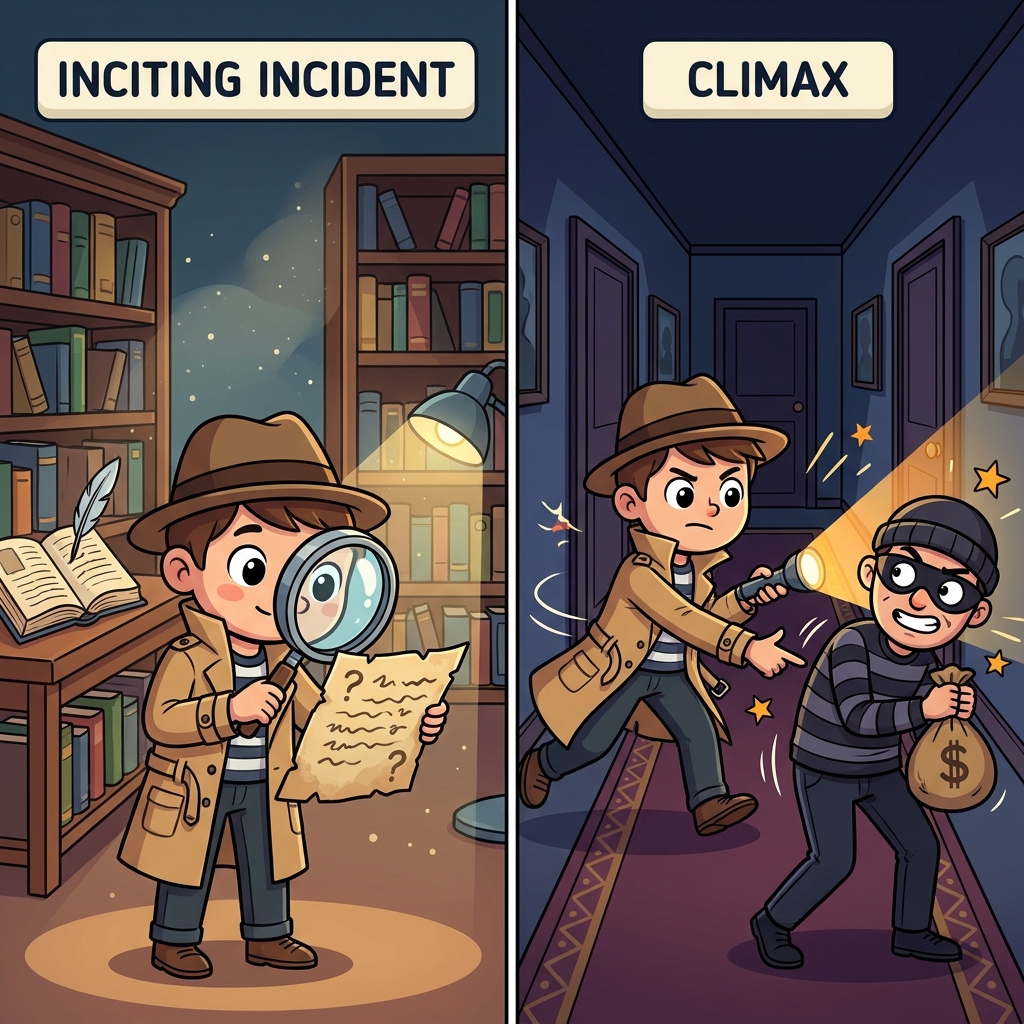
I find this useful for intervention settings as well. When a student is stuck in a loop of retelling the story, this lesson acts as a circuit breaker. It insists that they stop the summary and instead pull out a specific action to show the similarity or difference. It is also a solid choice for a substitute day when you need students to continue their progress on grade-level standards without a massive prep burden. Just keep an eye on them during the guided practice; some students will try to jump straight to their conclusions without citing the actual evidence from the text. Remind them that the evidence is the only thing that makes their comparison hold water.
Related lessons

Understanding Figurative Language and Word Meanings, Teaches students how to interpret figurative language and word meanings
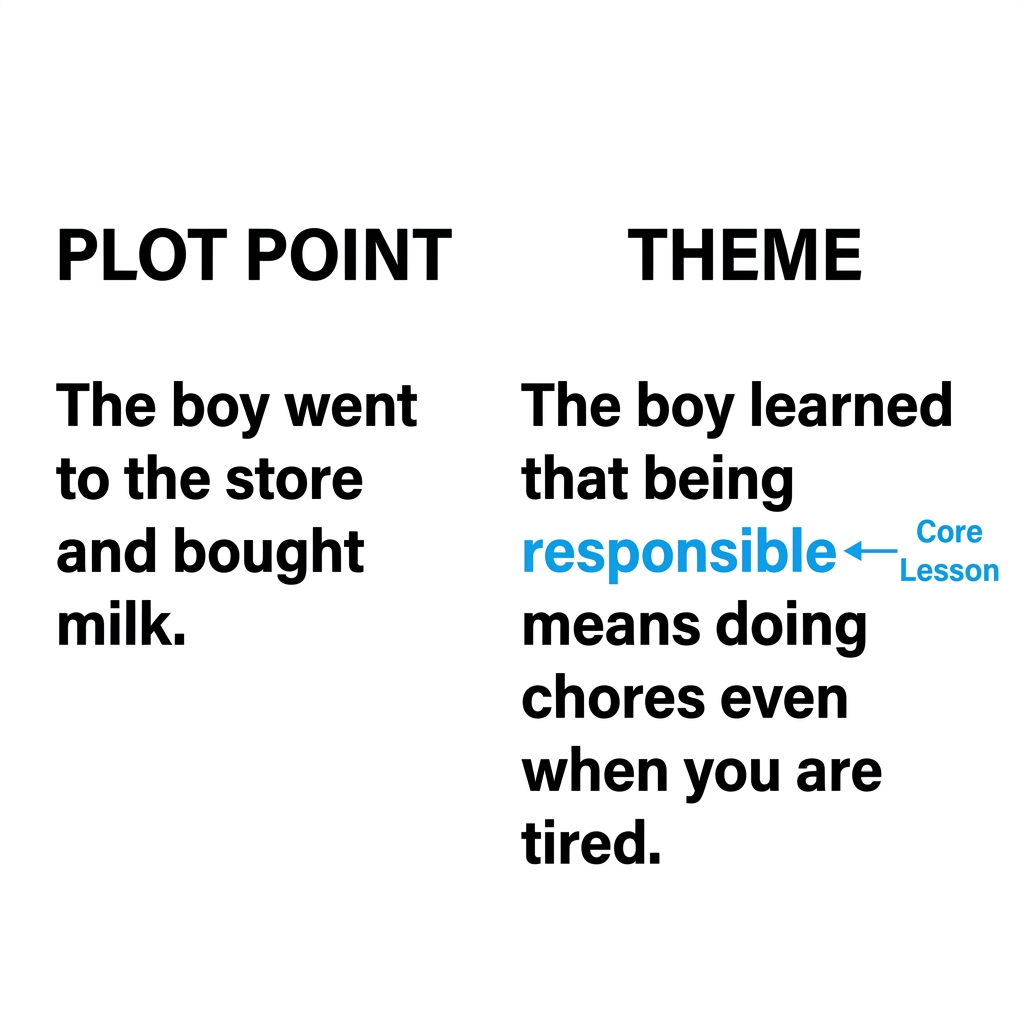
Finding the Heart of a Story, Guides students toward identifying themes and central story ideas

Understanding Stories: Characters and Plots, Explains how character actions shape the overall story plot