


This high school government lesson on the subject of Civics does not attempt to be a deep sociological inquiry into every theory of representative government. Instead, it focuses on the practical mechanics of how a senior in high school can actually influence a policy decision. It strips away the abstract rhetoric often found in textbooks and lands squarely on the actions individuals take to ensure the government listens to their concerns.
If you are coordinating a high school government class for a student who needs to recover credits or an independent study pupil who missed the unit, Ways Citizens Participate in the Political Process is a straightforward way to address the material. It runs about forty-five minutes and provides a clear path for students to demonstrate they understand the difference between voting in a primary and filing a legal challenge.
What the lesson actually asks students to do
The core of this high school government participation lesson is about categorization. Students work through three specific modes of engagement: electoral participation, institutional advocacy, and direct civic action. It is useful for seniors because it forces them to differentiate between activities like running for office, which is electoral, and activities like picketing or petitioning, which they must correctly identify as direct civic action.

The lesson uses a specific scenario to explain institutional advocacy: meeting with a legislator to change a law. It frames this as a way to bring citizen knowledge directly into the legislative process, which is a detail I appreciate because it helps students see lobbying not as a mysterious or corrupt activity but as a functional part of the system. The guided practice moves the student into a town hall setting where a campaign committee works to improve voter turnout. By the time they finish, the student should be able to articulate why active participation is necessary for democratic accountability, especially when leaders are tempted to ignore the will of the people.
Aligning with state standards
The lesson maps directly to CA.HSS-PoAD.12.6.4. This California-adopted standard requires that students describe the means citizens use to participate in the political process. The standard explicitly lists actions such as voting, campaigning, lobbying, filing legal challenges, demonstrating, petitioning, and picketing. These concepts are exactly what educators in West Contra Costa Unified, Fullerton Joint Union High School District, Banning Unified, and Fowler Unified teach when they cover the principles of American democracy.
I find that many students assume the process begins and ends with voting. This standard insists they look wider. It is necessary that students understand the nuance between a legal challenge and a demonstration. While the material is concise, it provides enough scaffolding for a student to grasp that each of these methods carries a different weight in our current political climate. If a student is struggling with the concept of institutional advocacy, the lesson examples provide a necessary bridge between theoretical government and the way things actually function in reality.
Where this fits in your schedule
You can use this material for more than just a typical whole-class lesson. Because it is self-contained and takes less than an hour to complete, it works perfectly for a student who missed the main unit and needs a quick way to catch up without sitting through a week of missed lectures. It also functions as a reliable stand-alone assignment for a substitute teacher who needs something substantive for a seniors-only class. If you have students in independent study, the prompt-and-response format provides a clean record of what the student learned, making your job as the instructor much easier when it comes time to grade their progress.

The language is accessible, and the scenarios are realistic enough that students do not feel like they are reading a dry legal brief. One caveat is that the lesson focuses heavily on definitions and identification. If you want students to debate the merits of lobbying versus demonstrating, you will need to add a follow-up discussion or a writing prompt. However, as a foundational tool to ensure they meet the standard requirements, it does the job with minimal fluff.
Related lessons

Comparing Government Systems, An overview of different types of government and political structures
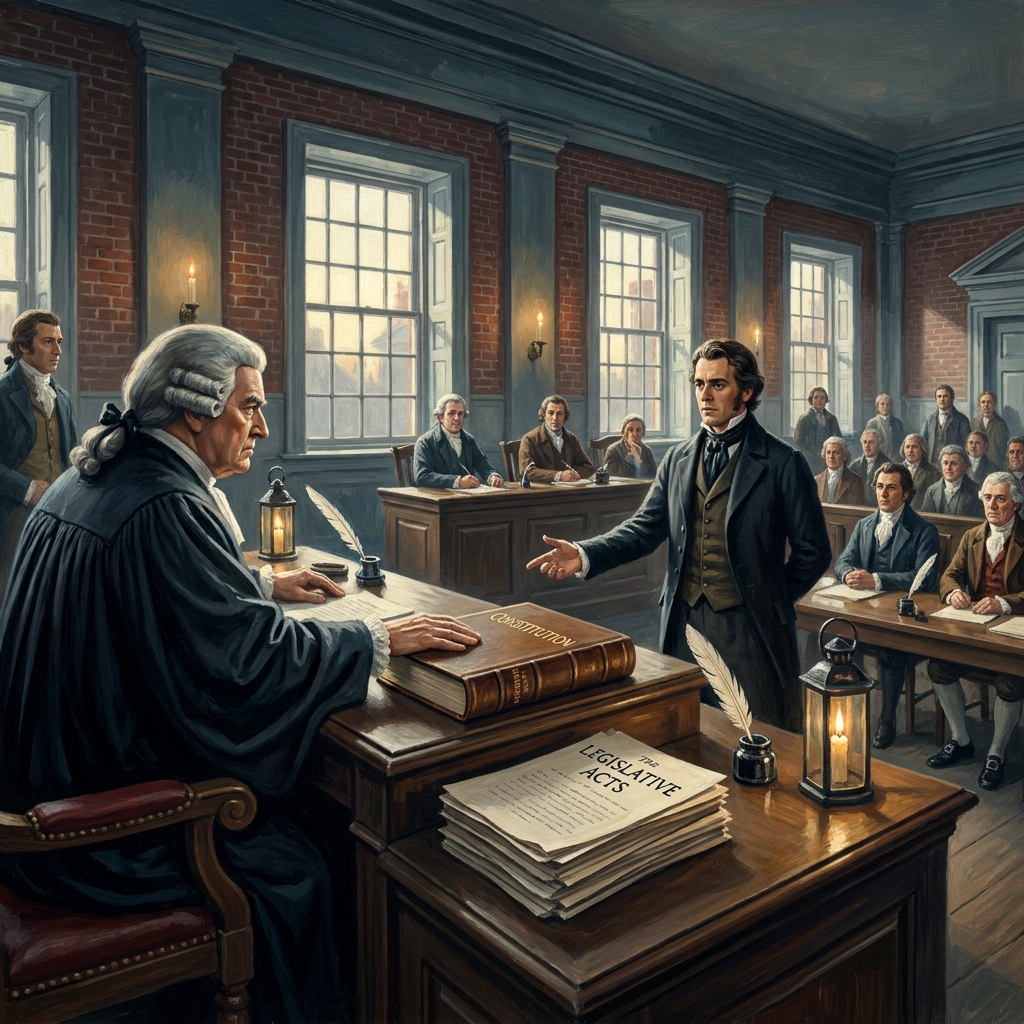
Interpreting the Constitution: Judicial Power and Federal Supremacy, The role of the judiciary in interpreting constitutional federal power

The Balance of Rights and Responsibilities, Examining the relationship between individual rights and civic legal duties