


Introducing students to algebraic variables requires a bridge between their past work in arithmetic and the abstract thinking required for higher mathematics. When educators frame these new concepts through familiar scenarios, students gain the confidence to translate words into mathematical phrases. This transition is essential for mastering the early components of middle school algebra.
How students get stuck on abstract variables
Students often hit a wall when we stop asking for a single, static answer and start asking for a mathematical phrase. They want to solve for a specific digit, but the moment you introduce a letter, their brains start looking for an equals sign that might not exist yet. This disconnect is why Using Variables to Represent Numbers is a helpful starting point for the Expressions and Equations unit. It bridges the gap between arithmetic and algebra by defining a variable as a symbol that acts as a placeholder.

The lesson opens with a merchant scenario to remind the class of familiar multiplication. From there, it gently shifts to the definition of a variable as a letter or symbol that represents an unknown or changing value. By grounding the theory in something as relatable as using ‘a’ for a student’s age, the material respects the fact that some kids just need that concrete anchor before they can handle the abstraction. It is the same standard taught in Corona-Norco Unified, Elk Grove Unified, Redwood City Elementary School District, and Livingston Union School District.
Building expressions from real-world logic
When you are looking for a 6th grade algebra lesson, you want something that builds confidence before adding complexity. The guided practice moves the students to a lemonade stand scenario. They are asked to write an expression for earnings when cups sell for three dollars each. Because it forces them to translate words into a mathematical phrase, they learn that an expression is simply a phrase containing numbers, variables, and operations.

This work aligns with CA.MATH.6.EE.6, which is the California-adopted standard asking students to write expressions to solve real-world problems. The standard acknowledges that a variable can either be a specific unknown or a value that changes within a specified set. Whether a student is working in a warehouse scenario tracking inventory or just calculating cup sales, the goal is to make the relationship between quantities visible on the page.
I find this lesson works best for a whole-class introduction to the topic, but it also serves well as a catch-up assignment for a student who missed the week of initial instruction. It does not try to teach everything at once. It stays focused on the transition from arithmetic to algebra. My one caveat is that students who are already comfortable with mental math might try to skip the writing of the expression entirely to jump to a result. You will want to watch for that. The lesson forces them to slow down and describe the logic using the letters and symbols provided.
Since the lesson only takes about 45 minutes, it fits easily into a standard block. It covers the core concept of variables representing unknown quantities, which is the foundational work for the entire year. If you have students struggling to see the point of this, the warehouse example included in the content is perfect. It explains why managers use variables to track stock levels when they need to see how many items to order. That kind of concrete professional application usually snaps the class back to attention. Use this whenever your students need to move beyond simple arithmetic into the formal language of expressions.
Related lessons

Understanding Exponents and Evaluating Expressions, Covers exponential notation and the order of mathematical operations
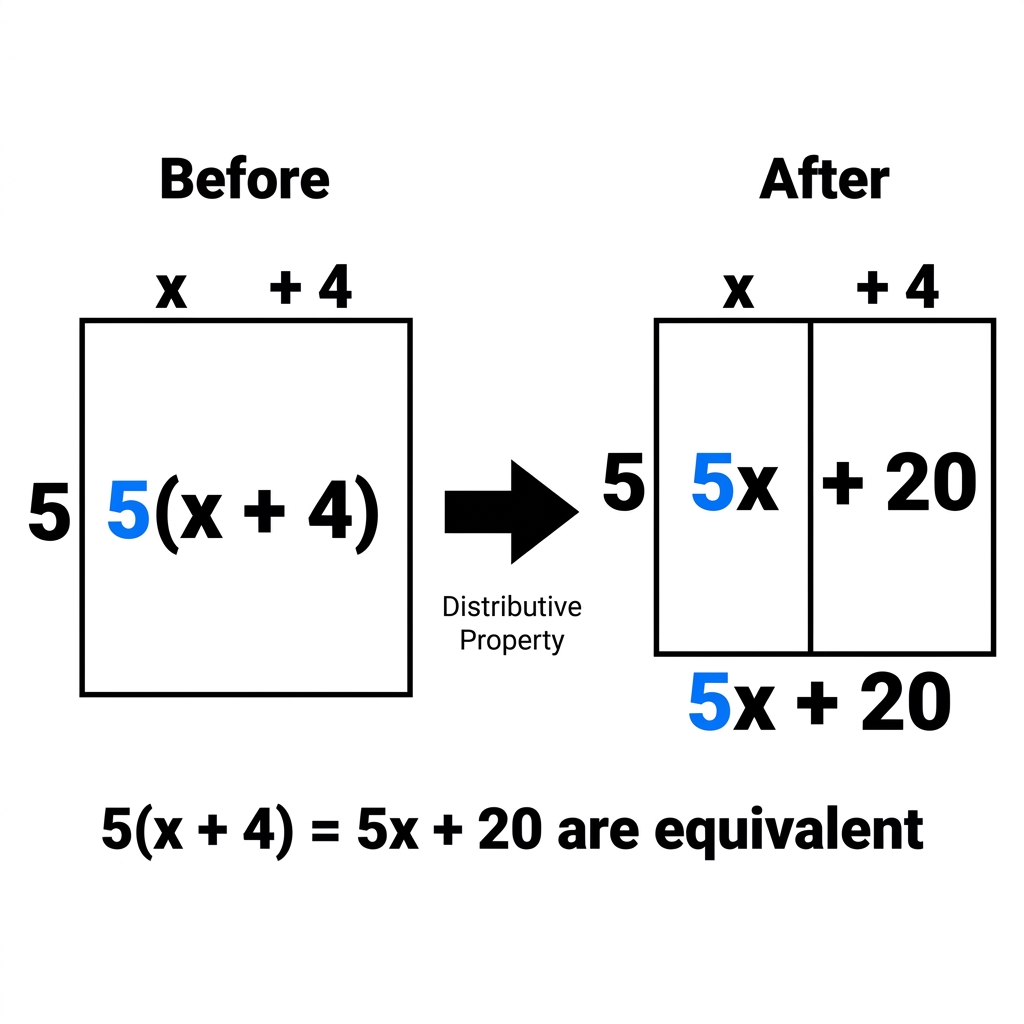
Understanding Equivalent Expressions, Teaches how to simplify and identify matching algebraic expressions
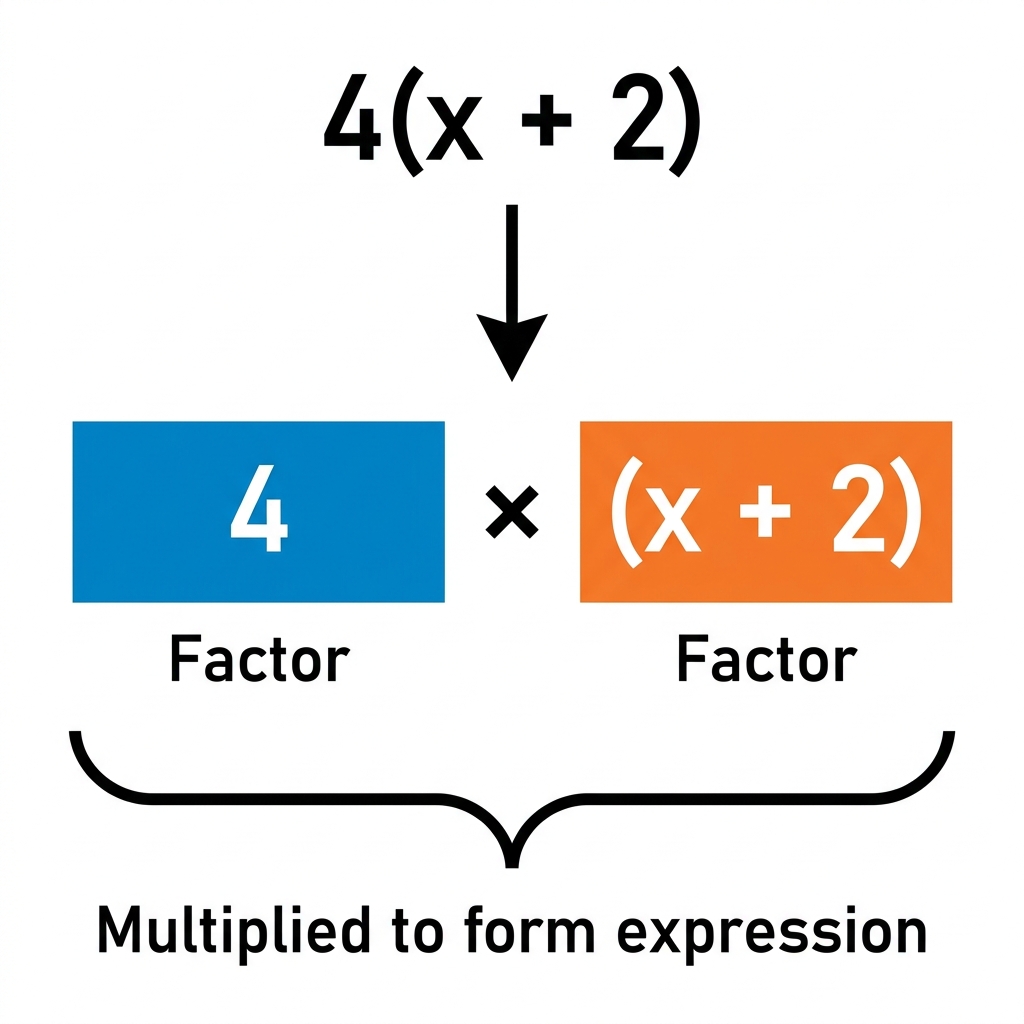
Understanding Algebraic Expressions, Explains the foundational structure of basic variable based equations