


This lesson is not about forcing students to write longer papers or adding more pages to their notebooks. It does not ask them to summarize every plot point they read. Instead, Using Textual Evidence in Writing focuses on a single, vital skill: grounding an argument in the actual words of an author. For eighth grade English language arts, this is the bridge between stating an opinion and constructing a valid piece of analysis.
We all have students who write that a character feels sad because the story says so, but they never quite show us where the story makes that point. They lack the practice of connecting their ideas to the text. This lesson addresses that gap by defining an analytical claim as a statement that expresses an interpretation or argument about a text, and then showing exactly how to support that claim with textual evidence, which is the specific words or facts from a text that prove a point.
When we look at using textual evidence in writing, we are talking about a fundamental requirement for middle schoolers. The lesson aligns with CA.ELA.W.8.9, which is the California-adopted standard for drawing evidence from literary or informational texts to support analysis, reflection, and research. This standard asks students to do two things. First, it requires them to apply grade eight reading standards to literature and literary nonfiction. Second, it mandates that they apply the same reading standards to informational texts. Whether your students are at Santa Ana Unified, San Ramon Valley Unified, Rowland Unified, or Merced City Elementary School District, they are all working toward this same expectation of building an argument supported by proof.
What the lesson actually asks students to do
The material begins with a straightforward reminder that we make claims about characters all the time, but those claims only hold up if we have proof. It sets the stage with a clear example. If a student claims the mood of a passage is eerie, they must point to the author writing that the forest was silent and the shadows grew long. The lesson explains that this quote works because it describes a dark, quiet setting. It connects the dots for students so they see that the evidence is not just an extra detail; it is the anchor for the interpretation.

The guided practice moves into a passage about a character who changes his mind about a journey. This specific setup forces students to find the exact moment of that change and select the words that prove their interpretation of why it happened. It is the kind of practical, focused practice that works well for a whole-class assignment or for a student who missed the week and needs to catch up on foundational writing skills. I also find this to be an effective tool for a substitute day because the instructions are clear and the task is manageable within forty-five minutes.
Why this matters for your students
I appreciate the lesson’s rationale. It points out that using evidence is not just a school task. It matters in real life. When students read the news, they need to identify whether the author has facts to back up their claims. When they read instructions, they need to check if the steps are supported by the goal. It helps them make better decisions as consumers of information.

One limitation to keep in mind is that this lesson focuses on the mechanics of the claim and the evidence, not the full drafting of an essay. If you have students who struggle with transitions or structure, you will need to add those elements separately. However, as a standalone lesson on the art of finding and using evidence, it hits the mark. It does not waste time with filler activities or vague prompts. It asks students to read closely, pull out the evidence, and explain why that evidence supports their thought.
Using this in my own practice, I noticed that students often try to summarize the text instead of analyzing it. The vocabulary terms provided here help clear that up. Once they can define an analytical claim, they stop treating the assignment as a retelling of the story. They start treating it like a conversation where they are required to prove their case. For a student who needs a quick intervention to fix their writing structure, this is a clean, effective approach.
You can assign this for an independent study module or keep it as a backup for when you need to reinforce research and analysis standards. It is one of those lessons that provides a solid reminder that writing is not just about having an opinion. It is about the work you do to show that your opinion has roots in the text you are reading.
Related lessons

Organizing Digital Writing, Focuses on structuring ideas within a digital writing environment
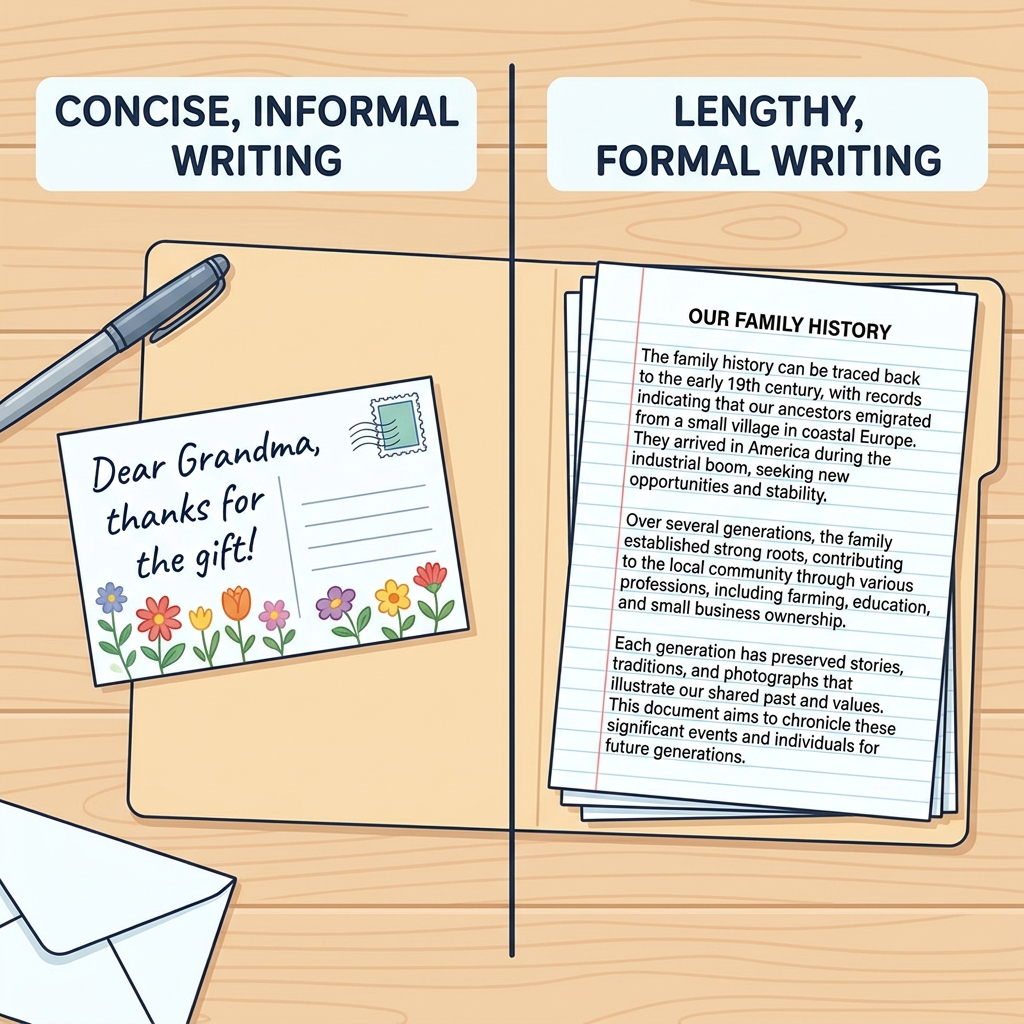
Adapting Your Writing for Different Tasks, Teaches modifying tone and style for specific writing requirements

Writing for Your Audience and Purpose, Covers tailoring written content for intended readers and goals