


When we teach the history of the United States, it is easy to get stuck in a narrative that stops at our own borders. However, for our eleventh-grade students in US History and Geography, the history of our country is inseparable from the history of our neighbors. The lesson United States and Mexico: A Century of Shared History provides a way to broaden that perspective through the concept of interdependence.
This lesson is designed to address the California state standard CA.HSS-11.9.7, which asks students to “Examine relations between the United States and Mexico in the twentieth century, including key economic, political, immigration, and environmental issues.” This is the exact same standard taught in classrooms across the state, from the Fullerton Joint Union High School District and Grossmont Union High School District to Washington Unified and Firebaugh-Las Deltas Unified.
Understanding the core concept
The lesson begins with a simple thought experiment that grounds the abstract idea of foreign policy in real world experience. It describes a fruit farm and a packaging warehouse that sign a contract to help each other succeed. This metaphor helps students see how nations function similarly. Interdependence is a relationship where two or more nations rely on each other to meet their economic, political, or social needs. I appreciate this approach because it moves the focus away from dates and into systems of collaboration that students can actually visualize.

Connecting history to current events
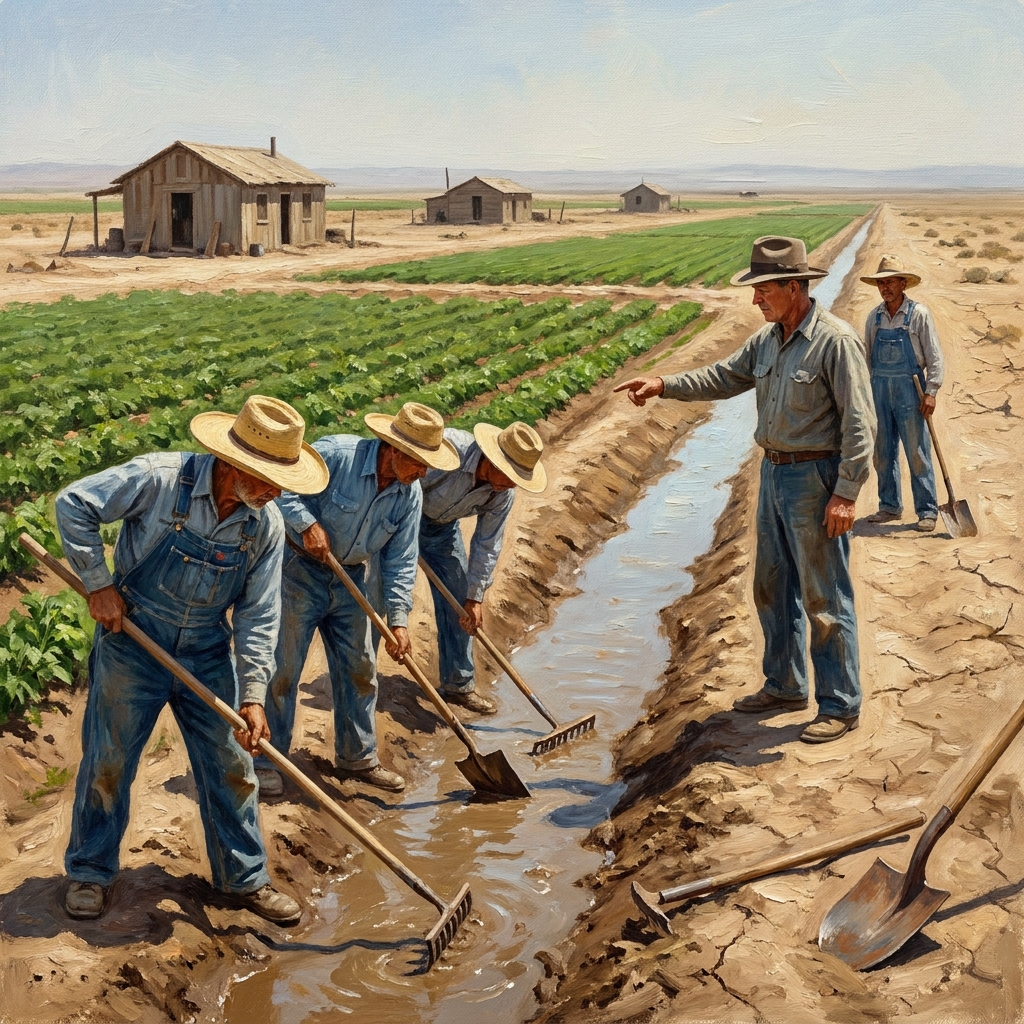
Once the foundation is set, the material introduces concrete examples of this reliance. The US History and Mexico relations lesson uses the Bracero Program of 1942 as a primary case study. Students learn about the legal contracts that brought Mexican workers to the United States during the war effort. It is a clear way to show how specific political needs led to shared economic activity. From there, the material guides students through the emergence of Maquiladoras in the 1970s and 80s. These manufacturing plants, located along the border, allowed for the assembly of goods using imported parts and Mexican labor. It is a practical study of how trade shapes borders.
Here is the vocabulary that helps define these shifts in the relationship:
- Bracero Program: A series of agreements starting in 1942 that allowed millions of Mexican men to work legally in the United States on short-term labor contracts.
- NAFTA: The North American Free Trade Agreement, signed in 1994, which reduced trade barriers between the United States, Mexico, and Canada.
- Maquiladoras: Foreign-owned manufacturing plants located along the United States-Mexico border that import materials duty-free to assemble goods for export.
- Interdependence: A relationship where two or more nations rely on each other to meet their economic, political, or social needs.
Classroom application and standard requirements
The lesson concludes by asking students to think about how these relationships affect their own lives today, from the food they eat to the goods they use. This makes the standard CA.HSS-11.9.7 feel less like a dry requirement and more like a tool for understanding their own world. The standard is part of a larger cluster that analyzes foreign policy since World War II, and this specific part of the curriculum is essential for showing students that voting and staying informed directly impacts the local economy.

As for logistics, I find this material works quite well for a substitute day or for a student who missed the week and needs a focused assignment to get back on track. It is self-contained enough for independent study but carries enough depth to spark a good classroom discussion if you have the time for it. The only caveat is that it is a dense forty-five minutes, so you might want to break it into two sessions if your students need more time to process the shift from wartime labor agreements to modern manufacturing trends.
Related lessons

Strategies of Civil Rights Advocates, Methods used by activists to pursue social and legal equality

Religious Intolerance in American History, Historical patterns of discrimination against various religious groups in America
Mexican Labor and the California Agricultural Economy, Impact of Mexican labor on the agricultural growth of California