

This is not a lesson that asks your students to become theoretical physicists overnight. You will not find complex calculus equations or long-form algebraic derivations for motion here. Instead, the lesson focuses on the core conceptual understanding that 6th grade science students need to visualize: how a push or a pull interacts with an object based on its physical heft. It is a straightforward, logical way to get students thinking like scientists who observe the physical world around them.
You can find the resources you need at Understanding Motion: Forces and Mass. It is designed to work well for a whole-class assignment, or it could be assigned to a student who missed the week to help them catch up on the physical science fundamentals. The lesson moves quickly through the definitions of force as a push or a pull and introduces the specific vocabulary terms students will use throughout the unit. These terms include mass, which is the amount of matter in an object that determines how much it resists a change in motion, and net force, which is the total amount of force acting on an object after all pushes and pulls are combined. It also defines acceleration as the rate at which an object changes its speed or direction.
What the lesson actually asks students to do
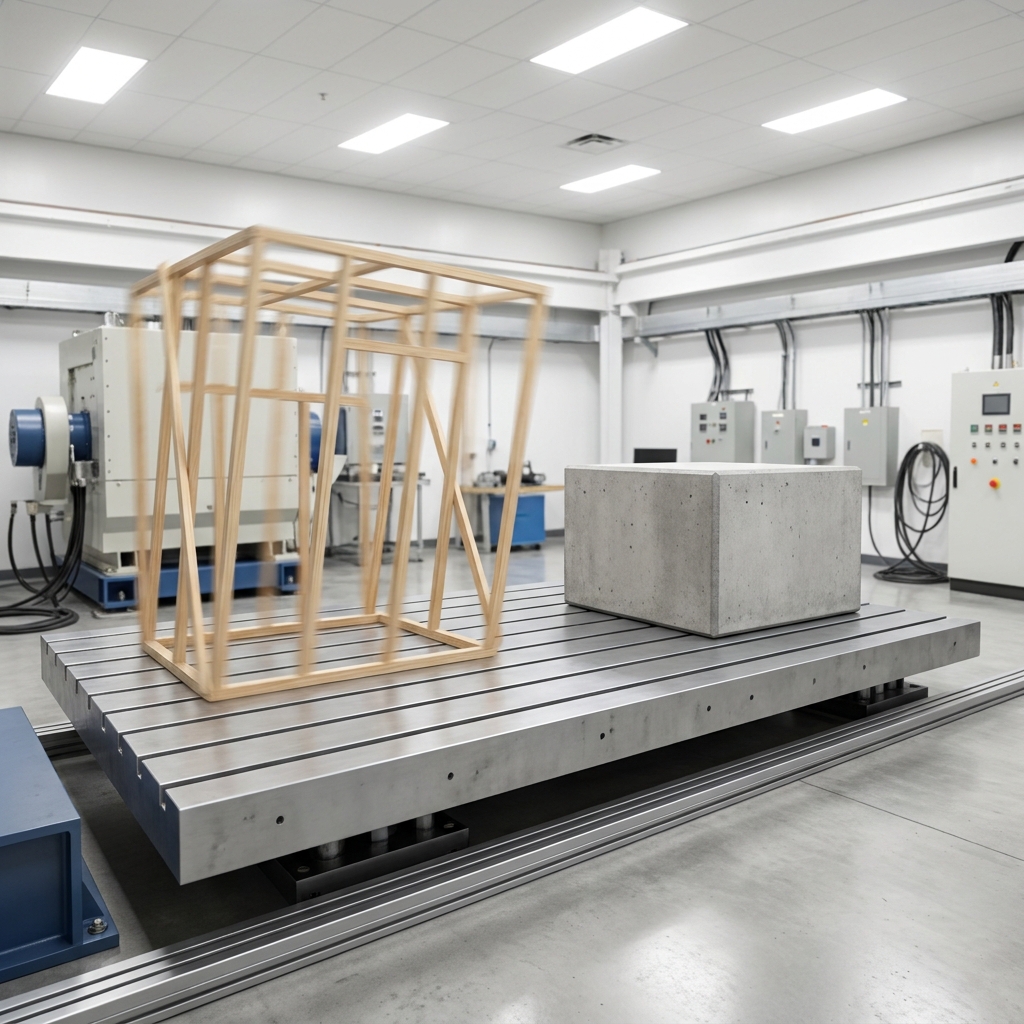
The core objective here is to get students to explain how total force and mass change an object’s motion. The lesson uses concrete scenarios to make these abstract concepts stick. For instance, it highlights how engineers design earthquake-resistant buildings by considering the mass of the structure and the forces that an earthquake will apply to it. One specific example provided is of a light wooden frame moving quickly during a simulated tremor, while a heavy concrete block moves much more slowly because its large mass resists the change in motion. This helps students visualize that more mass often requires more force to create the same amount of acceleration.

After seeing the building example, your students will apply these ideas during guided practice using a riverbed model. They imagine they are moving different amounts of sediment in a riverbed to see how mass affects movement. It is a practical exercise that forces them to think about variables. This 6th grade science lesson keeps the work grounded in observation, which is exactly what the California curriculum requires for this grade level.
Where students slip
The most common point of confusion is how students differentiate between weight and mass. They often want to talk about how heavy something feels rather than how much matter it contains. When you watch the class work through the riverbed model, look for those who struggle to see that mass is about resistance to change. If a student thinks that a heavier rock moves easier because it hits the ground harder, you have a perfect chance to intervene and clarify the difference between force application and an object’s inherent resistance.

This work serves the primary standard MS-PS2-2. This standard asks students to plan an investigation to provide evidence that the change in an object’s motion depends on the sum of the forces acting on the object and the mass of the object. Because California teaches middle school science using an integrated model that weaves physical, life, and Earth sciences together, this standard is contextualized with phenomena like seismic activity, which explains why the lesson focuses so heavily on earthquake-resistant building design. Educators across districts such as Sacramento City Unified, San Ramon Valley Unified, Ross Valley Elementary School District, and Western Placer Unified all teach this same standard to ensure that every student can predict how mass and force interact. The integrated model is a strength, but it means you must keep the focus tight on the physics principles during this 45-minute window.
When you use this material, encourage your students to sketch out their riverbed investigation before they start writing their explanations. Giving them a physical map to look at while they describe how the sediment moves helps bridge the gap between their intuition and the scientific rules of motion. If they can describe why the heavier sediment requires more force to move, they have mastered the core idea.
Related lessons

Electric and Magnetic Forces, Investigating how electric and magnetic fields influence object motion

Chemistry in Our Environment, Analyzing chemical properties and reactions within local ecosystems

Thermal Energy and Particle Motion, Connecting heat transfer to the movement of particles