

In 7th grade social studies, educators often seek methods to make the abstract power structures of the past feel relevant to a teenager. You are likely familiar with the challenge of explaining medieval hierarchies without losing the class in jargon. This post examines a lesson that grounds these systems in concepts students understand, like roles on a sports team, while addressing California state standards for middle school history.
Introducing the social structures of feudal Japan
In 7th grade social studies, we often struggle to make the abstract power structures of the past feel relevant to a teenager. You are likely familiar with the challenge of explaining medieval hierarchies without losing the class in jargon. The lesson The Warrior Code: From Medieval Japan to Modern Life does a nice job of grounding these systems in concepts students understand, like roles on a sports team. This lesson satisfies CA.HSS-7.5.3, which asks students to “Describe the values, social customs, and traditions prescribed by the lord-vassal system consisting of shogun, daimyo, and samurai and the lasting influence of the warrior code in the twentieth century.” This is the California-adopted standard, and you will find it taught the same way in Escondido Union School District, Los Angeles Unified, Downey Unified, and Redwood City Elementary School District.

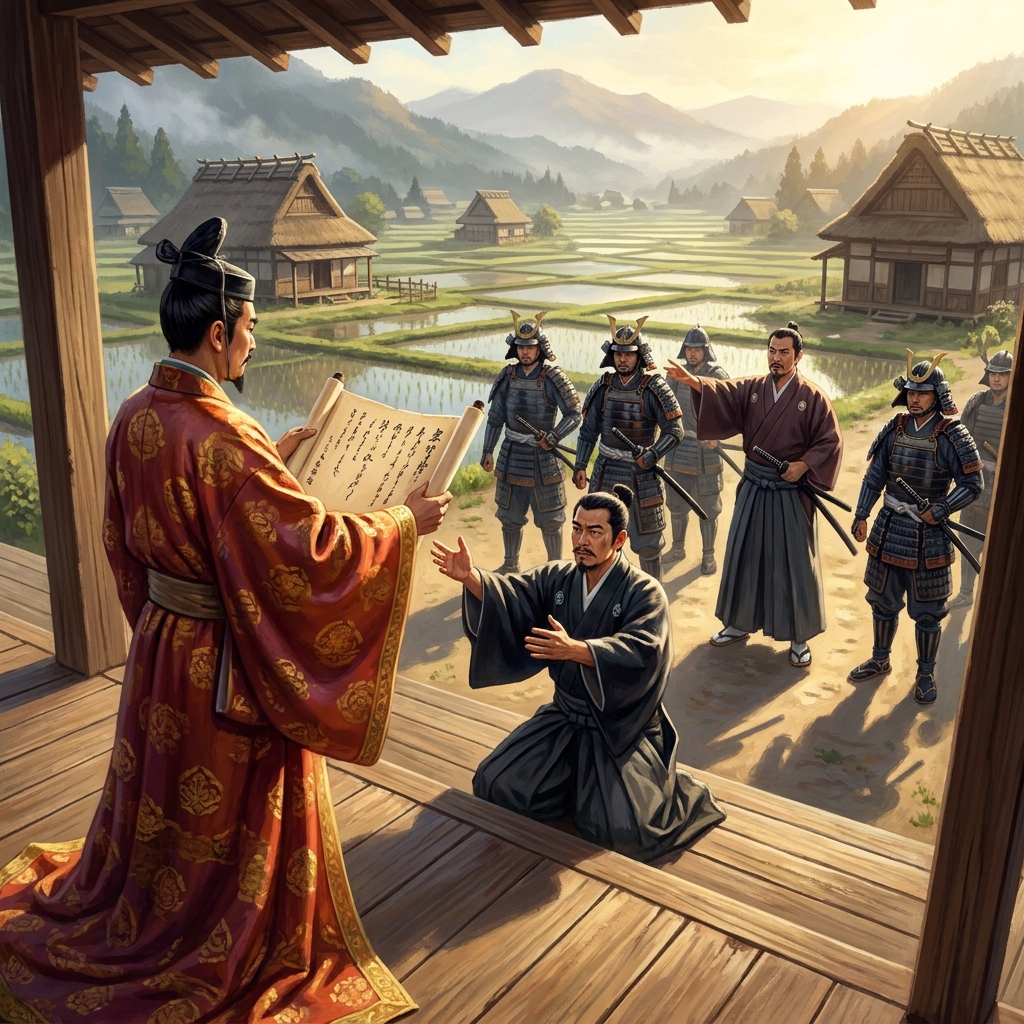
The lesson starts by comparing a shogun, daimyo, and samurai hierarchy to the organization of a sports team. A coach leads, a captain organizes, and players perform tasks. It is a simple comparison, but it works well to explain that everyone had a specific role in a system built on mutual support. The material defines a shogun as the supreme military commander with the real power, a daimyo as the land-owning lord serving the shogun, and a samurai as the warrior who followed a strict code of conduct. These roles functioned as the backbone of medieval society, creating the stability that defined that era.
How the warrior code bridges time
Once your students have a handle on the feudal mechanics, the lesson pushes them to look at the persistence of these values. This is where you might find your students engaging more deeply, as they begin to see how historical ideas shape the modern world. The lesson introduces Bushido, the ethical warrior code that emphasized loyalty, honor, and discipline. Students learn that these concepts were not just relics left in the past but were used to structure national identity during the twentieth century.
You can use this medieval Japan history lesson to show how cultural values shift over time. The guided practice includes a scenario where students look at films that portrayed characters sacrificing their own comfort for their company. This is a practical way to show how the old warrior values were linked to state goals, including militarism, which the lesson defines as the belief that a country should maintain a strong military capability and be prepared to use it aggressively to promote national interests. I have found that students often have strong opinions about whether these traditional values still exist in professional settings today. It is a productive point of tension that helps them understand the nuance of social history.
Practical application in your classroom
If you are looking for a reliable way to get through this standard in about 45 minutes, this material is a solid choice. It is well-suited for a whole-class assignment or for a student who missed the week and needs to catch up on the historical context of Japan. I also like using this for a substitute day because the structure is clear and the reading load is manageable for 7th graders working independently.

There is a risk, however, that students might view these historical codes as purely positive or as rigid rules that everyone followed perfectly. You might need to remind them that just because a society prescribes a code does not mean every single person embodied it in every action. Encourage them to ask why leaders promoted these values during times of national struggle. When students understand the why behind the behavior, they stop seeing history as a list of names and start seeing it as a series of choices.
Why the standard matters for citizenship
The lesson concludes by connecting these concepts to the modern experience of being an informed citizen. When students see how leaders or companies act today, they can better recognize the historical influences behind those actions. By examining why people value loyalty and discipline in their work, students start to realize that their own current cultural practices have roots that extend back centuries. It makes the distant past feel closer to their present day, which is exactly what we want for our middle school students.
Related lessons
Trade and Influence in the Mongol and Ming Eras, Explores how trade routes impacted cultural and economic development

Mapping the World: Exploration and Discovery, Covers the history of cartography and global exploration voyages

The Scientific Revolution and the Natural World, Discusses how scientific discoveries shifted views of the universe