

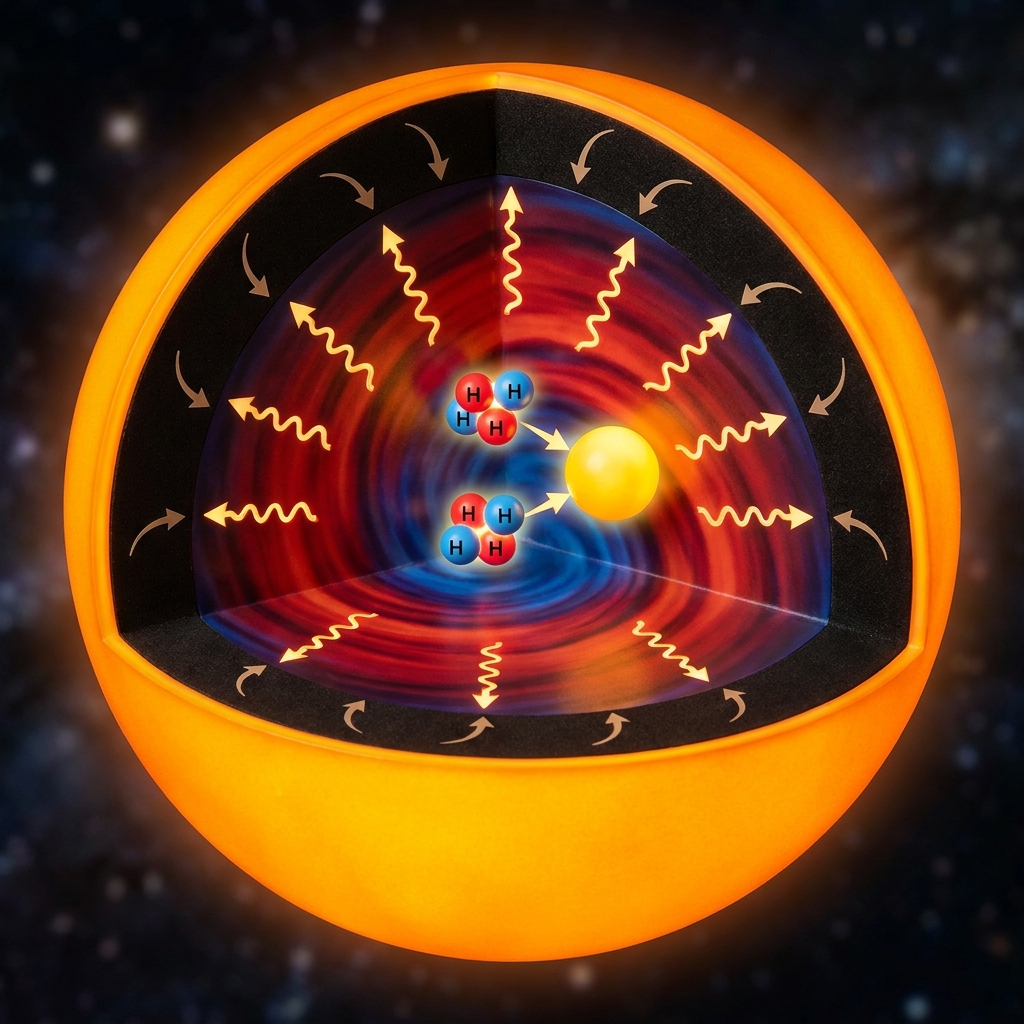
This lesson does not attempt to explain the entire history of the universe or every nuance of stellar evolution. Instead, it focuses on the mechanism that makes life on our planet possible. In The Sun’s Energy Engine, high school students examine how the sun creates energy and how that energy reaches us on Earth. It is a solid choice for a biology or earth science class, especially when you need to bridge the gap between abstract physics and observable environmental phenomena.
The lesson begins by clearing up a common misconception: that solar energy is the same as chemical combustion. Students are reminded that combustion merely rearranges molecules, whereas the sun relies on a deeper, more powerful process. The lesson defines its core vocabulary clearly, focusing on the core, where temperatures and pressures allow nuclear fusion, the process where hydrogen atoms combine to form helium, to release vast amounts of energy. This energy then travels through space as radiation, which is defined as the transfer of energy through electromagnetic waves.
Connecting stellar physics to the classroom
The core concept is built around the stability of the sun during its hydrogen-burning stage. The lesson provides a specific scenario: because the core temperature is high enough, hydrogen atoms fuse into helium, releasing energy that exerts an outward pressure. This pressure is the only thing preventing the star from collapsing under its own gravity. It is an elegant way to show students how a balance of forces sustains our sun, and by extension, our biosphere. Teachers in districts like Garden Grove Unified, San Bernardino City Unified, North Monterey County Unified, and El Monte Union High School District often use these specific models to demonstrate how physical processes at the stellar level dictate local environmental realities.

This material serves the HS-ESS1-1 standard, which is the California-adopted standard for earth and space sciences. This standard asks students to develop a model based on evidence to illustrate the life span of the sun and the role of nuclear fusion in the sun’s core to release energy that eventually transfers to Earth in the form of radiation. The material does a nice job of keeping that scope tight, ensuring students do not get lost in the weeds of quantum mechanics but instead stay focused on the energy transfer model.
Applying the model to California phenomena
Once students grasp the basic physics, they move to guided practice. They are asked to analyze a solar farm in the Mojave Desert. The task is to trace the path of the energy, beginning with fusion in the sun’s core and ending with the photons captured by solar panels in the desert. This forces students to translate a classroom concept into a real-world application. It is a great exercise for a whole-class assignment or for a student who missed the week and needs a focused review on energy systems.

The lesson also draws a smart distinction between solar energy and internal planetary energy. It explains that while solar radiation drives photosynthesis and climate, Earth’s internal tectonic activity is actually powered by radioactive decay. This is a vital caveat. It helps students understand why California looks the way it does, with varied environments like cool coastal forests and arid deserts, while also acknowledging the seismic activity that shapes our geography. Furthermore, the lesson explains how state energy policy, including laws and regulations, uses this scientific evidence to guide decisions about sustainable infrastructure.
This is a practical high school solar radiation lesson that avoids fluff. It works well as a substitute day activity because it is self-contained and provides enough worked examples for students to follow along without needing constant instructor intervention. If you are teaching an independent study track, the clear progression from vocabulary to modeled practice will save you time on explanation. Just keep in mind that you may want to supplement the lesson with a quick map of the Mojave if your students are not familiar with California geography, as that context makes the final application much more tangible for them.
Related lessons

Mitigating Human Impact on California Systems, Reducing environmental damage across various complex California natural systems

Water as a Geologic Agent, How liquid water shapes landscapes through erosion and transport
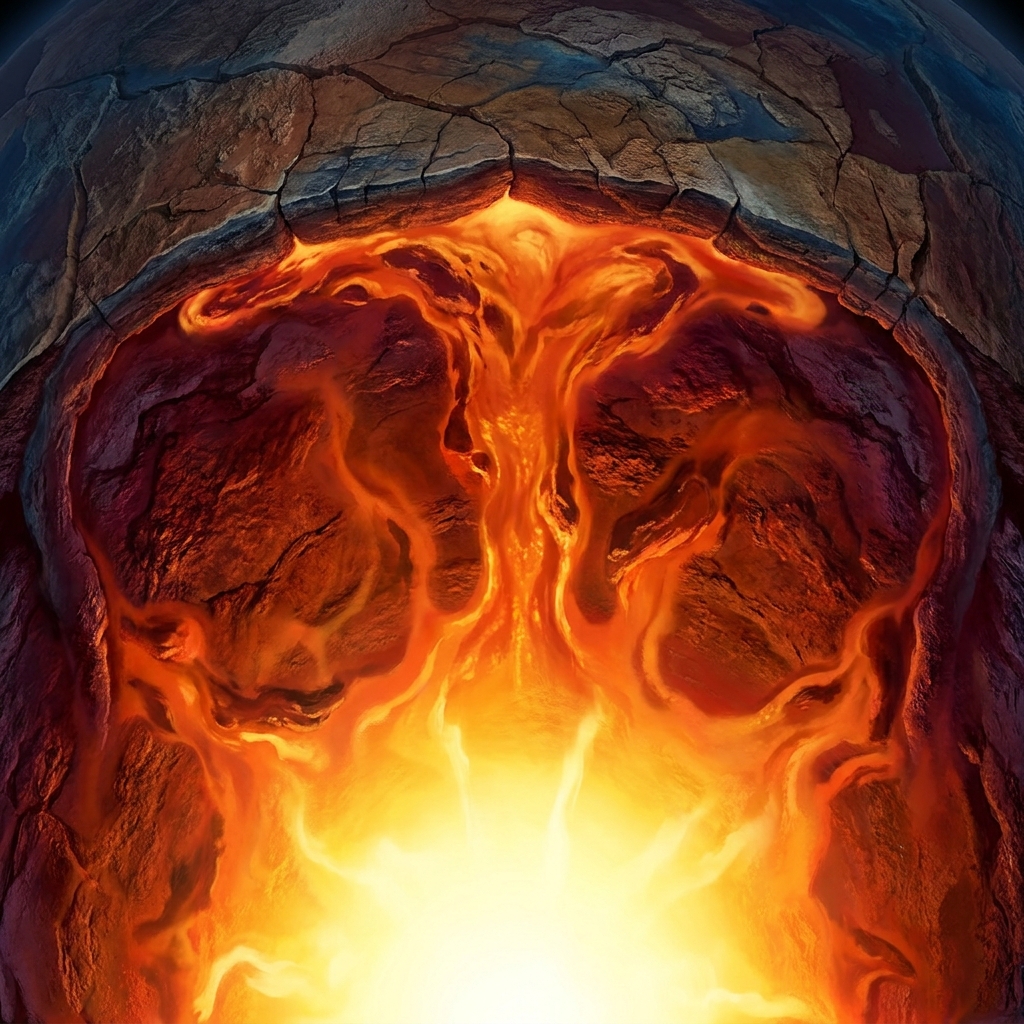
Earth's Moving Interior, Radioactive decay driving tectonic plate movement within the planet