

Students often walk into an 8th grade social studies classroom assuming that voting has always been a universal right for every adult man. They assume the early American republic looked just like the government they read about in modern textbooks. When we begin our work on the The Rise of Jacksonian Democracy, the first job is to undo that assumption. By the time we reach this point in the US History: Growth & Conflict curriculum, the school year is often moving fast. Teachers in Pajaro Valley Unified, Oakland Unified, Vacaville Unified, and Saint Helena Unified all know the pressure of keeping the schedule moving while ensuring students actually understand these foundational shifts in power. This lesson gives you a way to pause and focus when you are short on time or when a handful of your students missed the week of lecture and need to catch up on their own.
Misconceptions about early American voting
The lesson starts by clarifying that in the early years of the United States, your ability to vote was tied to whether you owned land. It was not a small exclusion. It meant that a huge portion of the population had no say in the democratic process. The material introduces Jacksonian democracy as a political movement that changed the social and political system by promoting the power of the common man and expanding voting rights to include all white men, whether they owned property or not. It is a dense but vital piece of the 8th grade social studies experience because it explains the transition toward the populism we recognize today.

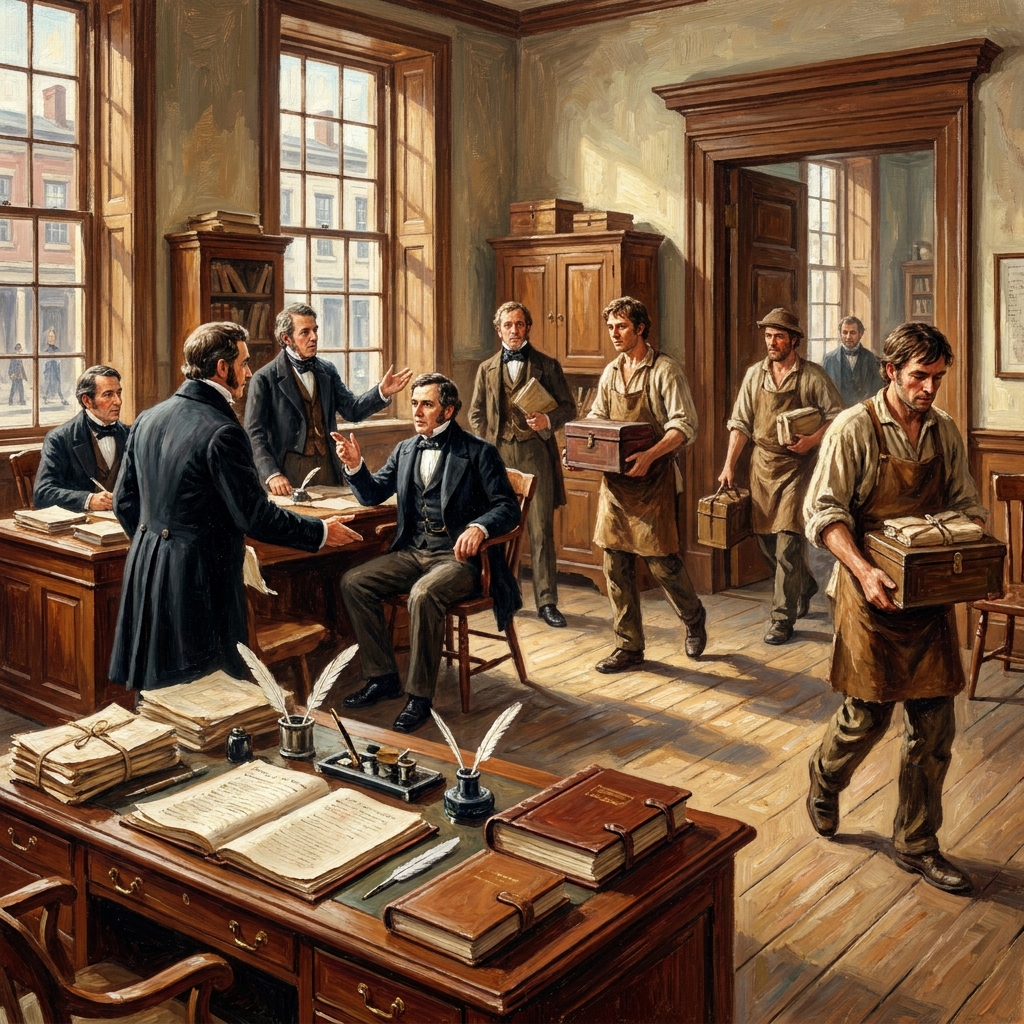
Using this 8th grade Jacksonian democracy lesson is helpful because it uses a clear worked example to show how Andrew Jackson changed the federal government. The lesson describes the spoils system, where a winning political party gives government jobs to supporters as a reward for their loyalty, as a key change in administration. Jackson believed this approach made the government more responsive to the public. It is a messy, controversial part of history, and the lesson handles it by letting students see it as a deliberate choice rather than just an abstract political fact. You can see how students react to the idea that federal jobs were handed out based on loyalty. Many students find this practice shocking because it feels so different from our modern ideas about civil service.
Connecting history to presidential power
The material also covers the use of the veto, which the lesson defines as the constitutional right of a leader to reject a decision or proposal made by a law-making body. This is where you can really see students start to grasp the expansion of presidential influence. Jackson did not just sign laws. He used his authority to actively oppose the Supreme Court, force Indian removal, and shut down the National Bank. When students engage with this material, they stop seeing the president as a passive administrator and start seeing him as an active, sometimes adversarial, force in national politics. The lesson correctly points out that this strategy of speaking directly to the public to build support for policy, which became prominent during this era, remains a feature of the presidency today.
Managing the lesson in your schedule
This resource fits perfectly into an intervention block or as a primary assignment for a student who missed the week of classroom instruction. It takes about 45 minutes to complete. The guide practice setup is particularly useful because it moves students away from just reading and into a debate about federal authority versus states rights. This specific focus satisfies CA.HSS-8.8.1. This is the California-adopted standard that asks students to discuss the election of Andrew Jackson, the importance of the political movement named after him, and his specific actions like the spoils system and his opposition to the Supreme Court. It is the same standard taught across all California districts. I find that when students spend time evaluating these actions themselves, they remember the vocabulary much better than if I simply lectured on the definitions.

If you have a student who struggles with reading, keep an eye on them during the section about the policy of Indian removal. The text covers this with the directness the topic requires, and some students may find the implications of Jackson’s policy difficult to process. You might want to pull those students into a small group to walk through the vocabulary. The term Jacksonian democracy and the concept of the spoils system are foundational, but the actual, physical impact of those policies is what stays with them. You want them to walk away with a clear picture of how the presidency changed, not just a list of names and dates to memorize.
For a substitute day, this is a very safe bet. The lesson is self-contained and clear, meaning you do not have to worry about a sub needing extensive preparation to keep the class on track. It allows your students to stay aligned with the rest of the year despite the change in routine. When you return, you have a solid foundation for the next chapter in your unit on growth and conflict. It hits the requirements without needing you to print extra packets or run around finding primary source documents to fill the time. It is a direct, efficient tool for teaching this standard.
Related lessons
Rivers and Rights in the American West, Geography and legal conflicts regarding water in the American West
The Northwest Ordinance: Schools and Freedom, Legislation establishing educational support and personal freedom in new territories

The Cotton Kingdom and the Southern Economy, Economic dependence on cotton and slavery in the southern states