

We have all had that student who confidently declares that the president makes the laws because they saw a bill being signed on the evening news. It is a common misconception, one that stems from focusing entirely on the executive branch while ignoring the messy, slower realities of the legislative process. When we teach twelfth grade government, we need to shift that focus back to the foundational structure of our system. The Legislative Branch: Structure and Power gives your students a clear way to see why Congress holds the cards when it comes to initiation, taxation, and impeachment.
This high school social studies lesson is designed to ground students in the text of the Constitution itself, rather than letting them guess how the government works. It covers the specific eligibility requirements for representatives and senators, explains the distinct roles of the House and the Senate in impeachment, and details the enumerated powers of Congress. It moves through these complex topics in about forty-five minutes, which makes it a solid choice for a day where you need a focused, independent activity or a way to catch up a student who missed the week of instruction. Teachers in Sacramento City Unified, Riverside Unified, Cotati-Rohnert Park Unified, and Simi Valley Unified are all using the same core material to ensure students grasp these constitutional requirements across the state.
Understanding the structure of Article I
The lesson begins with a practical look at how our founding document dictates who can actually walk onto the floor of Congress. Students contrast the looser residency requirements for local school board members with the strict age, citizenship, and residency rules found in Article I. This comparison prevents the common student mistake of assuming any local political experience translates directly into federal eligibility. By forcing them to look at the text, the lesson clears up confusion about how the House and Senate are structured differently. It defines Article I, enumerated powers, impeachment, and veto, ensuring that students have the vocabulary to discuss the branch with precision. When students work through high school legislative branch lessons, they move past generalizations and start identifying the specific constitutional checks built into the system.

Applying the lawmaking process
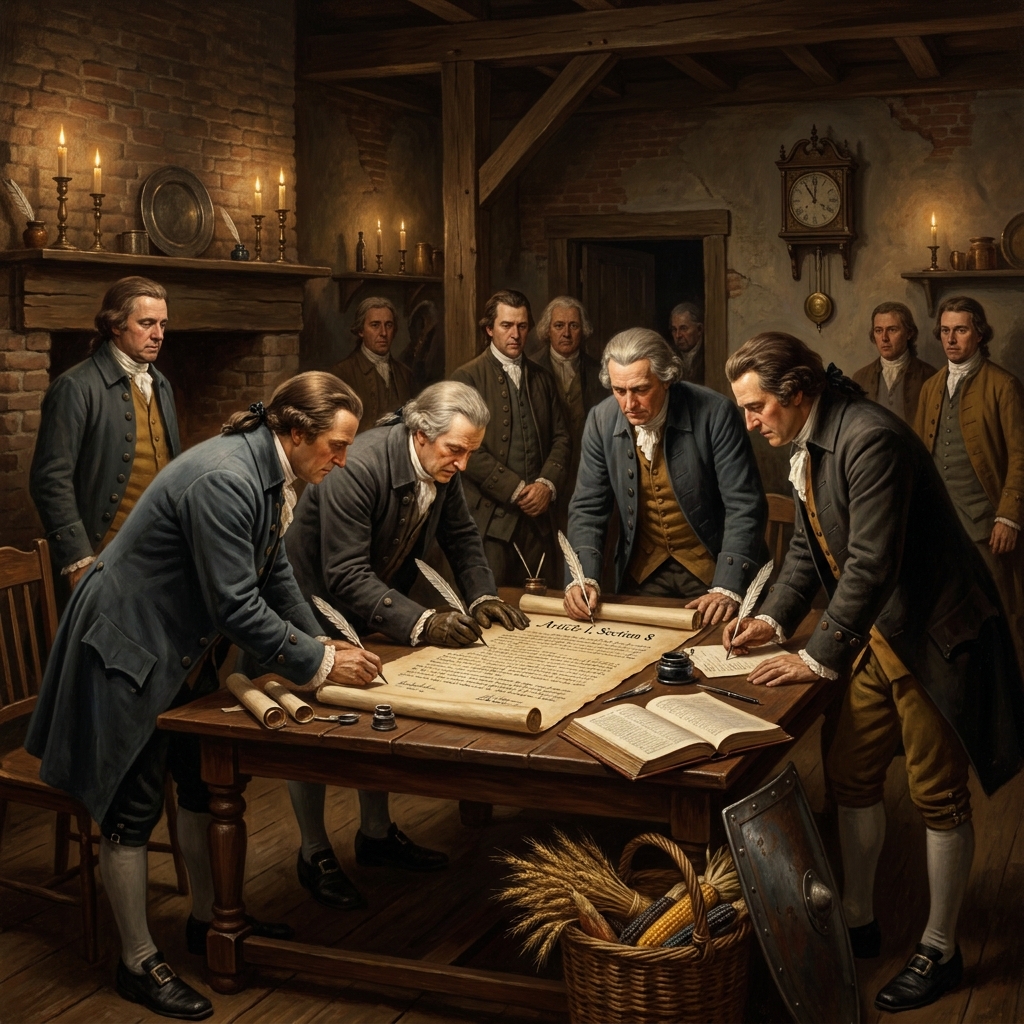
One of the most effective parts of the lesson is the use of a worked example involving the power to tax. Students learn that Article I, Section 8, places the authority to collect taxes for the common defense and general welfare specifically in the hands of Congress. The lesson then puts this into practice by having the class analyze a hypothetical tax bill being introduced in the House. It is a simple but powerful exercise because it stops students from assuming that the executive branch has the power to initiate tax policy. I have found that students who struggle with the abstract nature of government often benefit from this concrete look at why a bill stays in committee. It frames the legislative branch as an active, deliberate entity rather than just a name on a page.
Meeting the California standard
This lesson is aligned with CA.HSS-PoAD.12.4.1, which is the California-adopted standard for the Principles of American Democracy. This standard asks students to discuss Article I of the Constitution as it relates to the legislative branch. This includes a deep look at eligibility for office and lengths of terms for both representatives and senators, the election process, the role of the House and Senate in impeachment proceedings, the specific role of the vice president, the list of enumerated legislative powers, and the detailed process by which a bill becomes a law. It is a dense set of requirements, but it is necessary for anyone hoping to become an informed citizen capable of watching the news and understanding why a law is being debated in the way it is.

I appreciate that the lesson provides a why-it-matters context for the students. It connects the dry text of the Constitution to the current news cycle, which is a great way to handle the inevitable question of why they need to know these details. It is also a handy resource for a substitute day or an intervention period where a student needs to review the basics without needing a full lecture. The material is straightforward, and the vocabulary is presented clearly, which helps prevent students from getting lost in the legal jargon that can sometimes make the Constitution feel inaccessible. Keeping this focus on the mechanics of the branch ensures that by the time they reach the end of the unit, they understand that lawmaking is not just a signature on a desk, but a long, deliberate process driven by Article I powers.
Related lessons

The Balance of Rights and Responsibilities, Discusses how constitutional rights and responsibilities interact within American society

Political Philosophies and Governance, Covers foundational philosophies that influence current United States government structures
Becoming a Citizen of the United States, Outlines the legal process and requirements for achieving American citizenship