


Many students struggle to visualize invisible shifts of atoms during chemical reactions. When you assign The Law of Conservation of Mass, you give them a framework to move past that initial observation.
What happens when students see matter vanish
You have likely stood at the front of a lab table while a student looks at a fizzing beaker and tells you that the mass just disappeared. It is a common misconception in 6th grade science because, to the naked eye, the gas bubbling out of a reaction seems to represent lost weight. The struggle is not with their ability to observe but with their ability to visualize the unseen shift of atoms. When you assign The Law of Conservation of Mass, you give them a framework to move past that initial observation.

This lesson hits the objective by showing exactly how the total number of atoms stays the same during a chemical reaction. It starts by grounding students in the idea that when we weigh objects, we are measuring their mass, which is the amount of matter inside them. It uses a balance scale as a visual anchor to explain that a metal tray on each side shows whether mass is equal. This is the necessary groundwork before they ever see a chemical equation.
The worked example regarding hydrogen and oxygen gas is particularly helpful. The lesson explains that when these react to form water, the atoms simply rearrange. If you begin with 4 hydrogen atoms and 2 oxygen atoms, you must end with that same count of atoms in the resulting water molecules. It is a simple concept, but seeing it written out as a count of specific atoms is a much better way to teach it than just stating the rule.
Aligning with the state standards
The core of this material focuses on 6th grade science conservation of mass to prepare students for the expectations of the California NGSS framework. The primary standard here is MS-PS1-5. This standard asks students to develop and use a model to describe how the total number of atoms does not change in a chemical reaction and thus mass is conserved. This is an important piece of the middle school physical science curriculum because it pushes students to think about matter as a constant rather than something that can just disappear.
Because California teaches middle school science using an integrated model that weaves physical, life, and Earth sciences together, this standard is a foundational piece of the broader curriculum. You will find that this material is consistent with the expectations held by educators in Twin Rivers Unified, Poway Unified, Rim of the World Unified, and Alameda Unified as they implement the same state-adopted standards across our local districts. When you look at MS-PS1-5, remember that it is not just about memorizing a definition but about requiring students to show their work through a model. The CA addition to this standard reminds us that these concepts are contextualized with California phenomena like seismic activity and energy policy, which helps students see why the science matters in their own backyard.
Vocabulary and classroom applications
Before you turn the class loose, make sure they are comfortable with the core terms. A chemical reaction is a process where substances, called reactants, change into new substances, called products, by rearranging their atoms. The reactants are the starting materials present before the change happens, while products are the new substances that are formed after. Conservation of mass is simply the scientific principle that the total mass of a system remains constant during a chemical or physical change.

I recommend using this lesson for a whole-class assignment when you first introduce the reaction unit. It is also a great tool for a student who missed the week, as the visual modeling of the atoms is self-explanatory for someone working through independent study. If you find yourself in a pinch, it is also a solid choice for a substitute day because the logic is so clearly scaffolded.
The guided practice uses the reaction between vinegar and baking soda inside a sealed balloon. This is a perfect example of a closed system. Because nothing can enter or leave the balloon, the mass stays the same even as the balloon inflates. It is one of the few labs that almost always works and creates an immediate shift in student thinking. If they see the balloon expand without the scale changing, the lightbulb usually turns on.
Keep in mind that the why it matters section is worth the time. The lesson connects this to environmental science, specifically how we neutralize chemical waste. If we do not account for every atom, we cannot clean the waste properly. It also ties this to California energy policy and the use of fuel cells. These examples are what transform this from a dry worksheet into a lesson on how the world actually functions. It is a good reminder for the class that if we cannot track the atoms, we cannot solve the problem.
Related lessons

Newton's Third Law and Collisions, Explains action and reaction forces during physical collisions between objects
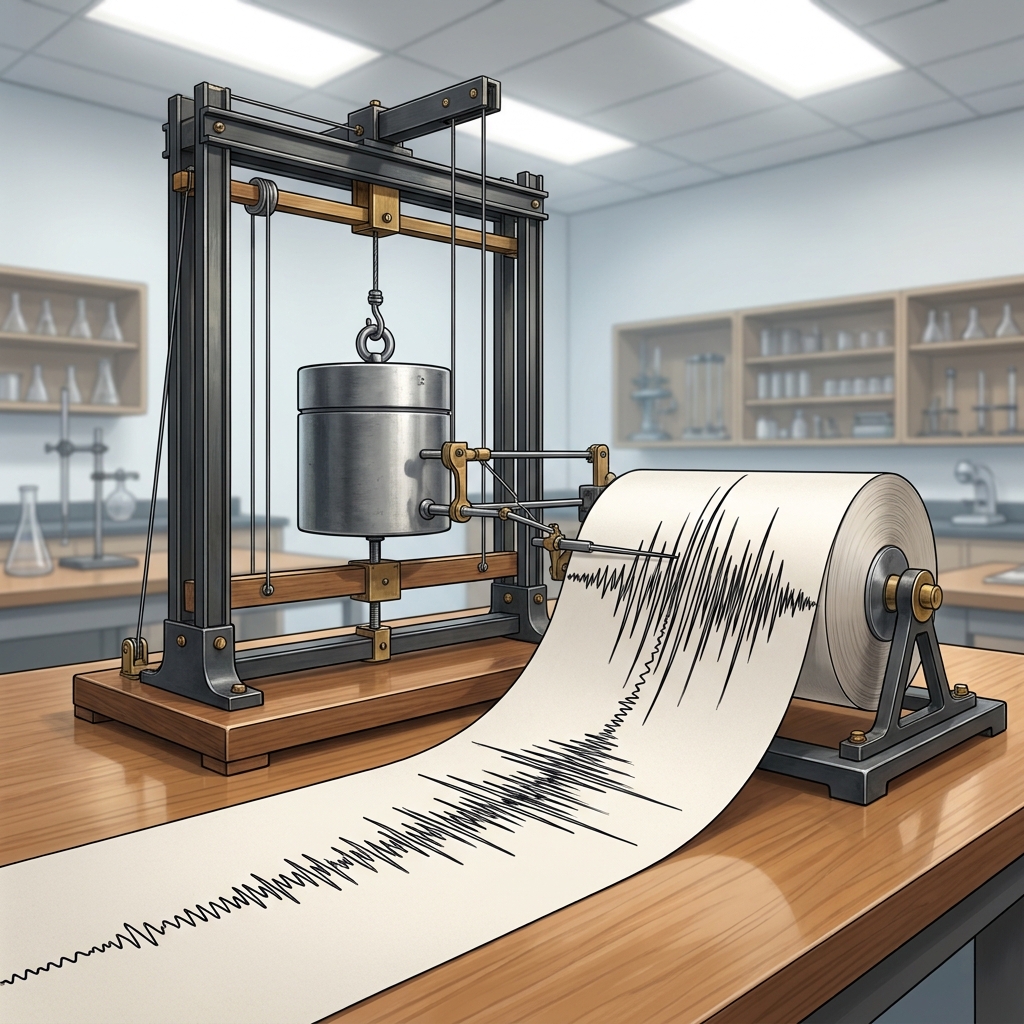
Understanding Wave Energy, Covers basic properties of waves and energy transfer mechanisms
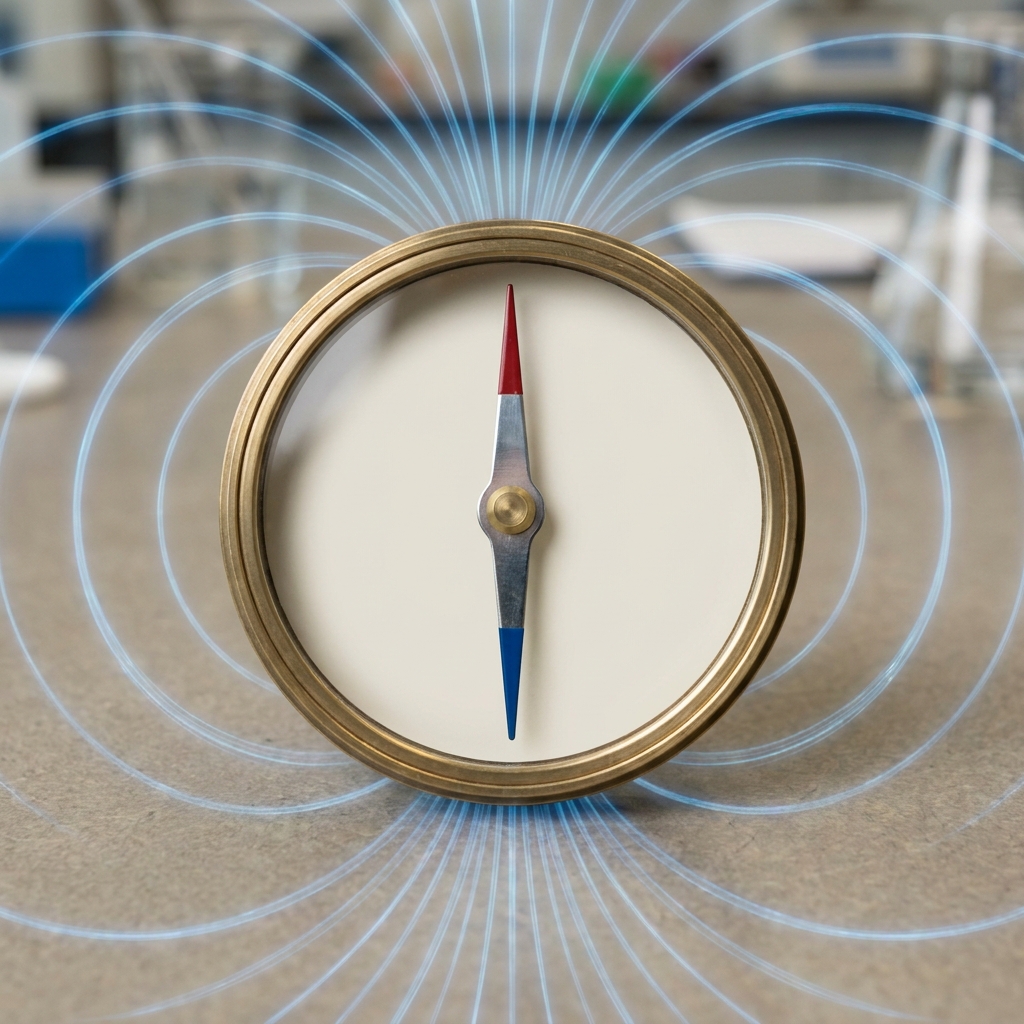
Invisible Forces: Understanding Fields, Describes how magnetic and gravitational fields exert unseen forces