

When we reach that middle point in the school year, 7th grade science often shifts from the concrete identification of cell parts to the more abstract challenge of understanding function. It is a common hurdle for students who can label a diagram of a cell but struggle to explain why that cell is vital to the larger organism. This is why I appreciate the approach taken in The Body as a System. It forces students to move beyond memorization and start thinking about the mechanics of biology.
This 7th grade science lesson covers the core concept of systems and system subsystems by establishing that the human body is not just a collection of parts, but a coordinated network. The material opens with a practical analogy of a bicycle to ground the abstract concept. Just as a bike requires a frame, a chain, and gears to move, the body relies on interacting components to maintain life. If one part malfunctions, the output of the entire system suffers. This analogy helps students visualize the internal processes we often describe with sterile, academic language. You will find that students grasp this quickly when you frame the body as a machine that needs all its parts working in harmony to succeed.
Defining biological systems through evidence
The core objective of this seventh grade science systems lesson is for students to articulate that the human body is a system made of smaller, interacting subsystems and individual cells. The lesson material defines a system as a collection of interacting parts working together for a specific goal, while a subsystem is a smaller, specialized part that carries out a distinct task. A cell is identified as the fundamental building block that forms the foundation of all tissues and organs. By requiring students to build an argument supported by evidence, the lesson targets the specific skills outlined in the standard MS-LS1-3.

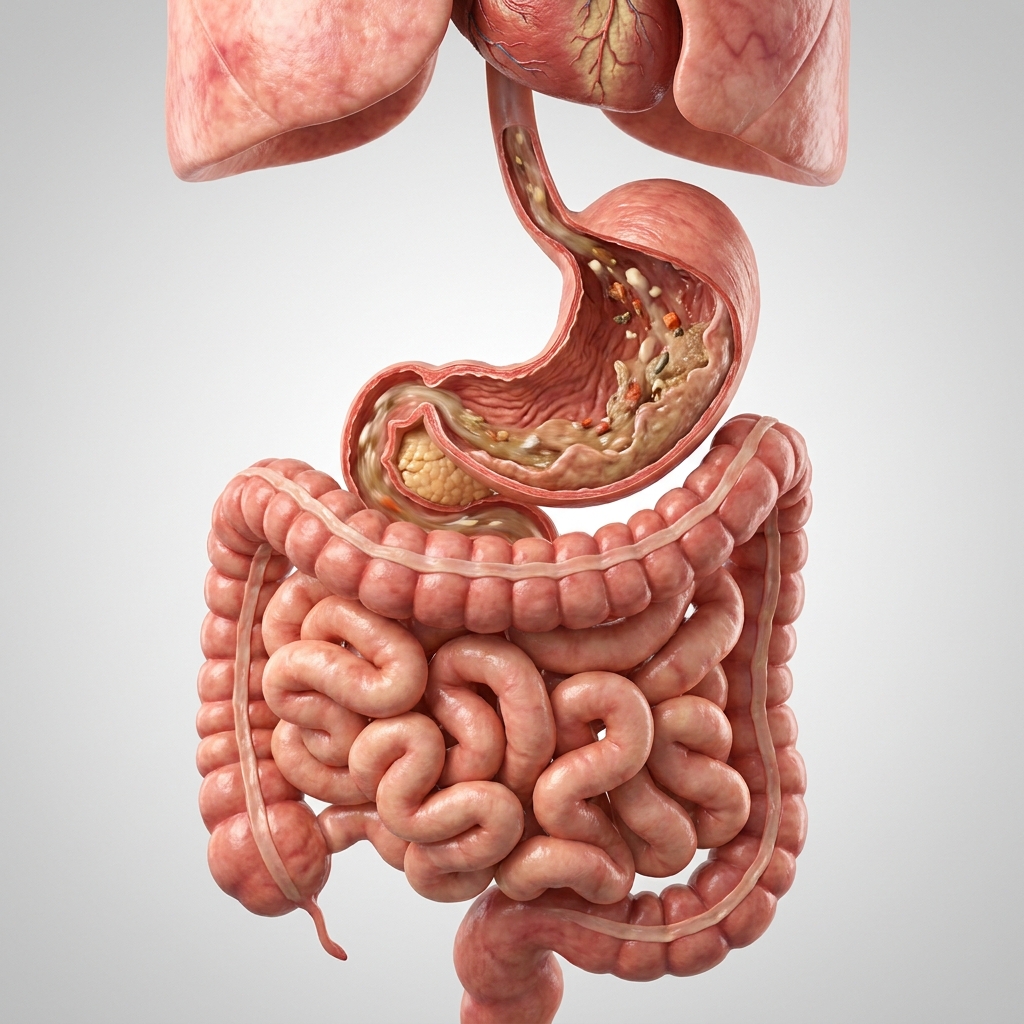
This standard asks students to use an argument supported by evidence to explain how the body functions as a system of interacting subsystems composed of groups of cells. This is part of the California-adopted standards, and it remains consistent whether you are teaching in Montebello Unified, Los Angeles Unified, Salinas Union High School District, or Oakley Union Elementary School District. The work connects to the California approach to middle school science, which integrates life, physical, and Earth sciences into a coherent narrative. The lesson asks students to examine the digestive system, where the stomach breaks down food and the intestines absorb nutrients to provide energy, as a clear example of parts working together for the function of digestion. Students are then asked to apply this logic to the excretory system, identifying how the kidneys function to remove waste from the blood and keep the body environment clean.
I find the inclusion of the why-it-matters section to be particularly useful here. It bridges the gap between anatomy and public policy by comparing metabolic homeostasis to energy management. The lesson explains that California’s energy policy requires the coordination of various power sources, such as solar and wind, to maintain a stable supply and prevent blackouts. This provides a tangible, real-world parallel to how the body manages energy intake and distribution. Students who can see these patterns across different fields are often the ones who retain the information long-term. It turns a static anatomy lesson into a broader lesson about management and coordination.
Where students often hit a wall
The primary area where I see students struggle is the leap from describing an organ to describing a function within a system. Many students will happily tell you what a kidney does, but they stumble when asked to explain how that function relies on the circulatory system to bring blood to the site or how it fits into the overall health of the entire organism. If you skip this conceptual foundation, later units on complex physiological interactions will inevitably fall apart. The way this lesson structures the progression from the bicycle analogy to the excretory system provides the perfect scaffold for students who usually get lost in the weeds of biological jargon.

This lesson is well-suited for a whole-class assignment, especially if you have students who need a fresh way to approach complex biological concepts. It also works beautifully for a student who missed the week of direct instruction or as a focused intervention for those who are struggling to see how individual organs contribute to the organism as a whole. You might consider using this as a substitute day plan if you need something that is low-prep but high-impact. Because the content requires students to generate an argument based on evidence, you get a clear look at their thinking process rather than just their ability to define vocabulary terms. If you have been looking for a way to ground your life science curriculum in the requirements of the California standards, this provides a clear and direct path for your students to follow.
Related lessons

Anatomical Clues: Understanding Evolutionary Relationships, Explores biological traits and their role in identifying evolutionary connections

How Food Powers Your Body, Discusses how nutrients convert into energy for human biological processes

Protecting California's Natural Wonders, Examines environmental conservation strategies for diverse state ecological systems