


First graders often struggle to move beyond the physical act of counting by ones. This transition to mental math is essential for building a strong foundation in number sense and place value. The following strategies provide a way to guide students away from counting items one by one and toward an understanding of our base ten system.
A shift from counting by ones
You have likely seen a first grade student who still needs to touch every single item when they count. They start at 24 and count up to 34 by ones. It is slow and prone to errors. The lesson Ten More and Ten Less is designed to break that habit by moving students toward the mental place value fluency they need to succeed in later years.

This lesson provides a quick, focused way to get your students thinking about the structure of our base ten system. When a student can mentally identify 10 more or 10 less, they are no longer dependent on the visual cues of counters or the tedious process of counting by ones. If they cannot make this jump now, their mental math in second grade will be a real struggle.
Building the mental framework
The lesson asks students to identify ten more or ten less than a given two-digit number. It avoids forcing students to rely on physical objects to find the answer. Instead, it pushes them to explain their reasoning, which is the most effective way to see if they truly grasp why adding or subtracting ten changes the tens digit but leaves the ones digit alone.
Students work through various exercises to reach the goal of finding ten more or ten less easily. This is the exact same standard practiced by teachers in West Contra Costa Unified, Newport-Mesa Unified, Hayward Unified, and Shoreline Unified as they work toward state proficiency. The lesson is straightforward and fits well into your routine if you need a quick first grade mental math lesson to fill a gap in your curriculum.
Aligning with state standards
This material directly serves CA.MATH.1.NBT.5. This California Common Core standard asks students to mentally determine ten more or ten less than a given two-digit number without counting, and to explain their thinking. It is a vital step in the Number and Operations in Base Ten domain, focusing on the cluster of using place value understanding and properties of operations to add and subtract.
The standard expects students to view numbers as units of ten and ones. If a student is still counting by ones to reach 56 from 46, they are missing the point of the base ten system. This lesson serves as the bridge between that physical counting phase and the conceptual understanding of how place value operates.
Where to use this in your classroom
I find this lesson works best when a student has missed the previous week of instruction and needs a fast way to catch up on place value basics. It is also a perfect tool for a substitute day when you want the class to continue working on a core skill that they can handle with a bit of directed practice. Because it takes about fifteen minutes, it is very manageable for a quick intervention or an independent study session.
My one caveat is that you should listen closely to how they explain their reasoning. Some kids will memorize the pattern of only changing the tens digit but will not actually understand why that happens. If you ask them to draw it out once or twice, it helps cement the concept for those who might just be guessing. Keeping this simple is the point, but verifying the logic is what makes it stick.
Related lessons
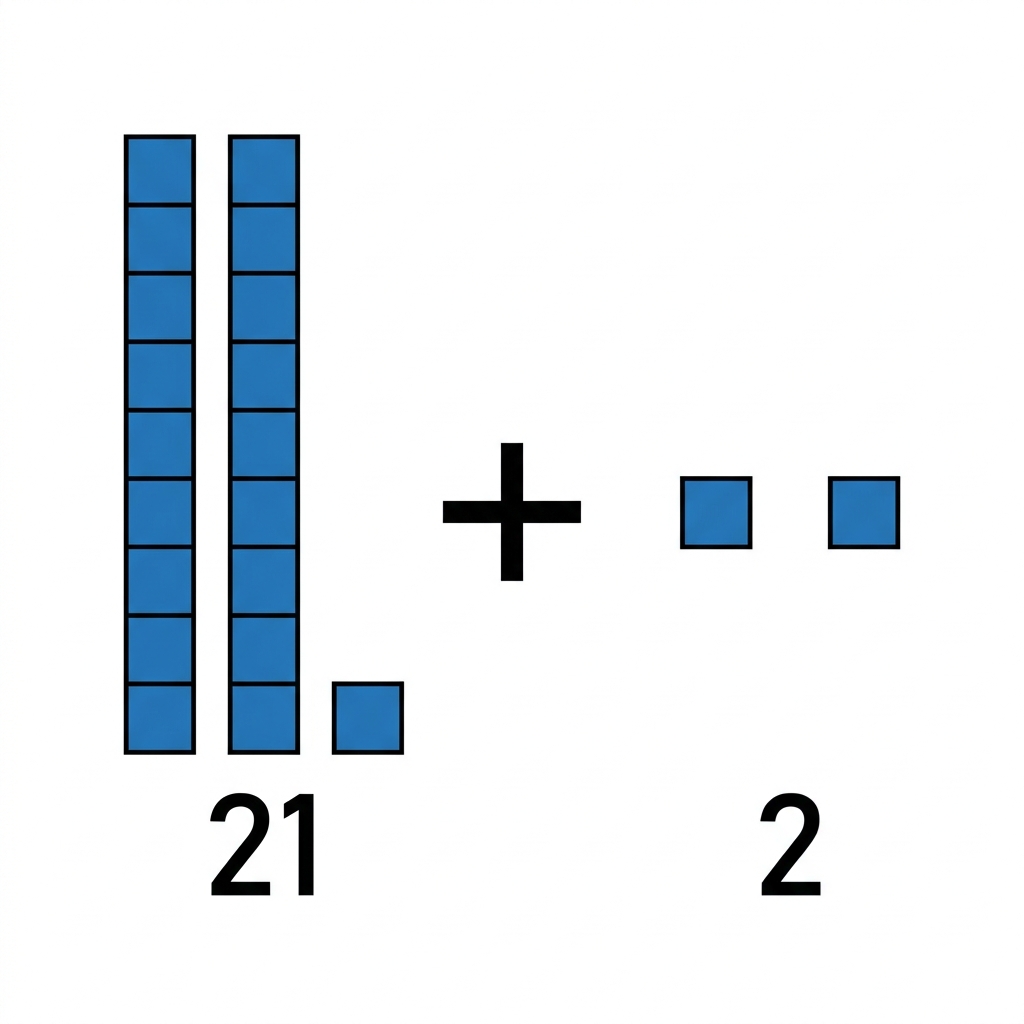
Adding More Together, Practicing the addition of quantities in a first grade setting
Sorting and Counting Our Things, Classifying and quantifying various objects in a structured way

Finding the Missing Part, Solving for unknown values within basic addition and subtraction