

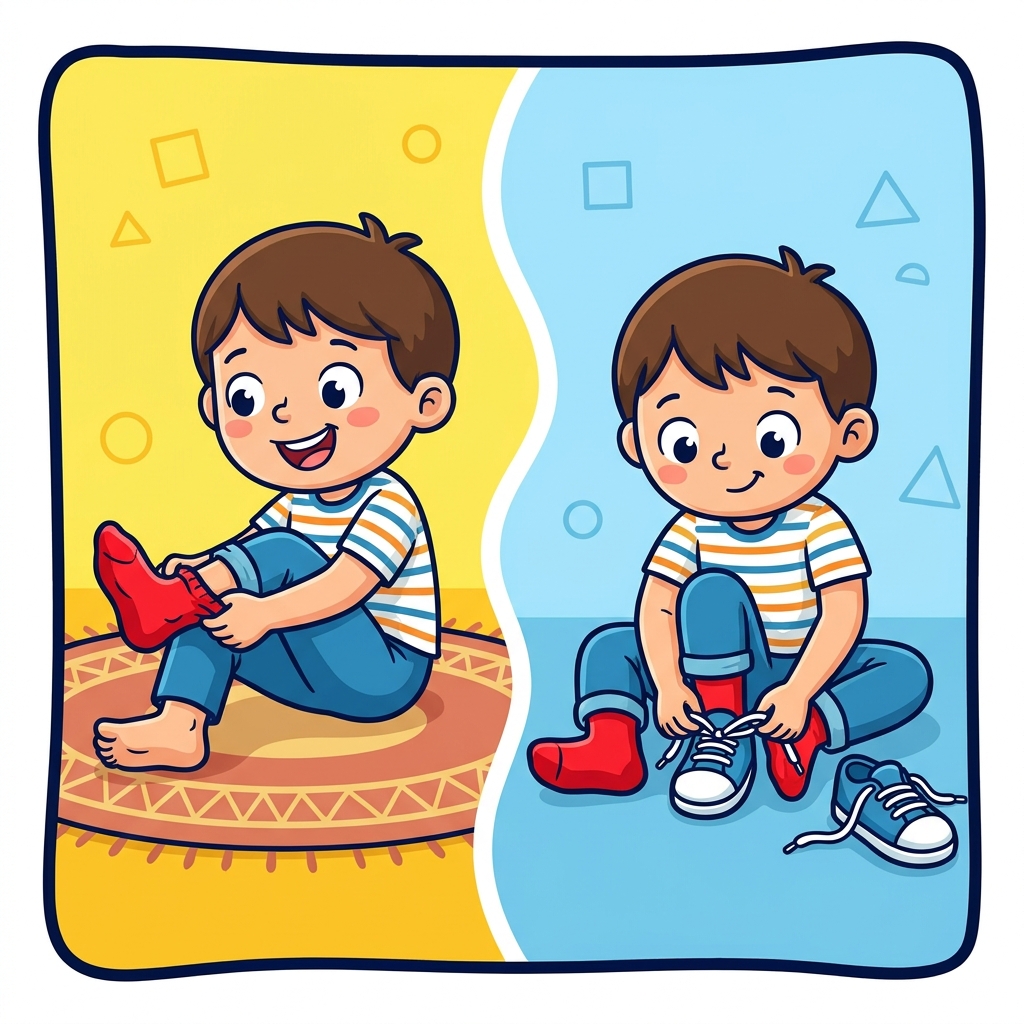
I know we are all staring at the wall calendar and feeling that familiar tightness in our chests. By the time we hit the mid-year point, the writing curriculum often ends up as the first thing moved to the afternoon slot, only to be skipped entirely when the fire drill runs long or the reading intervention takes an extra twenty minutes. It happens in Los Angeles Unified, Irvine Unified, Calexico Unified, and Fall River Joint Unified, just as it happens in every other corner of the state. If you find yourself in that position, having missed the scheduled week for teaching narrative structure, Telling a Story is the specific resource I keep for those instances.
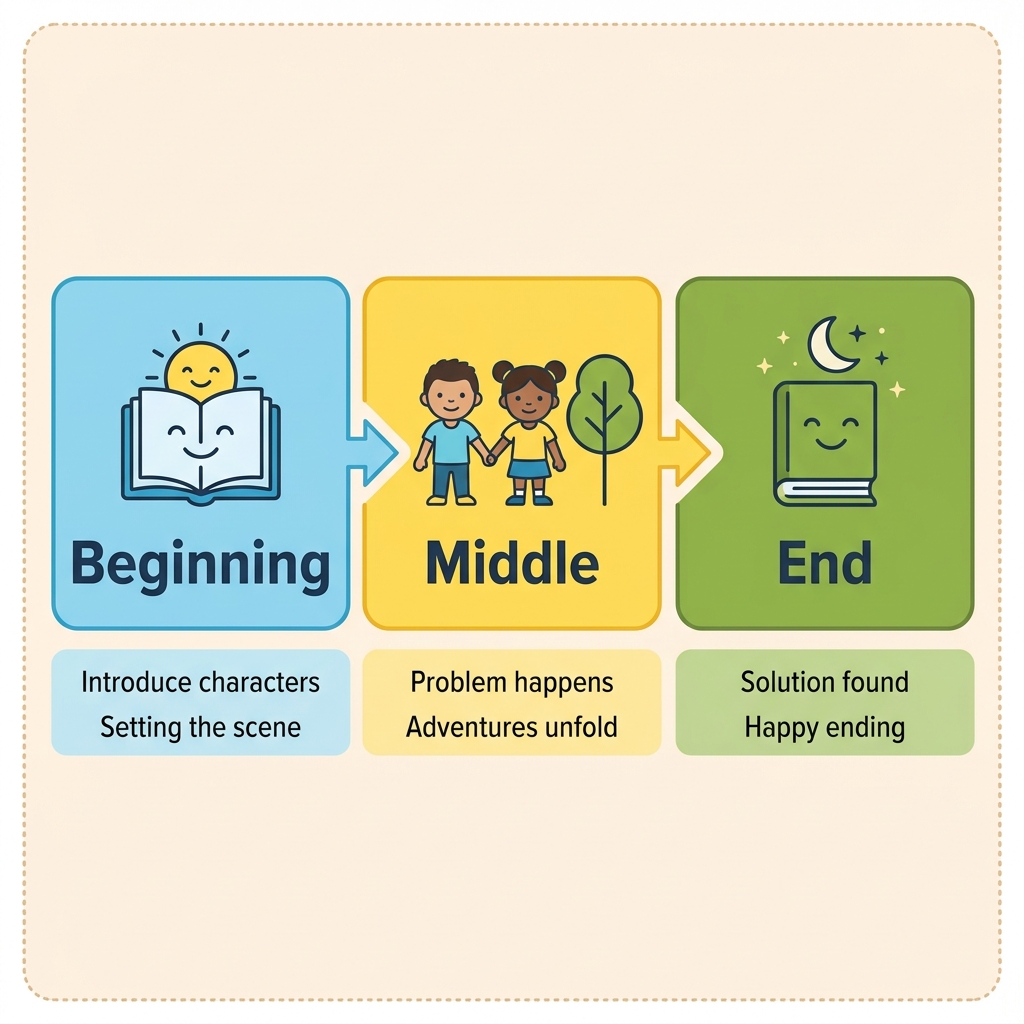
This 1st grade English Language Arts lesson is built around a singular, clear objective: helping students understand how to tell a story with a distinct beginning and end. At this age, the jump from speaking in fragments to writing a coherent narrative is significant. The material guides students through the process of organizing ideas so they don’t just dump thoughts on the page. It asks them to consider a sequence of events and then requires them to include specific details about what happened. It is exactly the kind of scaffolding a teacher needs when a group of six-year-olds has hit a wall with their writing journals.
Understanding the narrative standard
The lesson centers on CA.ELA.W.1.3, the California-adopted standard that asks students to write narratives by recounting at least two events in the right order. This standard is not just about writing sentences. It specifically requires that students include details about the events and use temporal words to signal the order, such as first, then, next, or finally. Most importantly, it asks for a sense of closure, which is often the hardest part for a first grader to grasp. They tend to just stop writing when they run out of steam. Teaching them to provide that final sentence that wraps up the story is a developmental milestone in their writing development, or at least in their academic progression.

When I use this 1st grade narrative writing lesson, I usually look for the students who struggle with the concept of a timeline. You know the ones. They start with a dog, jump to a pizza, and end with a rocket ship. The beauty of this material is that it forces them to slow down and map out their ideas. It gives them the vocabulary they need to transition between those events properly. I have found it particularly useful for my students who missed a week due to illness or family matters, as it is a complete, self-contained unit that requires very little extra explanation from me. It acts as an excellent tool for independent study or a quick intervention session during small group time.
Practical classroom application
I find this lesson is also a lifesaver when you have a substitute in the classroom. We all know how rare it is to leave plans that don’t result in a stack of unfinished work that requires reteaching on Monday. Because this lesson is so straightforward in its objective, getting from a beginning to an end using clear, ordered steps, a substitute can facilitate it without needing to be an expert in your current writing unit. It serves its purpose well as a standalone assignment or as a review activity if you noticed during your last writing block that the class was missing the mark on sequencing.

The limitation, if I have to be honest, is that it is quite brief. It takes about 15 minutes of direct engagement, which is perfect for a focused station, but you might find yourself needing to supplement it if your students are particularly advanced and looking for more complex ways to build their stories. For most of my class, though, the 15-minute timeframe is exactly what they can handle before their focus drifts. It gets the job done without overcomplicating the simple, necessary skill of putting two events in the correct order with a bit of descriptive detail. If your students are still struggling to find a place to end their stories, direct them back to the closure section of the lesson, where they practice summarizing the outcome of their small narrative. Keeping it simple is often the only way to get through the state standards without burning out the class or yourself.
Related lessons

Making Sentences, Building foundational skills by correctly constructing simple, complete sentences

Why Did the Author Write That?, Examining the specific purpose behind an author's written choices
Retelling Stories, Practicing the sequence of events when summarizing a narrative