

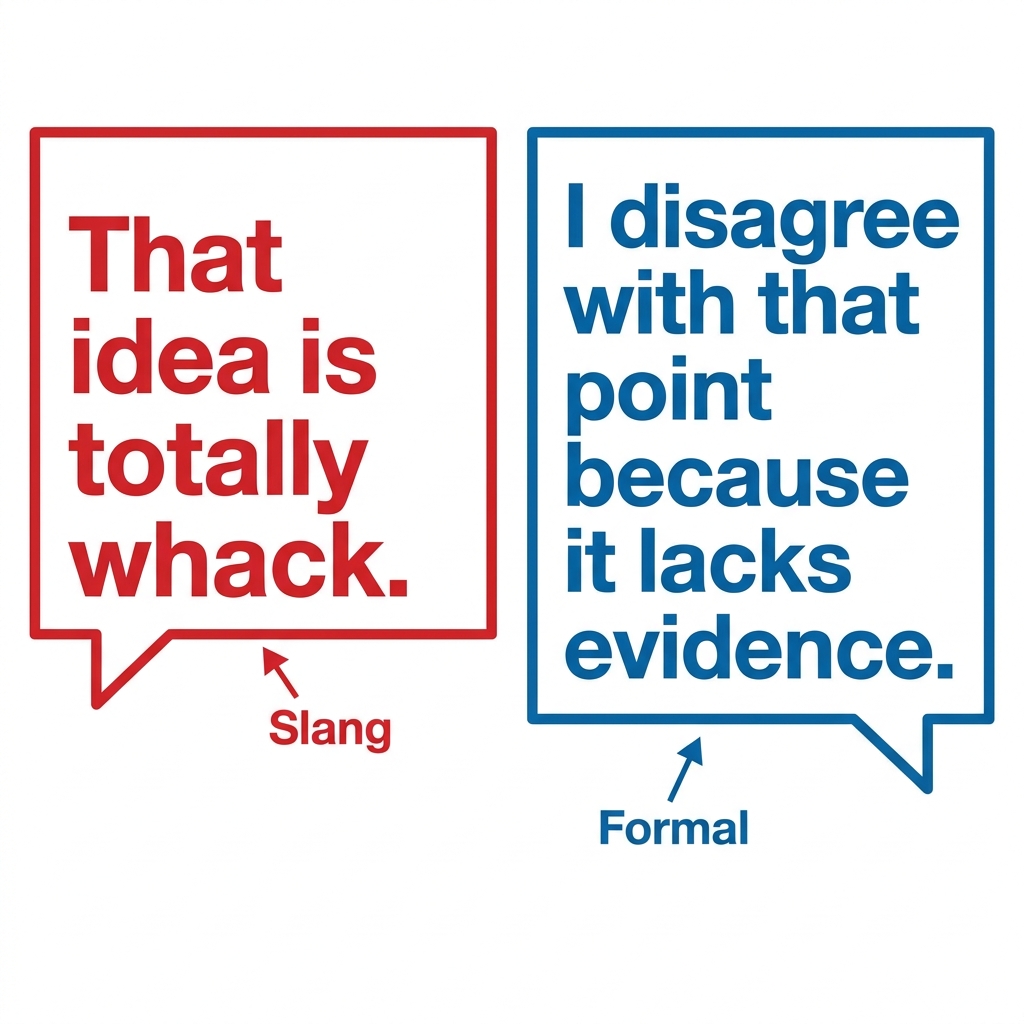
Too often, our sixth graders treat every conversation like a text message to a friend. They use the same relaxed syntax and slang whether they are asking for a bathroom pass or presenting a research project to the class. It is not that they lack respect; it is that they lack the tools to shift gears. They have not yet internalized the difference between a casual chat and a formal presentation. This tendency to use a flat, unchanging register limits their ability to persuade, inform, or even just be taken seriously when they have something important to say.
Speaking with Style and Purpose offers a practical way to address this. It moves away from lecturing about how students should talk and instead focuses on how they can adjust their delivery based on the specific audience or goal of their message. The lesson starts with a reality check that students often find relatable, such as the difference between talking to a peer and preparing to present a five-slide science project.
Understanding the scope of the standard
This lesson is built to support the California-adopted standard CA.ELA.SL.6.6. This standard asks students to adapt their speech to a variety of contexts and tasks while demonstrating command of formal English when appropriate. It also includes the specific California-added requirement that students use the techniques of an effective speaker, such as maintaining appropriate eye contact, keeping volume at a level that everyone can hear, and ensuring clear pronunciation. The lesson also incorporates CCSS.ELA-LITERACY.SL.6.6, which defines the overarching requirement for adapting speech to different contexts and tasks as a foundational piece of the student’s speaking and listening toolkit. These standards define the same expectations across the state, from classrooms in Long Beach Unified and Elk Grove Unified to those in the Byron Union Elementary School District and the Ross Valley Elementary School District.

How the lesson builds these skills
The lesson uses a straightforward, three-part vocabulary framework to clear up misconceptions about how we communicate. First, it defines Formal English as a style of speaking that uses complete sentences and precise vocabulary, which is typical of professional or academic settings. It contrasts this with Informal English, which is the relaxed style we use with friends and family, often characterized by slang or shortened sentences. Finally, it addresses Pronunciation, reminding students that how they say words matters as much as the words themselves, especially when the goal is to be understood by someone who does not already know their context.
The worked example in this middle school communication skills lesson is particularly effective. It walks students through a hypothetical job interview. It explains that when you sit up straight, make eye contact, and speak in complete sentences, you are showing respect for the person listening. This is not about changing who you are; it is about changing your presentation to match the situation, much like you would change your clothes for an event. The guided practice hits home even harder. Students are asked to imagine they need to ask a teacher for an extra day to finish an assignment. It prompts them to think about how they would phrase that request to be both polite and clear, rather than simply walking up to the desk and grumbling about the due date.
Practical classroom applications
I find this lesson works best when a student has missed the previous week of instruction or during a substitute day when you want the class to continue working on a meaningful skill without needing a complex project. It also acts as a strong intervention for students who struggle with the social cues of the classroom environment. Because it is self-contained and takes about 45 minutes, it is easy to drop into a sequence of study without disrupting the flow of your existing unit. It is an excellent fit for independent study as well, as the scenarios are clear enough for a student to walk through them with minimal prompting.

One limitation worth noting is that once students understand the concept, they still need ongoing reminders. Teaching them to distinguish between formal and informal speech is the first step, but they will revert to their old habits unless you provide consistent, low-stakes opportunities to practice this shifting in your daily routine. The lesson gives them the vocabulary they need to talk about their own speaking choices, which is a massive help when you need to give them quick feedback later in the year.
Why this matters for your students
The reason this matters is that communication is the primary way our students build relationships and get what they need. Whether they are talking to a friend on the playground, a teacher during a project check-in, or a future boss, the ability to read the room and adjust their speaking style is what helps they get heard. If they never learn to distinguish between a casual remark and a formal, clear request, they risk being misunderstood or ignored in settings where their input actually matters. This lesson gives them the chance to see that their voice is an instrument they can control, not just a habit they fall into.
Related lessons

Evaluating Arguments and Claims, Students analyze logical evidence and identify potential claims in arguments

Understanding Media and Its Impact, Students explore how different media sources influence public opinion daily
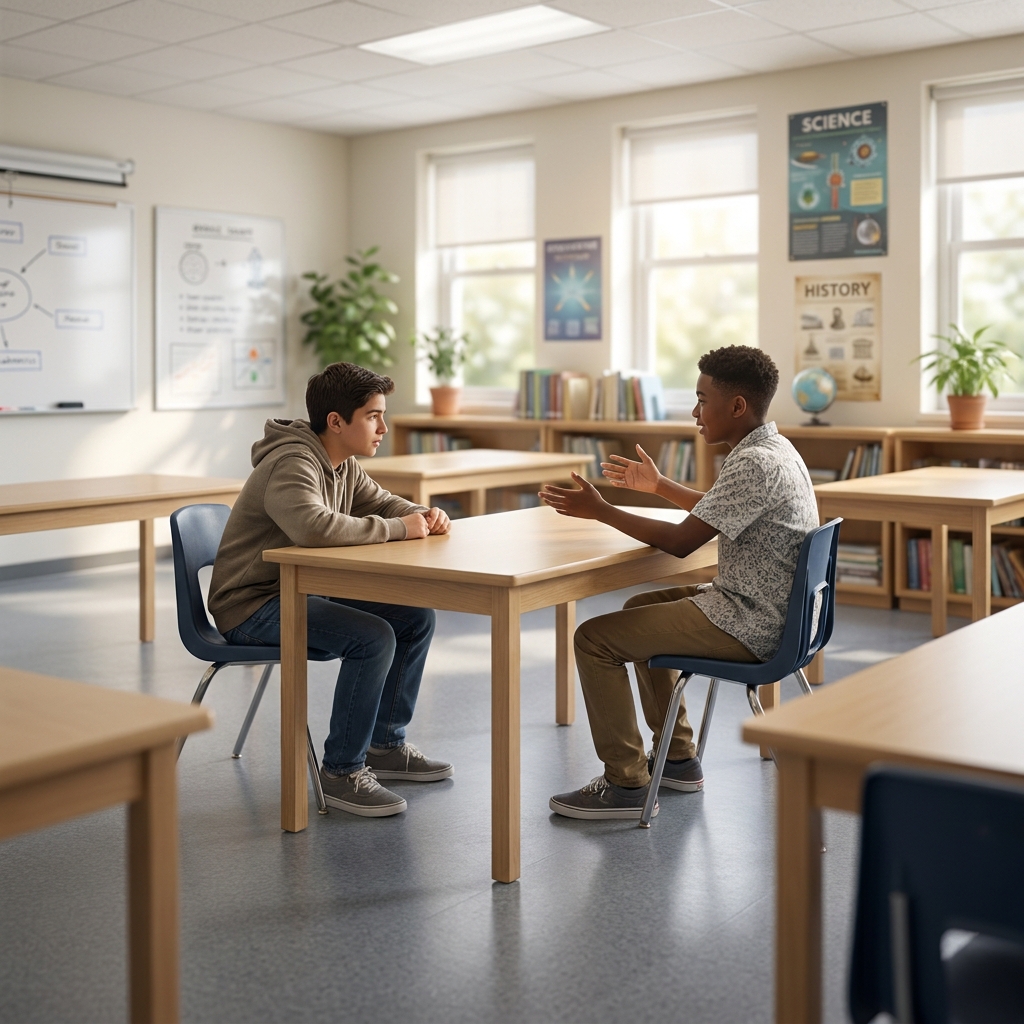
Active Listening and Paraphrasing, Students learn to restate main points to demonstrate clear understanding