

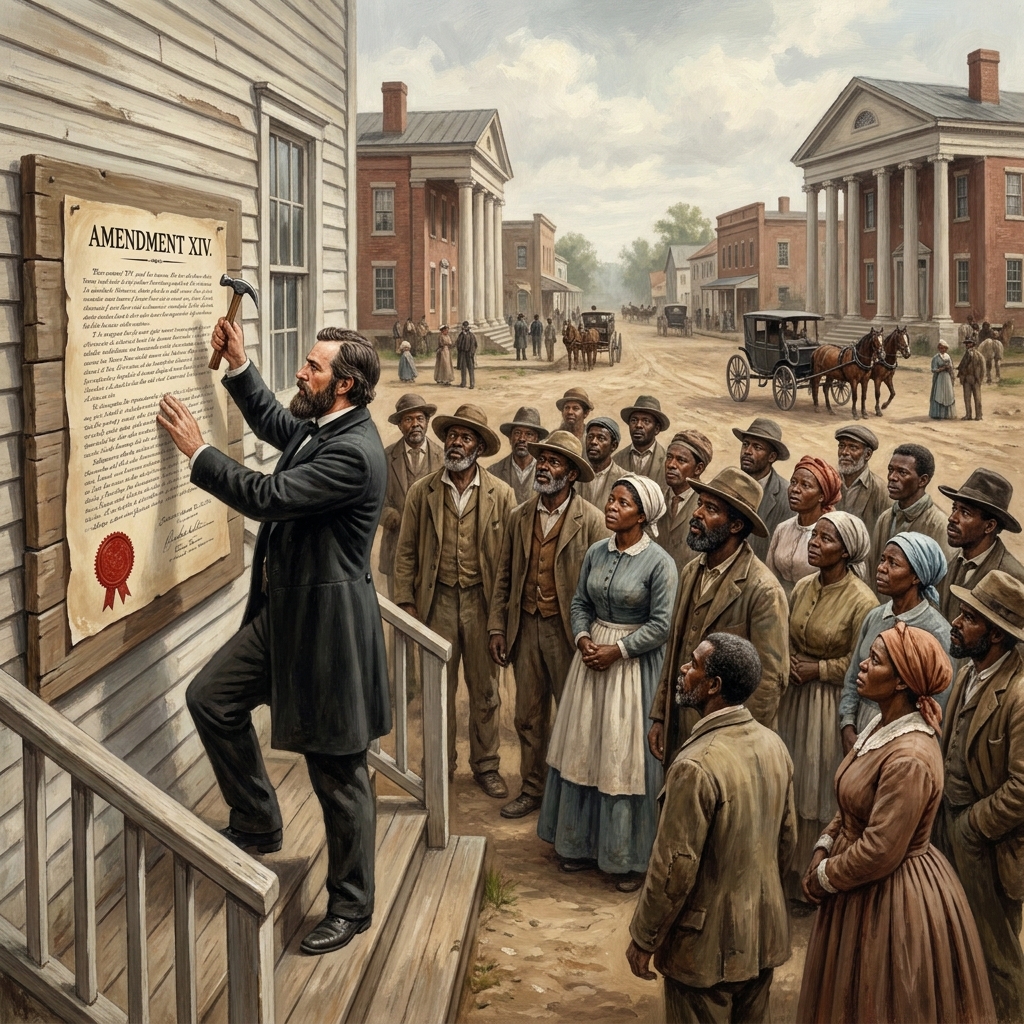
You have probably seen a student pause during a discussion on the Civil War, confused about how the country simply moves from open conflict to peace. It is the moment when the textbook flips from battles to the legislative struggle of rebuilding. This Rebuilding a Nation: The Era of Reconstruction lesson for 8th grade social studies covers the period from 1865 to 1877, a time when the government worked to rebuild the South and define the rights of newly freed African Americans.
Students start by examining the constitutional amendments intended to create a legal framework for freedom. The lesson explains that the 13th Amendment permanently ended slavery, the 14th Amendment granted citizenship and equal protection to all persons born or naturalized in the United States, and the 15th Amendment prohibited the denial of voting rights based on race. Teachers in districts like San Diego Unified, William S. Hart Union High School District, Eureka Union School District, and Silver Valley Unified all use the same CA.HSS-8.11 standard, which requires students to analyze the character and lasting consequences of Reconstruction. This means students are expected to move past the dates and names to understand how these laws shifted the American experience.
What the lesson actually asks students to do
The material does not shy away from the friction of the era. Students look at how the promise of the 15th Amendment was undercut by state-level policies like poll taxes, which were fees that made it difficult for poor people to participate in elections. You will find that your students engage well with the vocabulary terms provided, such as Freedmen’s Bureau, which served as a federal agency to provide food, clothing, and education; Black Codes, which were laws passed to restrict the freedom of African Americans; and sharecropping, the economic system that kept many in cycles of debt.

The lesson asks students to synthesize these ideas, connecting the failure to secure land ownership for freedmen to the emergence of a wealth gap. This is defined in the lesson as a significant difference in assets and financial stability between groups that persists across generations. It is a sobering but necessary look at how systemic inequality, defined here as a situation where laws and social structures create unfair outcomes, took root. If students do not grasp how these legal failures prevented long-term economic stability, they will find the later study of the civil rights movement and late 19th-century industrialization much harder to parse. You can use this for a whole-class assignment, as a lesson for a student who missed the week, or as a productive substitute day activity.
Where students slip
The biggest hurdle for 8th graders here is the distinction between what the law promised and what the reality of daily life actually looked like. When you guide them through the 8th grade reconstruction history lesson, emphasize that the text of an amendment is only one piece of the story. The lasting consequences of Reconstruction, which the lesson identifies as the long-term impacts of these policies on modern American society, are often hard for middle schoolers to visualize. I find that when we map the rise of discriminatory laws against the constitutional promises, students stop looking at history as a series of inevitable successes and start seeing it as a hard-fought, often fractured, negotiation.

Be ready to spend a little extra time on why the 14th Amendment was necessary in the first place, especially in terms of legal protections. When students see that the government had to explicitly grant citizenship to formerly enslaved people to ensure they had the same legal protections as everyone else, the gravity of the post-war situation hits home. The lesson provides a clear path for this realization, moving from the legal milestones to the harsh reality of why those milestones were insufficient to prevent systemic issues. Use this to help your students understand that becoming an informed citizen means recognizing how the laws of the past continue to shape the financial and political barriers we discuss today.
Related lessons
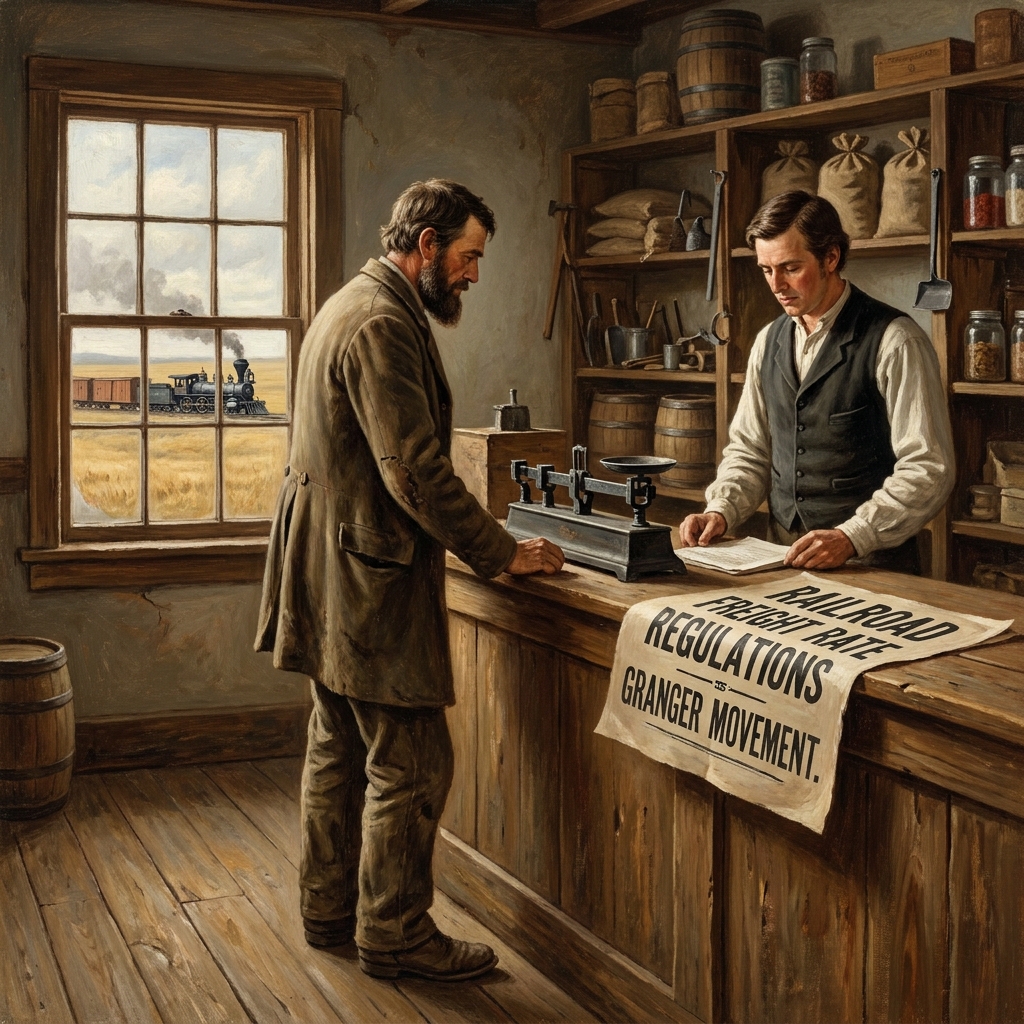
Farmers and Reform: The Grange and Populism, Covers agricultural movements and the rise of populism in America

The Birth of Political Parties, Explains the origins and early development of US political parties
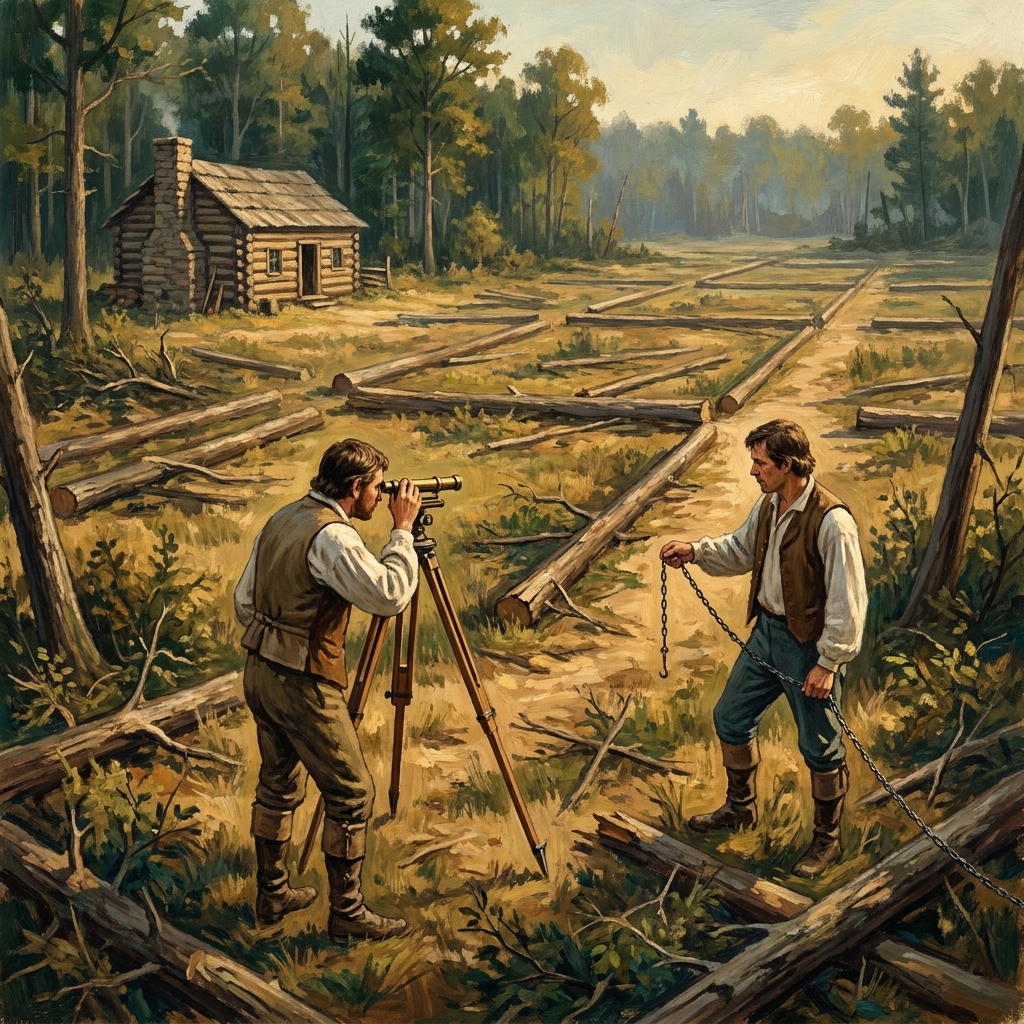
Privatizing the Frontier: The Land and Northwest Ordinances, Discusses land policy and expansion in the early United States