

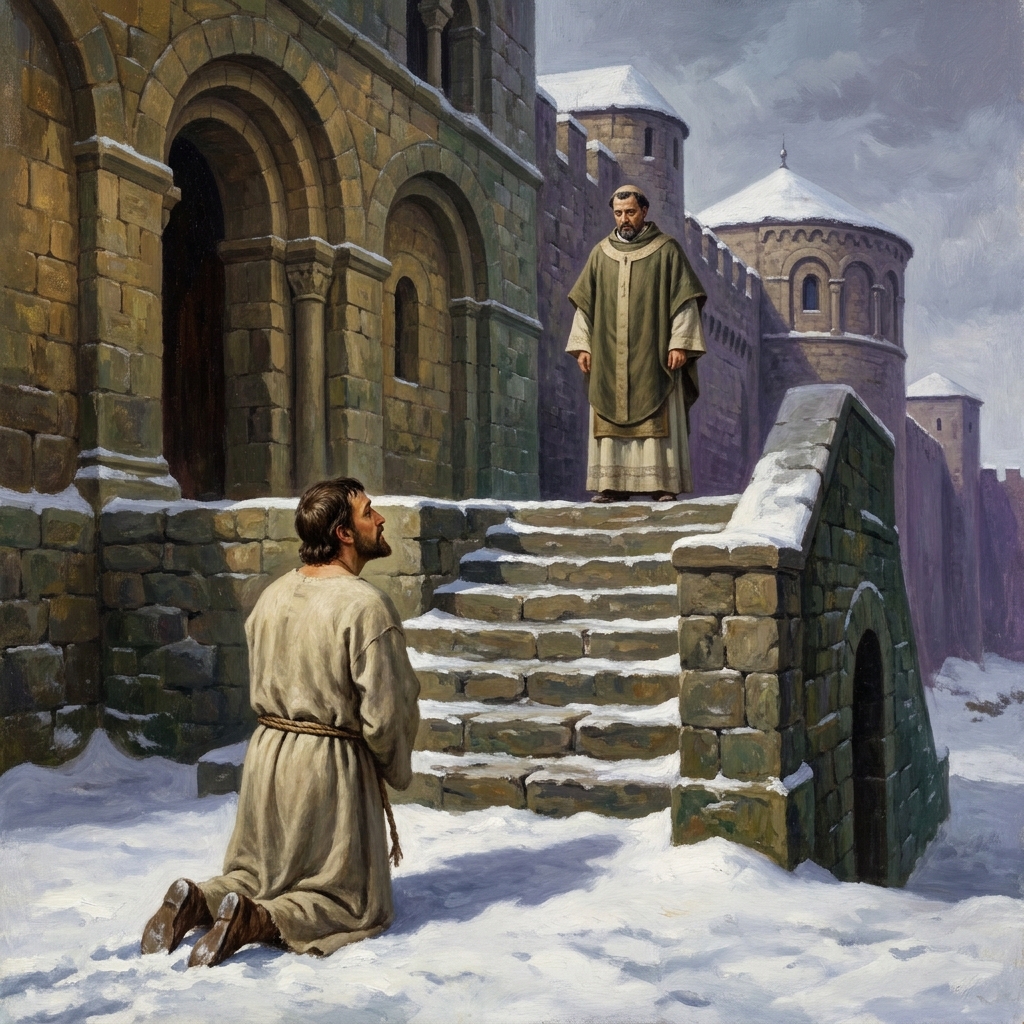
“Demonstrate an understanding of the conflict and cooperation between the Papacy and European monarchs (e.g., Charlemagne, Gregory VII, Emperor Henry IV).” This is the explicit language of CA.HSS-7.6.4. While the standard reads like a checklist, it is really asking your students to grasp the subtle shifting of authority in a world where the lines between spiritual leadership and political rule were constantly blurring. Whether your team is in San Diego Unified, Moreno Valley Unified, Simi Valley Unified, or Central Unified, this standard provides the framework for teaching these historical power shifts.
You can find this material in Power and Faith: The Papacy and Medieval Monarchs. The lesson starts with the basics of how these two entities relied on one another, specifically citing the coronation of Charlemagne by Pope Leo III as a moment of mutual reinforcement. From there, it moves into the inevitable friction that came when their interests diverged. I find that seventh graders usually struggle with the idea of excommunication. They know it means being kicked out, but they often fail to grasp the gravity of that status in a society defined by faith. The lesson illustrates this brilliantly with the standoff between Pope Gregory VII and Emperor Henry IV over the appointment of bishops, which ultimately forced Henry to travel to Canossa to beg for forgiveness.
Using this in the classroom
This is a 45-minute lesson, making it perfect for a substitute day, independent study, or a quick intervention session for students who missed the main unit on the Middle Ages. The guided practice is particularly effective because it puts the student in the shoes of a medieval king. By asking them to draft a letter to the Pope seeking a blessing for a crusade, the lesson moves away from rote memorization and forces them to engage with the transactional nature of the medieval state. They have to decide what they want from the Church and why the Pope might be the only person capable of granting that legitimacy.

Where students slip
The biggest hurdle here is the tendency to view the Church only as a religious institution. When you lead this 7th grade medieval history lesson, keep a close ear on how your students describe the motives of these actors. They often assume monarchs were purely evil or popes were purely holy. Use the guided practice to push back on that. Ask them if the king is writing to the Pope because he is a devout believer or because he needs the Pope’s army to secure his land. The lesson does a great job of keeping this distinction front and center, eventually closing with a reflection on how these historical clashes laid the groundwork for our modern separation of church and state.

I recommend using this as a mid-unit checkpoint. It is specific enough to be useful, but broad enough that it does not bog the class down in unnecessary biographical details of every single monarch. If you have students who feel overwhelmed by the complexity of the period, have them focus entirely on the difference between the two scenarios provided: the cooperation seen with Charlemagne versus the direct conflict between Gregory VII and Henry IV. That duality is the heartbeat of this entire standard.
Related lessons
Foundations of Islamic Belief and Practice, Covers the core tenets and traditions of the Islamic faith

The Roman Empire: Borders and Pressures, Analyzes the external and internal challenges faced by Roman leaders

Understanding Medieval Japan, Explores the political and social structures of feudal Japanese society