


If you are looking for a straightforward way to bridge the gap between social trends and legislative action, Policy Responses to American Demographic Shifts is worth a look.
This high school US History lesson is built for 11th graders to examine the intersection of 20th-century social change and government intervention. It is a solid choice for a substitute day or as a quick refresher for a student who missed the week, as the content is self-contained and takes about 45 minutes to finish. Across districts like Fresno Unified, Fullerton Joint Union High School District, Acton-Agua Dulce Unified, and Hacienda la Puente Unified, teachers are working to help students connect the dots between how people move and how the state responds.
What the lesson asks students to do
The core objective is for students to identify how government policies shifted alongside American demographics in the 20th century. The lesson starts with a familiar scene: the post-war migration from dense cities to suburban areas. It uses the Federal Highway Act of 1956 as the primary example of how the government responded to the sheer necessity of connecting new, sprawling suburbs to job centers through a national interstate system.

Students then walk through a specific case regarding higher education. The lesson highlights the expansion of state universities in Sunbelt cities, explaining that state governments directed tax revenue toward these institutions specifically because of the massive influx of young residents. It is a clear example of a policy being a proactive management tool rather than just a reaction. To succeed here, students must define the policy response itself rather than just memorizing the law names. When you are circulating the room, listen for students who can articulate that a policy response requires the government to address a specific population need, whether that is infrastructure, education, or housing.
The lesson also touches on the Housing Act of 1949 and the complexities of urban renewal. It introduces students to the tension between clearing blighted neighborhoods and the resulting displacement, noting how these programs were intended to manage urban development but often had unintended consequences on racial demographics. You might find that some students struggle with the nuance of these policies. Remind them that identifying a policy response does not mean endorsing the historical outcome; it just means tracing the government’s attempt to intervene.
Aligning with the standards
This resource covers CA.HSS-11.11.7, which is a California-adopted standard under the US History and Geography framework. This standard asks students to explain how federal, state, and local governments respond to demographic shifts like the move to suburbs, racial concentrations in cities, Frostbelt-to-Sunbelt migration, international migration, the decline of family farms, increases in out-of-wedlock births, and instances of drug abuse. It is a tall order for one standard, but this lesson provides the exact vocabulary and structural framework to get those conversations started.

Using a high school social studies demographic change lesson like this helps ground the abstract concepts of 20th-century policy in concrete reality. I suggest using this as a standalone assignment for independent study or as part of a larger unit on domestic policy. It is helpful to emphasize the why-it-matters section: understanding these links helps students realize that government action is rarely random. It is almost always a reaction to the shifting lives of the people on the ground. When your students walk away, they should be able to look at a contemporary social issue and ask what policy response might be in play. It is a practical skill for any citizen, regardless of their grade point average or political interest.
Related lessons

Diplomacy in the Twentieth Century, Analyzes international relations and foreign policy across the twentieth century
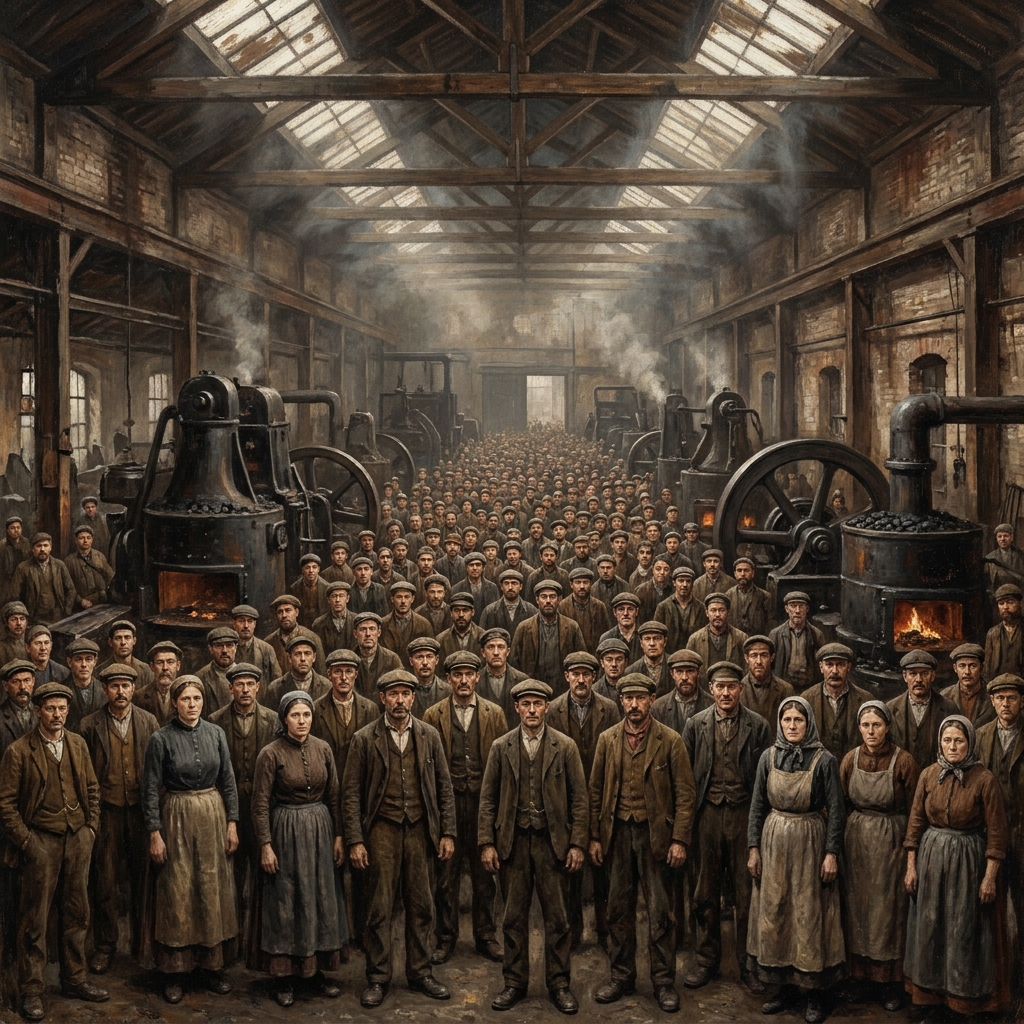
The Evolution of Organized Labor in America, Examines the development and influence of labor unions in America

Faith and Reform: Religious Roots of American Civic Principles, Explores how religious values shaped various American social reform movements