

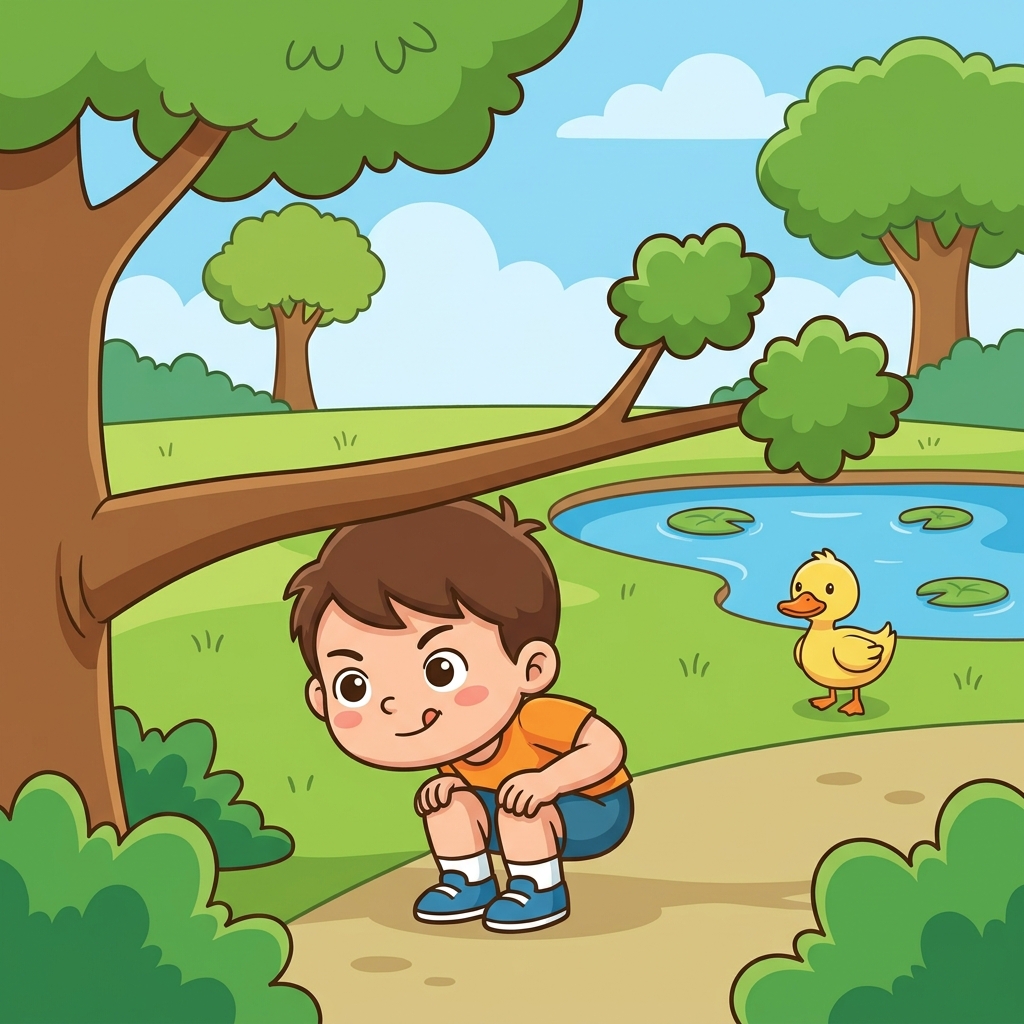
The biggest hurdle for kindergarteners learning new vocabulary is assuming that every word has only one meaning. They get comfortable with a noun, like a duck being a bird, and then feel genuinely tripped up when they hear someone tell them to duck under a low bar. It is a simple shift in thinking, but it takes practice to get them to look at context clues rather than just memorizing a single definition.
When you need to assign a quick review of these language skills, New Words and Word Parts is a solid choice for your kindergarten English language arts students. It tackles exactly this kind of word flexibility, asking students to determine or clarify the meaning of unknown words by looking at the surrounding context and recognizing how small parts of a word change its meaning. The lesson is designed to be efficient, usually taking about 15 minutes to complete. It works well as an independent study task, a quick intervention for a student who missed the week, or even a standby assignment for a substitute day.
What the lesson asks students to do
The core objective is simple: students learn that words are not always static. The materials guide the class through identifying new meanings for words they might already know. If they can get past the idea that a word has only one definition, they start to pay attention to the setting or the sentence structure to figure out the intended meaning. This is a critical building block for early reading comprehension.

The lesson also introduces the concept of inflections and affixes. Students look at how parts like -ed, -s, or -ful change a word. I have found that when students realize they can peel away an ending to find the root word, their confidence with new or long words improves significantly. By using kindergarten vocabulary practice materials like this, you can give them the tools to decode the meaning of a word even when it looks unfamiliar at first glance.
Standard requirements and classroom use
This lesson directly serves CA.ELA.L.K.4, which is the California-adopted standard for vocabulary acquisition and use. This standard asks students to determine or clarify the meaning of unknown and multiple-meaning words in their reading. It has two parts. Part a focuses on identifying new meanings for familiar words, like the difference between a duck and to duck. Part b adds the use of inflections and affixes as a way to find the meaning of unknown words. These foundational skills are taught just as consistently in Palmdale Elementary School District, Mt. Diablo Unified, Western Placer Unified, and Fairfield-Suisun Unified as they are in your own classroom.

Because the lesson is short and self-contained, it is particularly useful for an intervention teacher or an independent-study coordinator who needs to make sure a student is staying on track with core language standards. You do not have to worry about a massive setup time or a complex project. It is a straightforward, targeted task that gives you immediate data on whether the student understands how to use word parts as a clue. If a student is struggling with word recognition, assigning this might be the nudge they need to slow down and look at the suffix instead of just guessing the word.
My one caveat is that this material is best used as a follow-up or a reinforcement rather than an introduction to the topic. While the content is clear, students who have never heard of a prefix or a suffix might need a quick, five-minute conversation with you before they open the screen. Once they understand the basic rule, the practice portion of the lesson does the heavy lifting for you.
If you assign this to keep a student caught up or use it as part of a smaller intervention group, the lesson fits well into a busy schedule. You can assign it, let the student work through the exercises, and then use the results to determine if you need to revisit the topic in person. It is simple, it is focused, and it targets exactly the kind of linguistic awareness that kindergarteners need to succeed as they transition into more independent reading.
Related lessons
Story Friends, Teaches students how to identify character traits in stories

Learning About Stories, Covers the basic structure and elements of simple stories

Making Digital Art, Introduces basic digital tools for creating visual art pieces