


Teaching economics in high school US History allows students to connect historical trends with their own financial lives. This high school social studies lesson is a straightforward way to get your 11th graders thinking about the mechanics of the American economy. If you are preparing for your unit on the Great Depression, Money and Markets in Early 20th Century America hits the ground running. It works well as a whole-class assignment to introduce the concept of central banking or as an independent study module for a student who missed the week. Helping students identify how central banks function prevents the common misconception that economic conditions simply happen to us, rather than being managed by specific policies. When educators show how historical decisions shaped modern economic systems, students gain a much clearer understanding of why the Federal Reserve exists today. This makes the material feel less like a dry list of events and more like a study of cause and effect that still applies to current financial news. Teachers find that connecting past economic struggles to present-day situations helps students pay attention to details they might otherwise skip over. Because the lesson offers a strong narrative structure, students often find themselves more engaged with the difficult vocabulary and complex economic theory. The lesson asks students to tackle the complexities of monetary policy by looking at the era before the Federal Reserve. It starts with the perspective of a farmer in the 1890s who is struggling with deflation. It explains that the farmer must work longer hours to produce more goods just to earn the same amount of cash to pay off his debt. By focusing on that specific pressure, the material helps students realize why a lack of a central bank felt like such a crisis at the time. You will see students work with vocabulary like liquidity, speculation, and the Progressive Era to build a foundation before the lesson transitions into the Federal Reserve Act of 1913. Understanding these definitions before moving into the Great Depression allows students to have a much richer analysis when they encounter primary source materials later on.
Aligning with state requirements
This resource directly covers the CA.HSS-11.6.1 standard. In California, this standard asks students to describe the monetary issues of the late nineteenth and early twentieth centuries that gave rise to the establishment of the Federal Reserve and the weaknesses in key sectors of the economy in the late 1920s. Teachers in Long Beach Unified, Anaheim Union High School District, Sanger Unified, or Bassett Unified are using these same standards to ensure students understand the shift in government responsibility. The lesson does a nice job of keeping the scope tight, focusing on how the system was meant to provide elasticity to the currency so it could expand and shrink based on demand. By narrowing the focus to these key economic indicators, students do not get overwhelmed by too much information. Instead, they learn to isolate the specific failures that contributed to financial volatility. These requirements push students to look closely at government intervention and private industry dynamics during a time of major national change. This is an excellent way to introduce the concept of government oversight in the American economy, especially for students who have not yet studied macroeconomics. Seeing the correlation between policy and economic stability helps students understand why state standards emphasize this era so heavily. It is the perfect starting point for understanding how the United States government began to regulate banking practices to prevent catastrophic financial collapses.

What to look for during guided practice
The guided practice moves into the late 1920s. This is the part of the lesson I find most useful for checking for understanding. It sets up a scenario where workers face stagnant wages while stock market speculation runs rampant. Students have to connect these dots to see the widening gap between the wealthy and the average consumer. I suggest walking around while they work through this; listen for how they describe the risks of borrowing money to buy stocks. If they can articulate why that speculation created a fragile market, they have grasped the core concept. It is not just about historical dates, but about seeing the structural flaws that allowed a minor market correction to turn into a widespread catastrophe. When students engage with the materials, you want them to identify the human cost of these economic mistakes. Encourage them to explain how a simple stock market fluctuation could potentially destroy the savings of an average family. By asking these questions, you ensure that the guided practice is doing its job of evaluating student knowledge. It also gives you a chance to clear up any confusion about why banks were unable to protect consumer deposits during that time. This is a critical point in the history unit that helps students understand the desperation and poverty that followed the market crash.
Practical application and final thoughts
One of the best things about this US History monetary policy lesson is how it brings the topic into the present. It reminds students that when they hear news about the Federal Reserve changing interest rates today, it directly impacts their future ability to buy a house, get a car loan, or find a job. This gives the content immediate stakes for teenagers. The vocabulary provided, especially the definition for the Panic of 1907, is clear and keeps the reading level accessible for high schoolers who might otherwise find economic history dry or confusing. It is a solid pick if you have a substitute day coming up and want something that keeps the class focused on high-level analysis rather than just rote memorization. Just keep in mind that the lesson is dense, so be ready to pause and clarify the difference between deflation and standard price fluctuations as you work through the opening. Having those clear, predefined terms is a major help for students who are new to economic history. By the time they finish the material, they should be able to explain why the Federal Reserve was created and how it attempted to solve the systemic issues of the previous century. This prepares them for subsequent lessons on the Depression and the New Deal, as they will already understand the context of the banking system. Building this baseline knowledge now saves time later in the semester when curriculum pacing becomes more challenging.

Related lessons
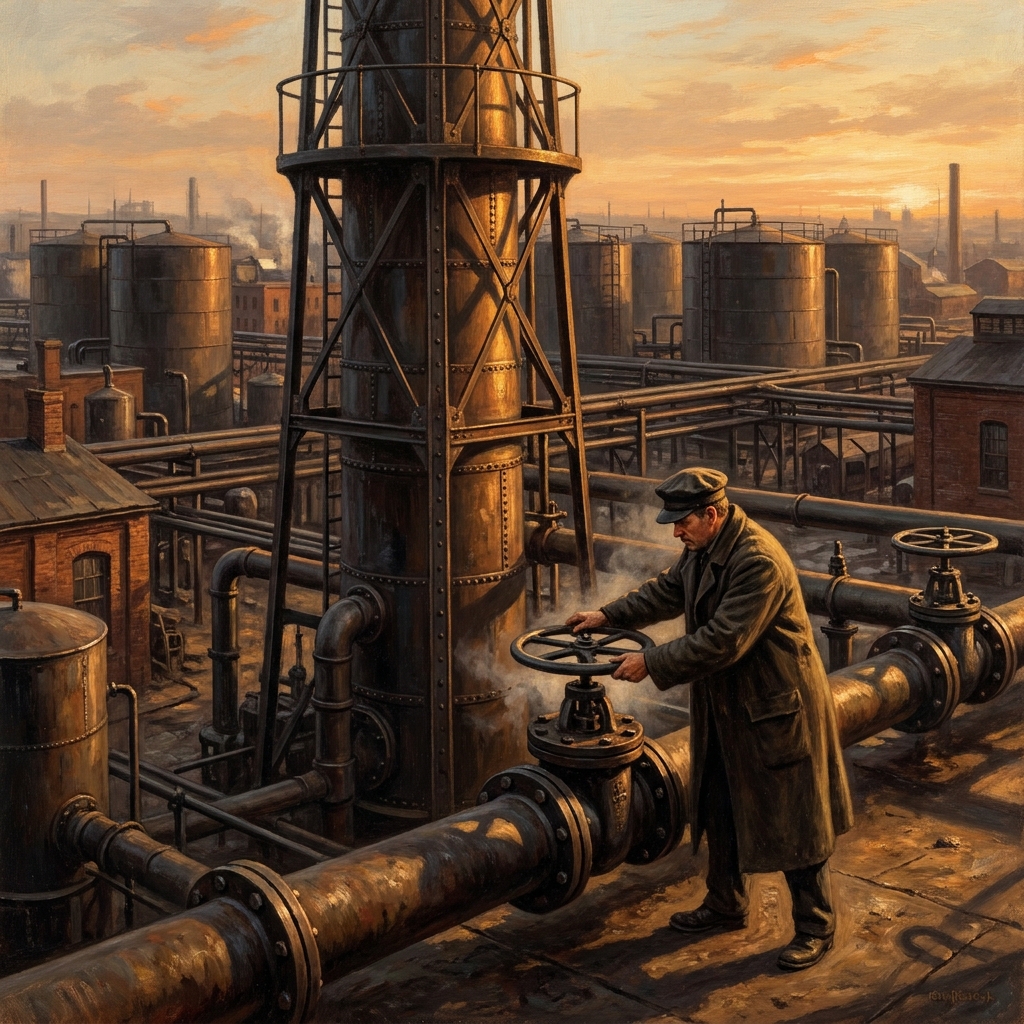
Industrial Growth and US Geography, Covers expansion of industry and shifts in geographic settlement patterns

Foreign Policy and Domestic Movements, Examines global relations and internal shifts in American social policy

Industrial Mobilization and Technological Change in World War II, Analyzes manufacturing shifts and innovation during the second world war