

Understanding the transition of a culture following the destruction of its physical center is a major concept in history. When we study the ancient world, it is common for students to assume that the loss of a structure signifies the end of a people, but this lesson helps clarify that shift.
Why students struggle with the end of the Temple
The most common mistake sixth graders make when we study the ancient world is assuming that when a physical structure like a temple falls, the people and their culture fall with it. They look at the map, see the dispersion of the population, and assume the story ends there. It is a logical but narrow way to view history. If a student cannot understand how communities move their focus from a central, singular location to the daily practices of a home or a local gathering place, the rest of the unit on the middle ages or later religious history will not make sense to them.

That is where Keeping Traditions Alive: Judaism After the Temple fits into your semester. This lesson helps students move past the idea that geography dictates the survival of faith. It centers on the concept of cultural resilience. It asks students to look at the destruction of the second Temple in A.D. 70 not as a final defeat, but as a moment of profound internal shift for the Jewish people.
How this lesson covers cultural resilience
This 6th grade social studies lesson is designed to be completed in about 45 minutes, and it uses a smart approach to bridge the gap between ancient history and the student experience. It opens by asking students to think about what happens when a family moves to a new city. The prompt uses the idea of a family moving from a farm to a city and keeping a specific weekly meal to stay connected to their roots. This builds the empathy necessary to understand how the Jewish community stayed connected despite the Diaspora, which the lesson defines as the scattering of a group of people away from their original homeland.
Instead of focusing on the loss of the physical building, the lesson explains the shift in leadership. It introduces the role of the Rabbi as a teacher and leader who helps others understand the Torah, rather than a priest who conducts sacrifices. This is a vital conceptual jump. When students realize that these leaders focused on teaching the law of the Torah instead of performing temple rituals, they begin to see that faith became portable. The lesson uses the synagogue as the local building where this community prayer and study took place. Because this curriculum is written for 6th grade ancient civilizations lesson standards, it keeps the narrative focused on the core structures of life after the destruction of the Temple.
Meeting state requirements
You are hitting CA.HSS-6.3.5, which is the California-adopted standard that asks students to discuss how Judaism survived and developed despite the dispersion of the population from Jerusalem and the rest of Israel. Students across the state, from Compton Unified and San Jose Unified to Oak Park Unified and Bonita Unified, are working toward this same standard. This part of the curriculum is part of the broader cluster that asks students to analyze the geographic, political, economic, religious, and social structures of the ancient Hebrews. This lesson satisfies the requirement by showing how religious and social structures adapted when the geographic center of the faith was removed.

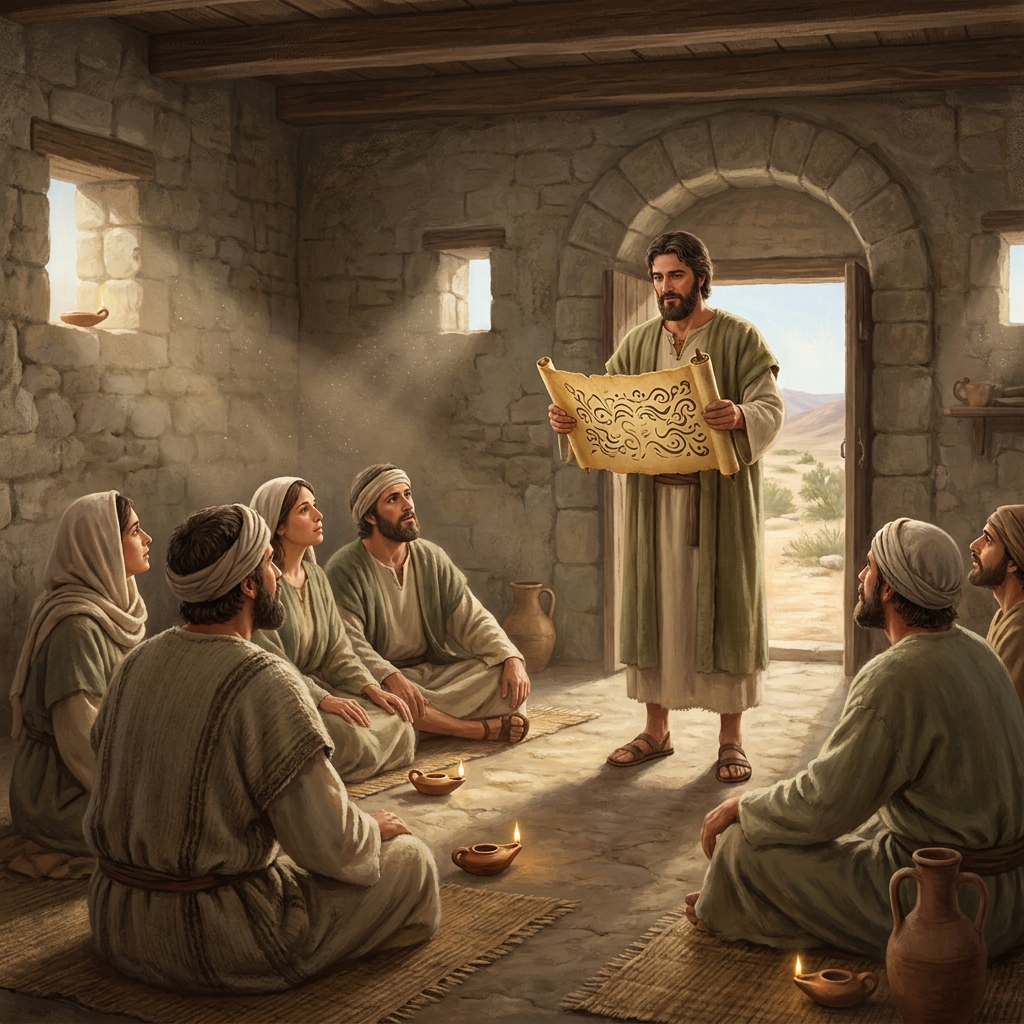
I find this lesson works best when I use it for independent study or as a way to catch up a student who missed the week of direct instruction. It provides enough context that a student can read through the scenario and the worked examples and arrive at an accurate conclusion without needing a full lecture. The guided practice asks students to imagine a Jewish family in a Roman province gathering in their home to read a scroll. It forces them to apply the vocabulary, Rabbi, Diaspora, Synagogue, and Torah, in a way that feels like a real-life application of the history they just read.
Where to use this in your planning
I suggest using this for a substitute day or for students who need to focus on literacy alongside their content. The text is straightforward, and the vocabulary is handled right within the flow of the sentences. One limitation you should keep in mind is that this is a brief overview. It does not go into the complex political history of the Roman provinces during this time, so if you want to push your high-achieving students, you might ask them to consider what the Roman authorities thought about these private gatherings. For the standard, however, this hits the mark perfectly. It grounds the abstract idea of a displaced group in the specific actions of real people, which is exactly how you want your class to think about history.
Related lessons
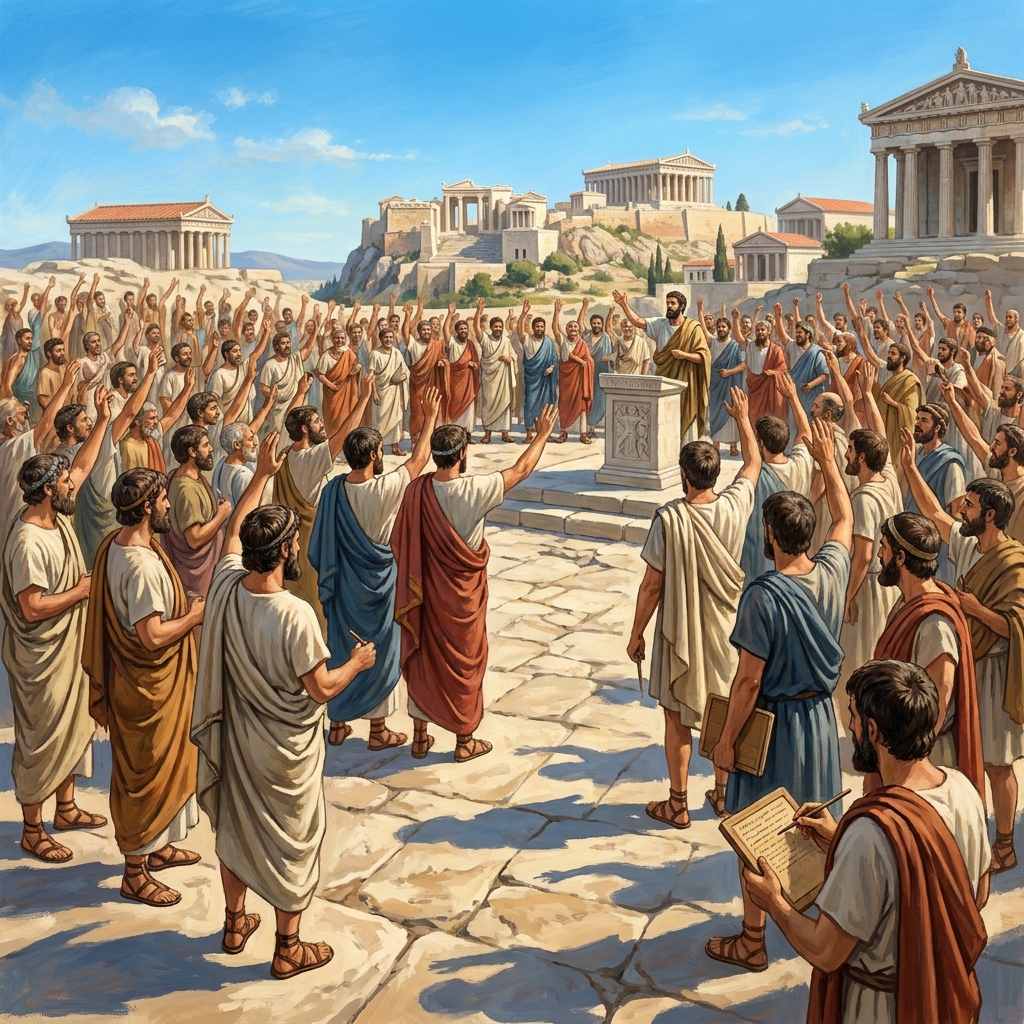
Democracy: Direct vs. Representative, Comparison of direct and representative democracy systems in ancient Greece

Hammurabi's Code and the Rule of Law, Examination of ancient legal codes and their influence on society

Ancient China: A Connected Civilization, Analysis of trade routes and social structures in ancient China