


Teaching students about physics concepts like magnetism and electricity requires finding ways to make invisible forces tangible. Third grade students are accustomed to interacting with the physical world through touch, such as pushing a chair, but they must also begin to understand that forces can act at a distance. Using lessons that ground these theoretical concepts in their local California environment helps bridge this conceptual gap effectively.
Introducing non-contact forces to your third graders
I remember a colleague once asking me if there was a reliable way to make the concepts of magnetism and electricity tangible for eight-year-olds without relying solely on passive video demonstrations. It is a fair question, because at the third grade level, physical science needs to bridge the gap between things they can touch, like pushing a chair, and invisible forces that move things from a distance. Invisible Forces in California is a science lesson that manages to do exactly that by grounding theoretical concepts in the specific environment our students see outside their windows every day.

This lesson is designed for a 3rd grade classroom and provides a solid introduction to the physical science curriculum. It avoids heavy jargon, choosing instead to focus on the observation of phenomena. When you introduce this to your students, you are helping them move beyond the simple idea that movement requires a physical hand-push or a foot-kick. You are helping them understand that there is a whole category of physics happening right in front of them without any physical contact at all.
Aligning with the CA NGSS framework
The core of this material focuses on the primary standard CA.3-PS2-3. This standard asks that students develop the ability to ask questions that help them determine the cause and effect relationships of electric or magnetic interactions when two objects are not touching. It is a critical shift in how they think about the world, moving from simple description to testing causal links.
You will find that teachers in districts as varied as Corona-Norco Unified, Sacramento City Unified, Ramona City Unified, and Sylvan Union Elementary School District all rely on this same California-adopted standard to build their physical science foundations. This consistency is helpful when you are planning units that need to be both rigorous and accessible. California contextualizes this standard by weaving in local environmental phenomena, which keeps the learning relevant. By looking at how static electricity affects dry chaparral or how magnetic sensors track local species, the standard becomes a tool for environmental literacy rather than just a list of physics rules.
Moving from the classroom to the wild
The lesson starts in a place every third grader understands: manual, physical movement. It reminds students that they already know how to move things by pushing them. It then pivots quickly to the interesting part, where things move without being touched. The lesson uses the example of a balloon rubbed against a wool sweater picking up bits of dry chaparral leaves. It is a classic experiment that never fails to get a reaction. From there, the lesson moves to the observation that static electricity can cause dust to cling to a drought-dried leaf. The material explicitly frames this as a non-contact force because the electric charge pulls the dust toward the leaf without the two ever touching.

I find that this third grade science lesson on non-contact forces works best when you let students struggle a bit with the “why” behind the dust-leaf interaction. Once they have that down, the lesson moves to guided practice where students investigate how dry grass fibers react to static electricity during a drought. It is a great moment for them to apply what they just observed in the demonstration.
The closure of the lesson is perhaps my favorite part because it connects these invisible forces to real-world conservation. It explains how non-invasive magnetic sensors allow scientists to track native species like the desert tortoise or the California Condor without disrupting their natural habitat. For a student who needs a reason to care about physics, seeing it used to protect an endangered animal is a powerful hook. This approach helps students see that science is not just about isolated experiments in a lab, but about understanding our role in the ecosystem. It is a perfect fit for a whole-class science block, but it also works well for a student who missed the week and needs to catch up through independent study. If you have a substitute teacher coming in, the straightforward progression of the material makes it an excellent choice for a day where you need something meaningful but contained.
Related lessons

Forces That Shape Our California Home, Physical forces that influence the landscape of the California environment
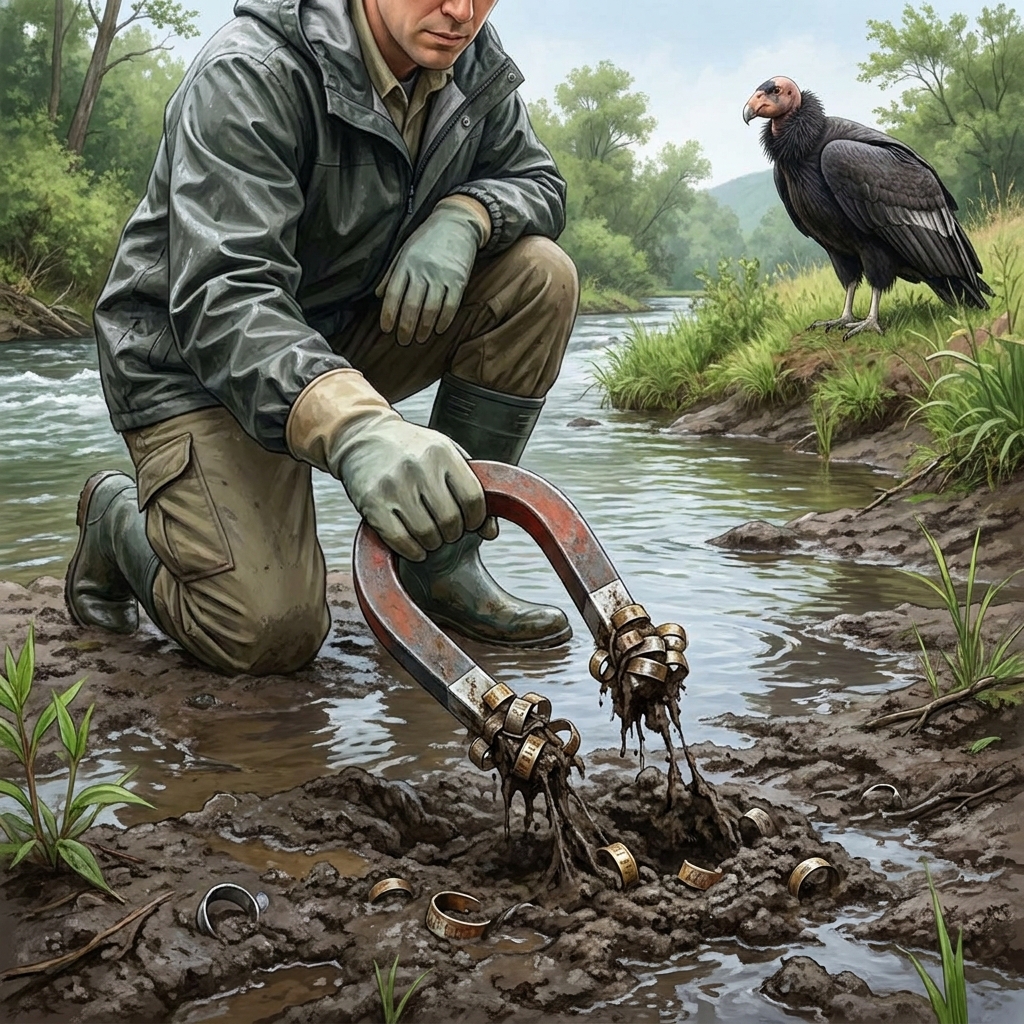
Using Magnets to Solve Problems, Practical applications of magnetic forces to address real world challenges
Predicting Motion in California Ecosystems, Analyzing patterns of movement within various local California natural habitats