

Teachers in 3rd grade science often find themselves scrambling to cover biology standards when the weather starts to turn in the spring. This is the time when local assessments loom, and it is easy to feel behind. If your schedule is tight, Traits and Variations in California Crops is a helpful resource that keeps the focus on clear data analysis rather than abstract concepts. It is designed to be a self-contained digital lesson for students in their third year of elementary school.
This 3rd grade science material covers the fundamental concepts of biology that define how organisms pass features to their young. The lesson defines an inherited trait as a feature passed from parent to offspring, such as the specific coat color pattern that a puppy receives from its mother. The lesson also introduces the term offspring to describe the young produced by living things, and variation to explain the differences in traits between individuals of the same kind. It is straightforward and avoids overcomplicating the science, which I find is a common trap in elementary life science.
What the lesson actually covers
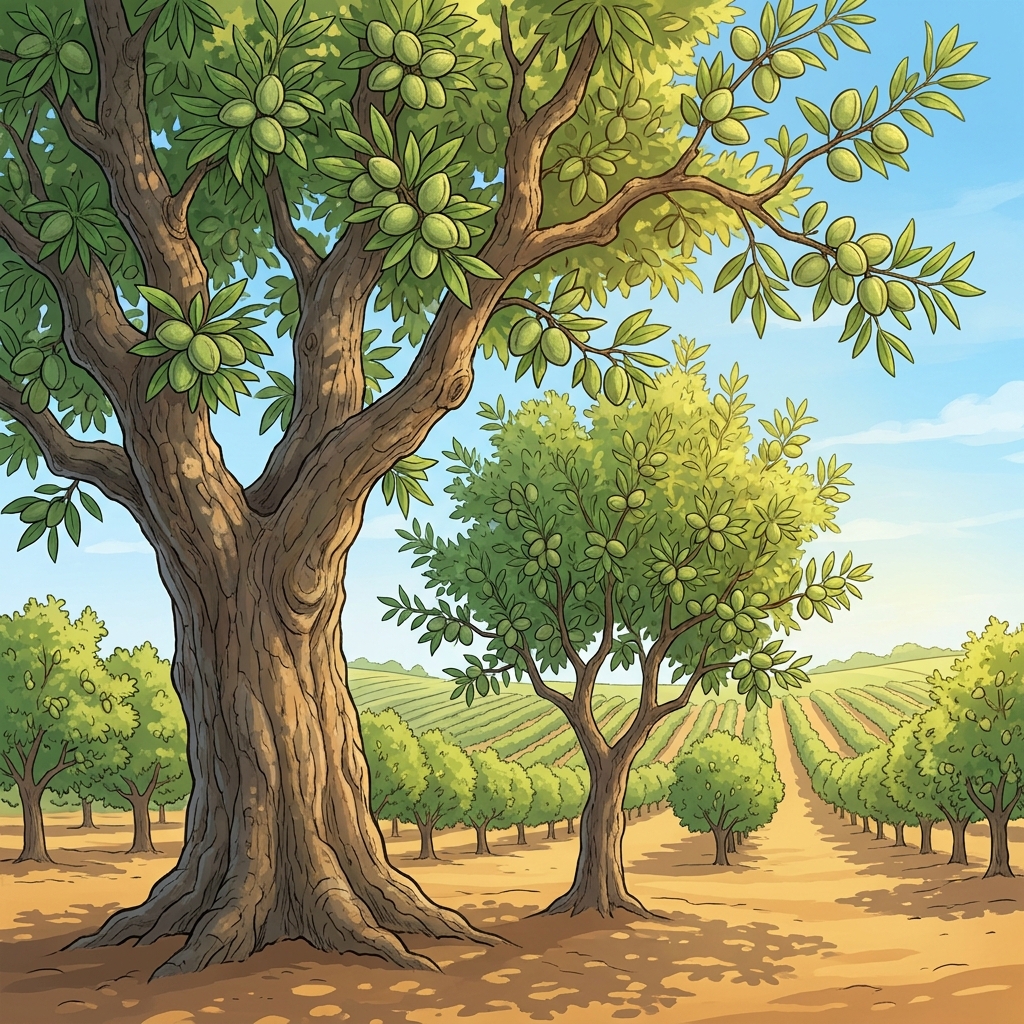
The lesson presents clear, concrete scenarios that students work through to build their understanding of heredity. One worked example focuses on an almond tree. When a parent almond tree with a shell hardness level of 5 produces an offspring tree with a shell hardness level of 5, the student identifies this as an inherited trait. The evidence provided is that the hardness level is identical to the parent, showing the feature was successfully passed down. This is an excellent way to ground the concept in something measurable.

The guided practice moves into the real world of California agriculture. It challenges students to analyze citrus species like lemons and oranges to look at sugar content. The material explains that scientists look for variation within the same species to identify traits like sweetness or peel thickness. A cultivar, defined in the lesson as a specific variety of a plant like a Valencia orange versus a Navel orange, serves as the primary tool for comparison. The why-it-matters section notes that selecting plants with the best traits allows farmers to produce more food for everyone. This is the same standard taught across the state in places like Poway Unified, San Juan Unified, San Luis Coastal Unified, and Salida Union Elementary School District.
Making sense of plant traits
Using an inherited traits and variations lesson allows a student who missed the week to catch up on the core concepts without needing a one-on-one lecture. I have found that students sometimes confuse inherited traits with behaviors they learn after birth. The lesson design does a good job of keeping the focus on physical characteristics like color, shape, and structure. It is a good choice for independent study or as a backup plan when you need a day for attendance recovery.
One caveat for teachers to keep in mind is that the concept of a cultivar might be new for most 8-year-olds. While the lesson explains it well, you should expect to spend a moment explaining that even though we call them all oranges, they have differences because of the specific variety. If you have a classroom of students who need a bit more support, you may want to have some real fruit on hand to show those physical differences in size and peel thickness.
A practical approach to science data
The primary standard for this lesson is CA.3-LS3-1. This California-adopted standard asks students to analyze and interpret data to provide evidence that plants and animals have traits inherited from parents and that variation exists within a group of similar organisms. This standard is part of a larger cluster on heredity, and this lesson specifically uses California agriculture to meet those requirements. It is an effective way to handle a standard that can otherwise feel too theoretical for a 3rd grader.

You can use this lesson as a whole-class assignment on a projector, or it works perfectly for a substitute day. When I have used similar materials, I like to have the students record their findings on their own paper alongside the screen. It keeps them honest and engaged with the data. If you have students who require intervention, the clear, step-by-step nature of the examples makes it less intimidating for those who might struggle with reading comprehension. This material cuts through the noise and helps the students see that biology is not just something in a textbook, but something that defines the crops grown right here in our state.
Related lessons
Helping Nature When the Environment Changes, Discusses how environmental changes impact various plant and animal species

How Traits Help Animals Survive, Explores how specific physical characteristics support animal survival in nature

Protecting California's Native Species, Focuses on conservation efforts for native plants and animals today