

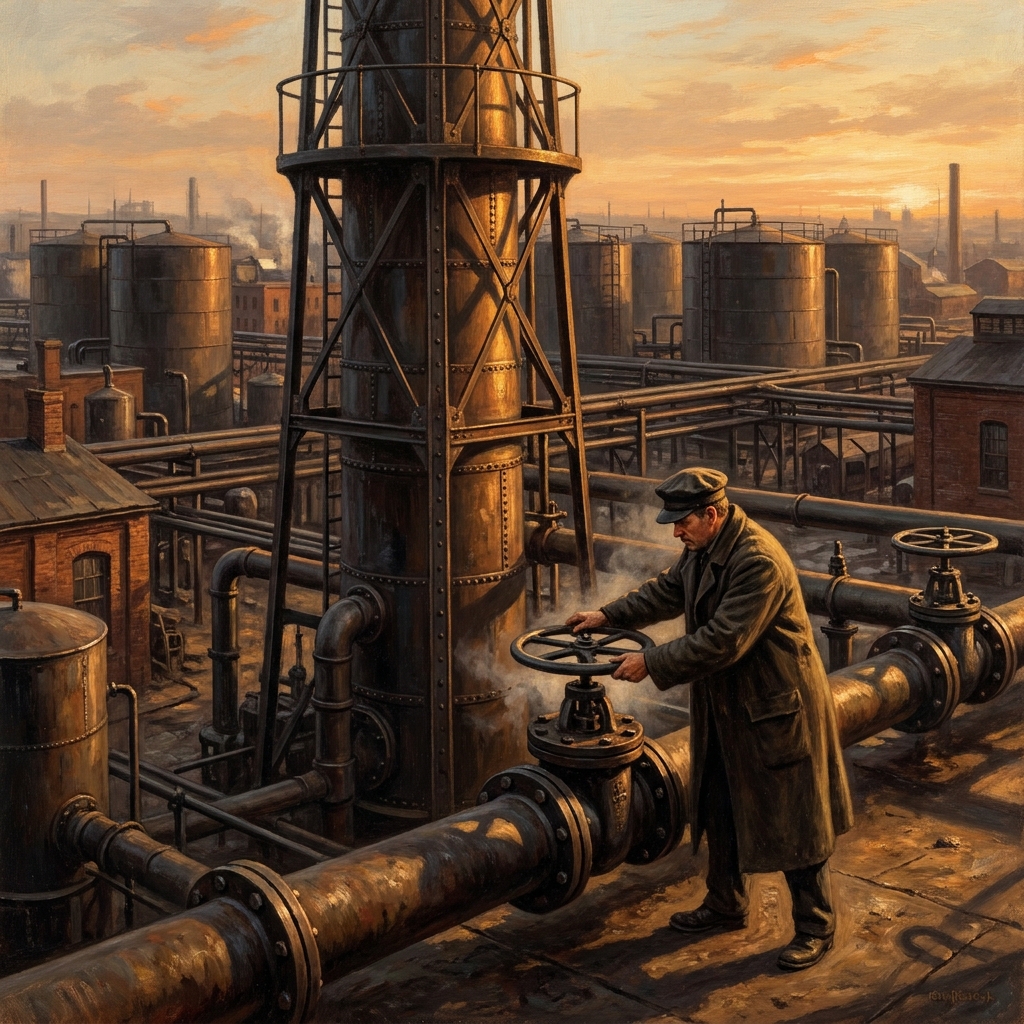
When we look at the Standard Oil example of refining thousands of gallons of kerosene at once, it is easy for students to focus only on the sheer volume of output. Many teenagers assume that industrial power is simply the result of building a really big factory. They see the machines and the smoke and they think they understand the era. However, this is the exact wrong turn that catches most of them when we discuss 11th grade US history. The real story of our nation moving from an agrarian debtor to a global creditor is not just about having large machines. It is about how our specific geography and our ability to move raw materials across 2000 miles of track created a situation where those machines could actually function at scale. If you are teaching high school social studies and want to push your students toward a more analytical view of the economy, Industrial Growth and US Geography is designed to fix that narrow perspective.
This lesson provides the material necessary to help students grasp the core concept of industrial power. It defines this as the ability of a nation to produce massive amounts of goods through factories and machinery rather than hand-made tools. The lesson takes them through the infrastructure requirements for such a shift, specifically looking at the Transcontinental Railroad as the catalyst that allowed raw materials like coal and iron ore to flow from the mines to the cities where the factories were waiting. Teachers in the Sweetwater Union High School District, Visalia Unified, Pierce Joint Unified, and Willows Unified all teach the same standard, and this resource fits that sequence perfectly. By using this US history industrialization lesson, you are giving students a way to see that the modern world is not an accident of history but a result of deliberate choices about infrastructure and trade.
What the lesson actually asks students to do
The core objective here is to connect the growth of American industries to the ways our physical geography and trade routes made the nation a global power. Students analyze the shift to capital-intensive industry, which is defined as a business that requires a large investment of money in machines, equipment, and factories to produce goods on a massive scale. The lesson forces them to look at the trade treaty scenario, where lower taxes on imported machinery meant that local manufacturers could buy better equipment than they could build themselves. This is the heart of the standard, CA.HSS-11.2.6, which asks students to trace the economic development of the United States and its emergence as a major industrial power, including its gains from trade and the advantages of its physical geography. This is a California-adopted standard, and it is part of the California Common Core for history. It asks students to analyze the relationship between industrialization, rural-to-urban migration, and immigration from Southern and Eastern Europe, requiring them to synthesize these economic changes with the movement of people across the country.

I find that students often struggle with the idea that geography provides an advantage rather than just being a location on a map. They see the Transcontinental Railroad as just a way for people to travel West. The lesson redirects that thinking by showing them that the railroad was a logistical spine that allowed for the mass production of goods. It effectively connects the dots between a mine in the West and a factory in the East. When they see that trade treaties or infrastructure projects are what allowed for the transition from hand-made tools to massive refinery systems, they stop thinking of history as a list of dates and start seeing it as a series of strategic economic decisions. It turns abstract economic growth into a tangible map of resources and shipping lines.
Where students slip
The primary area where I see students trip up is in understanding that being an industrial power is a choice of economic strategy, not just an inevitable result of having natural resources. They might think that because the U.S. had plenty of coal and iron, the industrial boom was bound to happen. They forget that the nation had to be connected, and that it had to engage in global trade to import the high-end machinery that accelerated domestic production. The lesson does a good job of balancing these factors. It forces them to look at how the exchange of goods and services between different countries acted as a multiplier for domestic capability. The guided practice scenario about lowering taxes on imported machines is a great way to ground this in a specific, relatable policy decision. It shows them that policy and geography work together to create the foundation of our daily lives.

This lesson is excellent for a whole-class assignment where you want to facilitate a discussion about why certain regions industrialized while others remained agrarian. It is also perfect for an independent study module because the reading is straightforward and the scenarios are well-defined. If you have a student who missed the week of instruction on the Gilded Age or the industrial transition, this covers the material in a concise 45-minute block. It does not try to cover every detail of the 20th century, which is its greatest strength. It stays focused on the transition to industrial power so that students are not overwhelmed by unnecessary dates or names. They finish the lesson with a much clearer understanding of why the United States became a leading global creditor and exporter. It is a solid piece of work that respects the student intelligence by asking them to analyze actual economic concepts rather than just memorizing definitions.
Related lessons

Religious Liberty and the Constitution, Constitutional analysis of religious freedom within the American legal framework

Causes and Responses to the Great Depression, Economic factors and government reactions during the Great Depression era

Budgeting for America: Post-War Priorities, National economic spending and priorities after the second world war