

Students often assume that eating is just a way to make food disappear. They see an apple and think it vanishes once it is consumed. We know matter cannot be created or destroyed, but getting eighth graders to apply this to their own biology is a different story. If they do not grasp the idea that atoms from a sandwich become the atoms of their own muscle or bone, they will struggle when you reach high school chemistry.
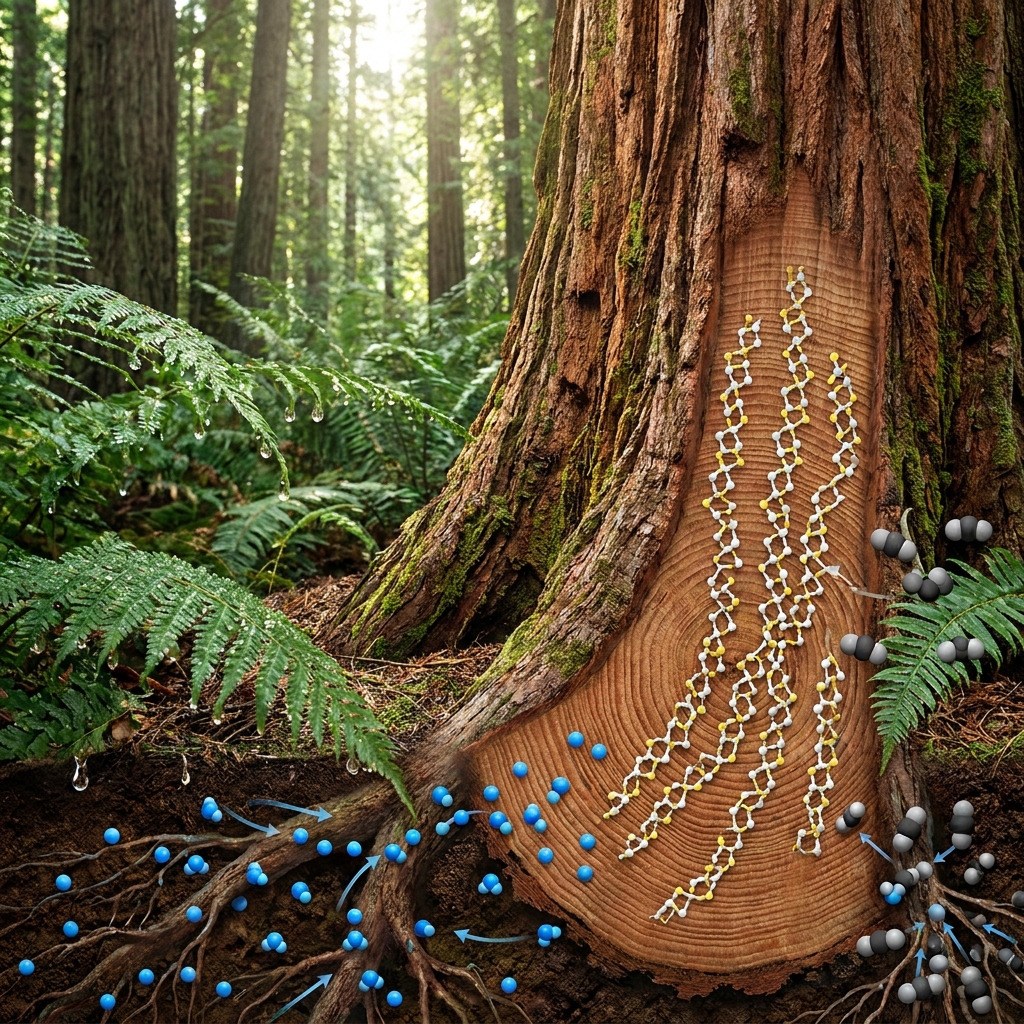
How Your Body Uses Food is a 45 minute science lesson for 8th grade that forces students to look at biology through a chemical lens. The objective is for them to explain how the body breaks down molecules to release energy and build new structures. It uses clear examples, like a redwood tree building cellulose from carbon dioxide and water, to show that growth functions as a chemical reaction.
The science of molecules
Students start by realizing matter is rearranged. The opener uses a sugar cube in water to show that something we cannot see is still there. They define core terms like matter, molecule, and chemical reaction. These concepts provide the backbone for understanding that when a California condor grows its wings, it is actually rearranging the food it eats into new feathers and bone tissue. It is not just gaining size by magic, but building itself out of the material it ingests.

The lesson serves the state requirement for CA.MS-LS1-7, the California-adopted standard. This standard asks students to develop a model that explains how food is rearranged to support growth or release energy as it moves through an organism. Teachers in districts like Compton Unified, Montebello Unified, Yreka Union Elementary School District, and Newport-Mesa Unified are all working toward this same expectation. Because California middle school science weaves physical and life sciences together, this lesson fits into that larger framework perfectly.
Why these concepts stick
The lesson connects this biology to real life. It explains how athletes recover by balancing proteins and carbohydrates to rebuild muscles after exertion. It also touches on how wildlife faces environmental stress. When a seismic event alters the physical environment and limits food access, animals must use stored fat through cellular respiration to survive. They pivot from growth to maintenance. This is where students see the connection between their health and the physics of the environment.
If you are searching for a high-quality cellular respiration lesson that bridges the gap between nutrition and conservation, this is it. It asks students to move away from vague terms like metabolism and start naming the actual process where glucose and oxygen react.
Where this lesson fits in your classroom
This lesson is a solid choice for a whole-class assignment when you hit the life science unit on energy. It is equally effective for a student who missed the week and needs a concrete task to catch up on the basics of mass conservation. If you find your class struggling with the difference between growth and energy release, use this to bridge the gap.

The only limitation to watch for is the pace. Some students get stuck on the math of the sugar cube or the logic of the redwood tree. You might need to remind them that mass is not gone, just moved. If they cannot visualize the atom rearrangement, the later discussions about cellular respiration will fall flat. Keep them grounded in the idea that atoms are fixed pieces of a puzzle. When they finish this work, they should understand that they are quite literally what they eat.
Related lessons

Natural Selection and Trait Frequency, Covers how traits change in populations over many generations

Genetic Inheritance and Reproduction, Explains how genetic information passes from parents to offspring

Evaluating California Conservation Programs, Analyzes effectiveness of regional environmental protection efforts and strategies