

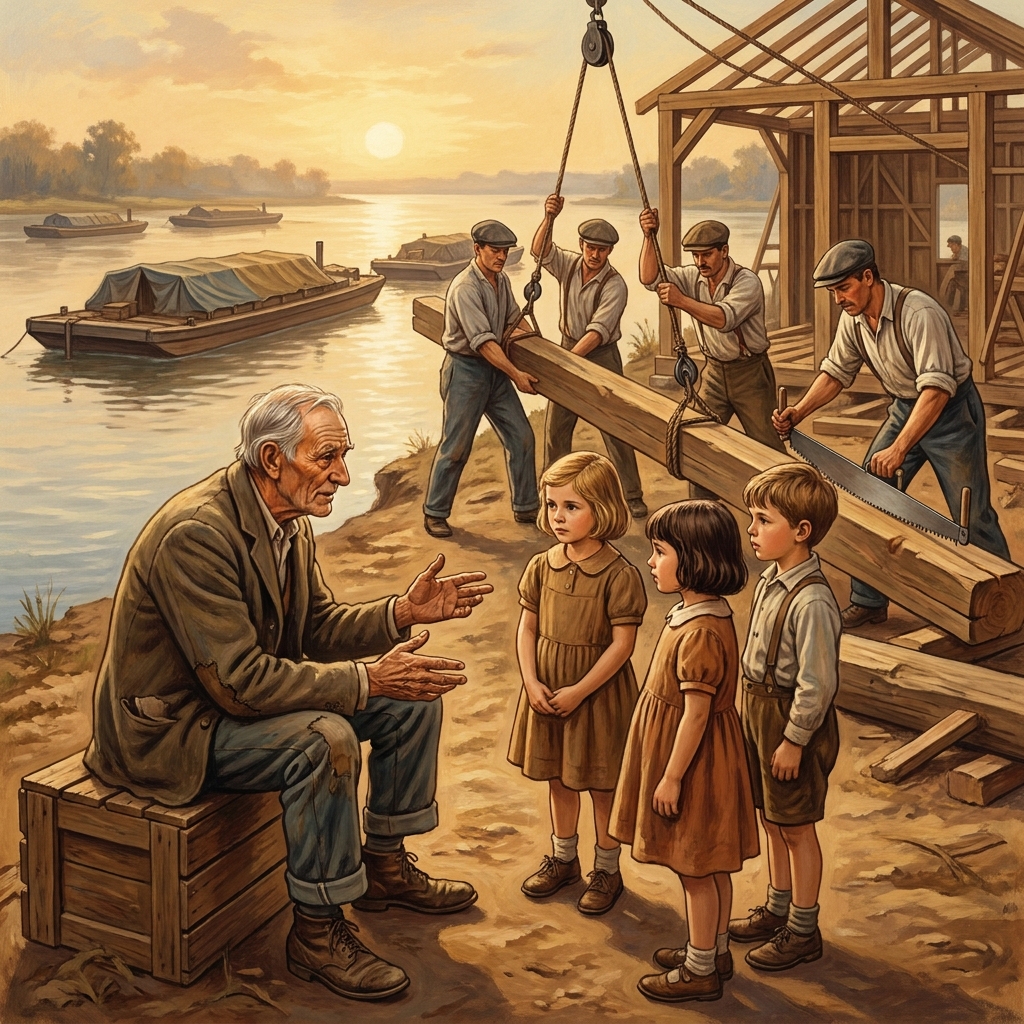
A parent once asked me why we spend so much time on local history with eight year olds when they could be practicing their multiplication tables instead. It is a fair question, but looking at local history is the best way to help students understand that they live in a place with a story that existed long before they arrived. In 3rd grade social studies, we want to move beyond just listing dates and instead help students see the physical evidence of change around them. The Exploring Our Community’s History lesson does exactly that by teaching kids how to be little historians who look for clues in their own backyards.
The lesson uses the concept of a primary source to anchor the work. It defines a primary source as a record or object created by someone who lived during the time being studied, such as a diary, a photograph, or an old map. By starting with a photograph from 1920 showing a town’s first general store, students get a clear visual of a starting point. The material also includes an oral history transcript, which shows students how a firsthand memory of how the town was built acts as evidence. This is not just theoretical. It is a primary source analysis lesson that asks students to look at real letters from a local merchant to see how the town economy shifted from farming to manufacturing.
This work is tied to CA.HSS-3.3.3, which asks students to trace why their community was established, how individuals and families contributed to its founding and development, and how the community has changed over time. This standard is a requirement in districts like Anaheim Elementary School District, Mt. Diablo Unified, Vacaville Unified, and Coalinga-Huron Unified, meaning it is consistent for all California classrooms. The standard specifically directs teachers to use maps, photographs, oral histories, letters, and newspapers as the backbone of the unit. I have always found that when students look at a photograph of a building that is still standing today, the standard stops feeling like a list of requirements and starts feeling like an investigation.
How to break down the standard for your students
The standard asks students to trace the founding of a community and the contributions made by individuals and families. This is a tall order for a third grader who might just think the town has always looked the way it does now. The lesson handles this by defining development as the process of a community growing or changing by adding new buildings, businesses, or services. By focusing on that definition, you can guide the class to look for signs of development in the old letters and photographs provided. They begin to see that a community is simply a group of people living in the same place or having a shared history, and their own current lives are part of that ongoing process.

The biggest challenge is moving students from just observing the source to actually extracting information from it. Sometimes they describe the store in the picture, but they miss the connection to the economy. My advice is to have them talk through the guided practice of the merchant letters with a partner before they try to write their own conclusions. When you have students look at those letters about farming and manufacturing, ask them specifically what tools or jobs the writer mentions. This makes the primary source less abstract and gives them concrete evidence to discuss.
Where to use this lesson in your schedule
This lesson takes about 45 minutes, which makes it perfect for a few different spots in your week. It is a great whole-class assignment when you are introducing the unit on local history. If you have a student who missed the week while you were covering settlement patterns, this provides a quick way to catch up without requiring you to pull together a dozen different resources from the library. It also works well for a substitute day because the instructions are clear and the primary sources are self-contained. You do not need to hunt for local archives to get a meaningful lesson, which is a massive help when you are already stretched thin.

I appreciate that the lesson includes a why-it-matters statement. It reminds students that being an informed citizen means being able to look for evidence to verify if information is true. We often talk about digital literacy for older students, but teaching kids to ask where an image came from or who wrote a letter is where it starts. If you have students who struggle with reading comprehension, the letters provide a manageable amount of text. It is a straightforward tool for teaching history without getting bogged down in dates. It encourages them to ask questions about the buildings they pass on the way to school, which is exactly the kind of curiosity we should be building in third grade.
Related lessons

Being a Good Citizen, Teaches students about civic responsibilities and participating in their community
Making Choices: Costs and Benefits, Introduces basic economic concepts related to decision making and resources

American Indian Nations: Continuity and Change, Covers the historical development and changes within American Indian Nations