

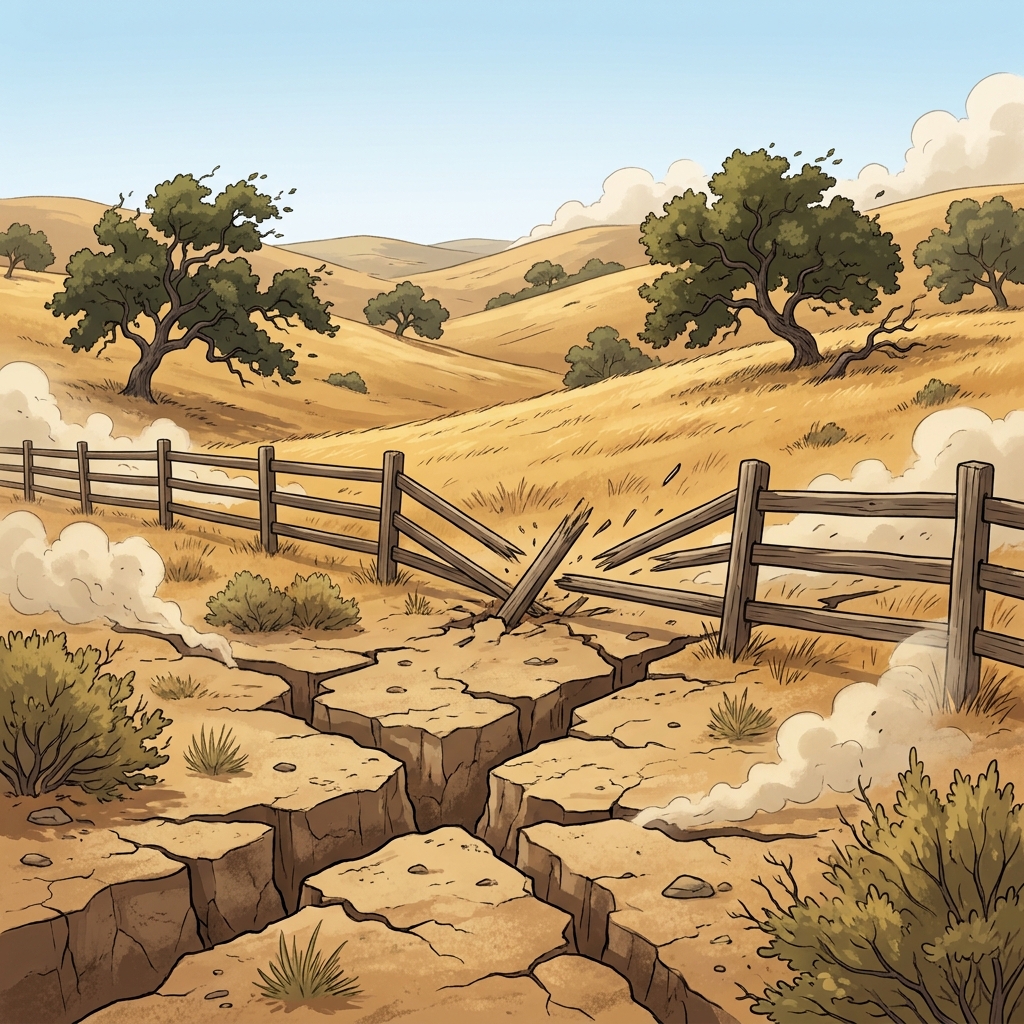
Second grade students often view the Earth as a static place, but science standards require them to understand that geologic changes happen constantly, though at different rates. The lesson titled How Earth Changes provides a structured approach to teaching this concept by distinguishing between rapid and slow events. This resource helps teachers guide students through the process of analyzing evidence, such as maps and historical data, to draw conclusions about how the world around them transforms over time.
How students perceive change
The most common mistake second graders make in this unit is confusing the time it takes for a change to become visible with the speed of the event itself. When they watch a clip of a landslide or a beach changing, they often try to force their own pace onto the phenomenon. They might assume that because they can watch the whole sequence in a video, the event must be quick. It is a subtle but important distinction that defines the entire objective of How Earth Changes. In this second grade science lesson, your students move away from the idea that Earth is static and begin to classify events by their duration. They need to see that some transformations are rapid while others take generations to play out.

This lesson is built to address the California-adopted standard 2-ESS1-1, which tasks students with using multiple sources to provide evidence for the speed of geologic change. This is the same requirement taught in schools across the state, including in Mt. Diablo Unified, San Bernardino City Unified, Ripon Unified, and Alvord Unified. The standard specifically asks students to understand that Earth events occur at vastly different scales. It requires them to look at evidence rather than just guessing. The material includes California-specific examples to make this concrete, focusing on the San Andreas Fault and the way that sudden shifts contrast with the gradual coastal erosion that happens on our beaches over time.
What the material provides
The core concept is simple: Earth events are either rapid or slow. The lesson introduces the vocabulary terms rapid and slow immediately. A rapid event is defined as something that happens in seconds or minutes, while a slow event plays out over years or centuries. The opener uses a clever metaphor involving a sandcastle on a flat beach. It asks students to visualize the ground under their feet in the same way they visualize that sandcastle, noting that sometimes the ground shifts after a storm or simply due to the passage of time. This sets a strong foundation before the lesson gets into the harder examples.
The worked example is where the logic really takes hold. It uses the California earthquake experience. Because the ground shakes during an earthquake in just a few seconds, it fits the definition of a rapid event perfectly. The lesson explains that this shaking causes the land to change very fast, which is a great way to ground the abstract concept of geologic time in something a student can physically register. During the guided practice, students analyze a news report about a recent earthquake and compare it to old maps of the coast. This gives them the multiple sources required by the standard. They get to see the San Andreas Fault as a physical crack in the Earth crust that explains why we have so many sudden, rapid events in our region.
You will find this lesson serves several different classroom needs. It works well for a whole-class introduction to Earth science. It also fits nicely as a review for a student who missed the week of instruction or as a focused task for independent study. If you have a substitute teacher in the room, the structure of the lesson is self-contained enough that they can guide the students through the evidence-gathering process without needing a deep background in geology.
Where to apply this in your classroom
I find the most effective way to use this content is to lean into the safety aspect mentioned in the why-it-matters section. Second graders are naturally risk-averse and interested in staying safe. When they realize that knowing the speed of an event helps us build better houses or pick safer locations for schools, the science becomes personal. If they know a cliff is slowly eroding, they grasp why we cannot build near the edge. If they know the ground shifts rapidly in an earthquake, they understand the reason for building strong, reinforced structures. This turns the second grade shared research writing lesson into a lesson on civic responsibility and engineering.

One caveat to keep in mind is the interpretation of the word evidence. While the lesson does an excellent job of providing news reports and maps, second graders often equate evidence with a personal story or a guess. You might need to spend extra time during the guided practice asking them to point to the specific part of the map or the news report that supports their claim. Do not let them skip this step. The goal is to get them to stop saying it happens fast because it looks fast and start saying it happens fast because the map shows a change in the fault line position. The lesson is designed to make that transition easier for them, but the teacher remains the bridge between the digital resources and the student logic.
Keep an eye on how they talk about the San Andreas Fault. Some students may fixate on the fault as a scary thing rather than a geologic feature. Redirecting them toward the idea of a crack that just exists in the crust helps normalize the science. It shifts the conversation from disaster preparation to simple, observational geography. You are giving them a framework to understand the ground they stand on, and that is a powerful shift in perspective for a seven-year-old.
Related lessons
Saving Water in California, Strategies for preserving California water resources

Water on Earth, Examination of different water forms on Earth
Natural Events in California, Review of common natural occurrences across California