


Educators often search for materials that connect abstract biological concepts to local environmental realities. This high school biology homeostasis lesson titled Homeostasis: The Body’s Balance offers a structured path for students to examine stability within biological systems. By analyzing how organisms and ecosystems manage change, students gain a clearer understanding of the feedback mechanisms that allow life to persist in diverse conditions.
What the standard actually asks of your students
The core of this Homeostasis: The Body’s Balance high school biology homeostasis lesson is built around the requirement to “Plan and conduct an investigation to provide evidence that feedback mechanisms maintain homeostasis.” In practice, this means we are not just asking students to memorize a definition. We are asking them to model how a system stays within a specific range despite external pressure. It is a step up from basic memorization because it forces them to look at the cause-and-effect relationship inside a system. When students work on CA.HS-LS1-3, they are meeting the requirements of the California-adopted standards which expect them to connect these internal processes to wider ecological phenomena. Students across the state, from classrooms in Stockton Unified and East Side Union High School District to those in Claremont Unified and Imperial Unified, all work toward mastering this specific standard.

The lesson uses the California NGSS framework, which adds a layer of depth by linking these biological processes to state-specific concerns like our unique climate zones and biodiversity hotspots. When you approach this with your students, frame the investigation as a way of solving a puzzle. The goal is to explain how feedback mechanisms keep an internal body environment stable even when conditions change. You will find that students often understand the concept of temperature regulation intuitively, but they struggle to formalize it into the vocabulary of systems.
Vocabulary and the mechanism of stability
To get the most out of this 45-minute block, spend some time explicitly clarifying the terminology. Homeostasis is the process of maintaining a stable, balanced internal environment despite changes in outside conditions. Your students will encounter two types of loops here: negative feedback and positive feedback. Negative feedback is a mechanism that detects a change and triggers a response to bring the system back toward its set point. Positive feedback is a mechanism that increases or reinforces a change until a specific outcome is reached. I find that high schoolers confuse these two frequently because they associate “negative” with something bad, when in biology it is simply the corrective path back to stability.
The lesson starts with a familiar scenario. Your students might hike in the cold Sierra Nevada mountains, where their bodies have a set temperature of 37 degrees Celsius. Their bodies work to keep this temperature steady. That is a perfect, relatable entry point. From there, the material moves to ecosystems. The worked example scenario details how predator populations increase consumption of prey until food becomes limited. This scarcity then causes the population growth rate to decrease, which naturally brings the number of individuals back toward a sustainable level. It is a concrete way to show that feedback is not just a physiological process but an ecological one as well.
Where the lesson fits and what to watch for
If you are looking for a solid Homeostasis: The Body’s Balance high school science lesson to fill a sub day, an independent study module, or a session for a student who missed the week, this is a strong choice. The guided practice focuses on California’s climate zones. These distinct geographical areas, such as Mediterranean, alpine, or desert zones, provide a perfect testing ground for these concepts. When students look at water evaporation in desert biomes, they see why plants have waxy leaves to hold water during the heat of the day. This is the practical application of homeostasis in action.

I recommend watching closely when the class begins to talk about environmental science. The lesson explains that California is home to biodiversity hotspots, which are regions containing a high number of endemic species that face significant habitat loss. These regions are fragile, and environmental scientists prioritize them to understand how feedback mechanisms prevent total ecosystem collapse. Biodiversity must be monitored through feedback loops to ensure that ecosystems like our forests and coasts stay healthy in a changing climate. If you see students struggling, push them to trace the path of the feedback loop: what was the initial change, what was the signal, and what was the reaction? That sequence is the most important part of the investigation. If they can track those three steps, they have a solid grasp on the standard.
Related lessons

Building Life: From Sugars to Proteins, Covers how organisms synthesize essential biological molecules from basic building blocks
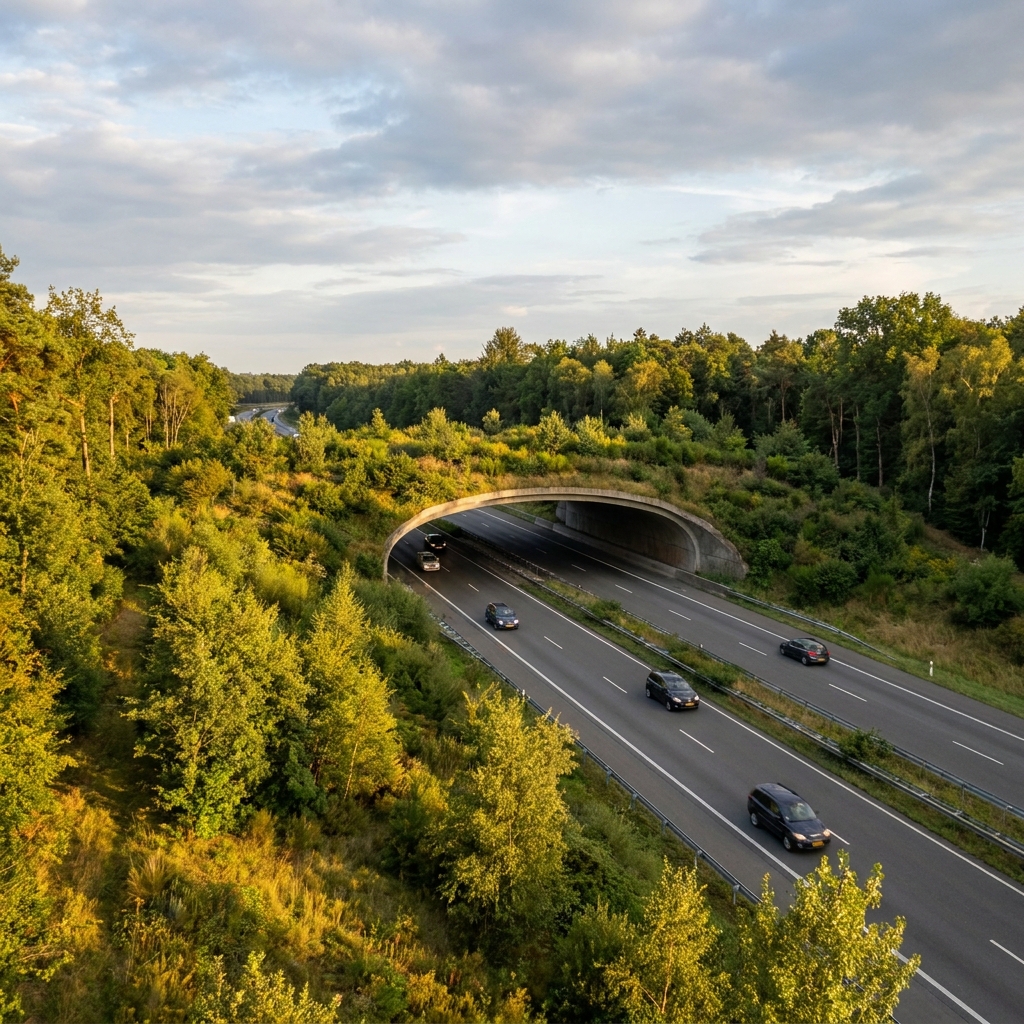
Mitigating Biodiversity Loss Through Conservation Engineering, Explores how engineering solutions address the decline of endemic species

Energy Transformation in California's Ecosystems, Discusses how energy moves through different environments and biological food webs