


High school biology teachers often seek methods to make complex genetic processes feel tangible for their students. By connecting the mechanics of meiosis and DNA mutations to the real-world vulnerability of specific populations, students can better appreciate why biodiversity matters for species survival.
How specific species reveal the complexity of heredity
The California condor acts as a sobering case study for any high school biology class. Because the remaining population is so small, these birds possess very little genetic diversity, which makes the entire species remarkably vulnerable to disease. This specific example serves as the central anchor for the Genetic Variation: How Diversity Happens lesson, and it is exactly the kind of concrete scenario that helps students grasp why biodiversity matters beyond just abstract definitions. When we talk about heredity in high school science, it is easy for students to get lost in the mechanics of division and forget that the result is an actual, living population struggling to survive.

This lesson is designed to be completed in about 45 minutes, making it a solid choice for a whole-class assignment, a student who missed the week of instruction, or even a structured session for independent study. The material begins with a refresher on how traits were historically understood using simple organisms like pea plants, where purple or white flowers appear in predictable, classic ratios. From there, the lesson shifts into the actual biological processes that disrupt those predictable patterns to generate variety, namely meiosis, errors in DNA replication, and environmental mutations.
Aligning with state standards and academic expectations
The core of this material satisfies the requirements for CA.HS-LS3-2. This standard asks students to construct and defend an argument based on evidence that explains how inheritable genetic variations originate from a few specific sources. These sources include new genetic combinations during meiosis, viable mistakes that happen during DNA replication, and mutations that are triggered by factors in the surrounding environment. It is the same standard applied consistently in classrooms across Oakland Unified, Modesto City High School District, Sanger Unified, and Santa Ynez Valley Union High School District. The lesson also incorporates the California addition to this standard, which emphasizes local phenomena like biodiversity hotspots and the state’s unique role in environmental research.
To utilize this high school genetic variation lesson effectively, students need to be comfortable with a few specific terms. Meiosis is presented as the specialized cell division that creates four daughter cells, each holding half the parent chromosomes for sexual reproduction. Replication describes the cell making an exact copy of its DNA sequence before it divides. Finally, a mutation is defined as a permanent change within that DNA sequence. I have found that students often struggle with the distinction between these processes, so I usually take a moment to draw the cycle on the whiteboard before we dig into the claim-making portion of the work.
Guided practice with environmental stressors
Once the technical definitions are out of the way, the lesson moves into guided practice using a real-world scenario involving coastal plants. We look at how these plants are forced to adapt when they shift into saltier soil environments. The material introduces the concept of environmental stressors, such as drought or increased soil salinity, which act as external conditions that push a population to change or risk decline. It is a powerful way to show that genetic variation is not just a biological accident, but an insurance policy for a species.

The takeaway here is that if an environment shifts, a diverse population has a better chance of containing individuals with the specific gene combinations required to survive the new conditions. My only critique is that the shift from cellular mechanics to population-level survival is quite fast, so you might want to circulate during the guided practice to ensure students are connecting the dots between the mutation in a single cell and the survival of the plant population. It is a clean, straightforward resource that manages to make a dense topic feel relevant without relying on fluff.
Related lessons
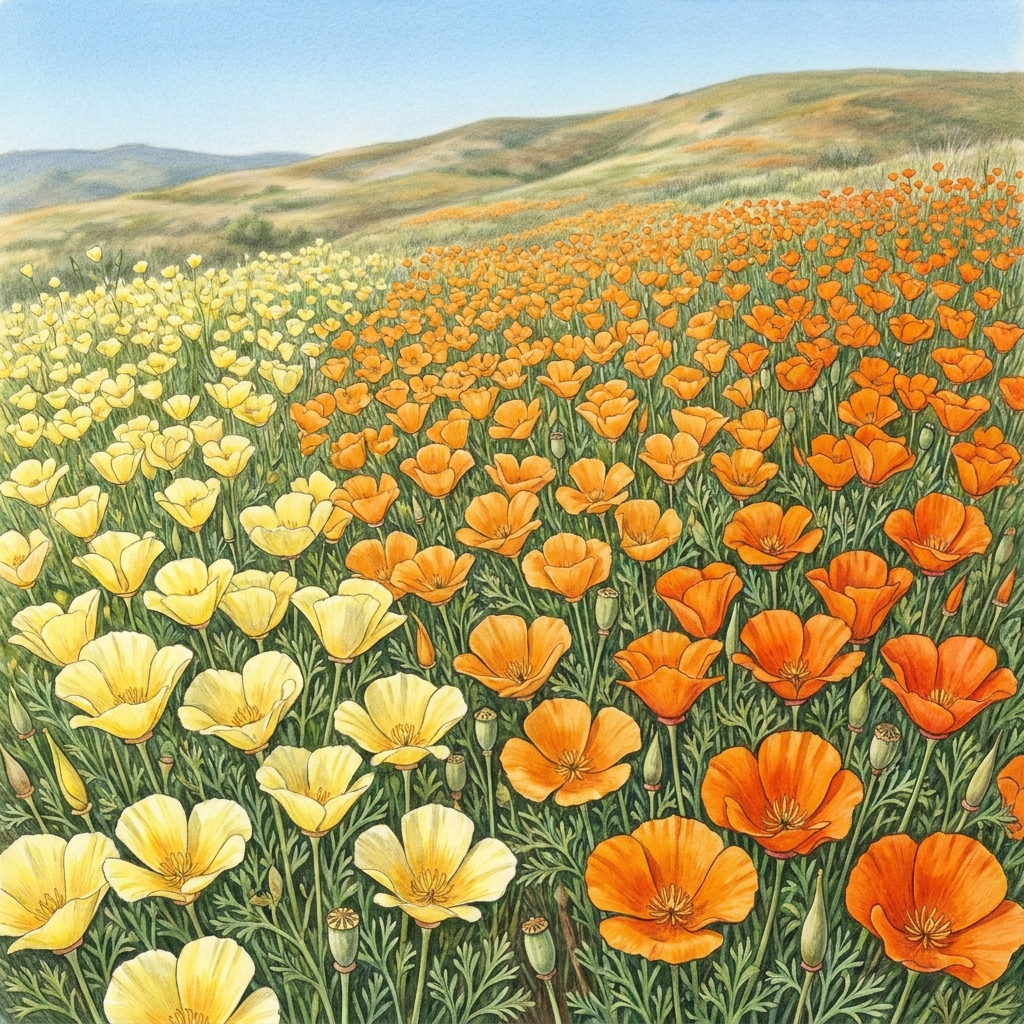
Biodiversity and Trait Variation in California, Covers species diversity and trait distribution in various California ecosystems

Understanding Carrying Capacity in California Ecosystems, Explains population limits and resource availability in natural habitats
Homeostasis: The Body's Balance, Discusses how biological systems maintain internal stability despite external changes