


Helping students manage complex information starts with a simple framework for sorting ideas. By teaching third graders how to group facts effectively, you provide them with the mental tools they need for long-term academic success in research and writing tasks. This approach simplifies the cognitive load for young learners, allowing them to focus on understanding relationships between facts rather than getting overwhelmed by the sheer volume of data.
Why categorization matters for your students
A frog life cycle requires eggs, tadpoles, and adult frogs to make sense, but unless a third grader has a way to keep those facts distinct from information about ponds or insect diets, the writing process stalls early. When you teach Organizing Your Notes to your class, you are helping them build the structural foundation for every research project they will tackle for the rest of their time in your building. I have found that students often treat information gathering like a scavenger hunt where they collect everything but forget to organize it. This lesson addresses that tendency directly.

This third grade English Language Arts lesson focuses on the core concept of categorizing information. It asks students to move beyond simply reciting facts to actively sorting them into logical buckets. It covers the specific definitions of notes as short, quick words or phrases and categories as groups of things that belong together. By using these definitions, your students begin to understand that a note is not meant to be a full sentence, which is a major hurdle for many nine-year-olds who are still getting comfortable with the mechanics of writing.
Understanding the state standard
The material covers the California-adopted standard CA.ELA.W.3.8. This standard asks students to recall information from their own experiences or gather it from print and digital sources, then take brief notes and sort the resulting evidence into provided categories. It is a specific, actionable goal that teachers in San Ramon Valley Unified, Chino Valley Unified, Redding Elementary School District, and Lincoln Unified all use to guide their writing instruction. The standard assumes that students can transition from memory to text, and this lesson supports that transition by providing clear scenarios like trip planning or animal classification.
When I see a student struggle with a research paper later in upper elementary school, it is almost always because the note-taking phase was messy. If they cannot sort their thoughts now, they will not be able to build a coherent argument or a structured narrative later. This lesson breaks down the labor of thinking into smaller, manageable parts. It teaches students that notes serve a function. They are not just busywork to fill a page. They are the building blocks of a finished piece of writing.
The logic of sorting information
The lesson uses a concrete worked example scenario to make the abstract concept of categories feel real. By looking at a frog, students learn to sort notes into life cycles, habitats, and diets. The lesson then transitions to a guided practice using a short video clip about ocean tides. This is a smart choice because it forces the student to listen for information while the video plays, requiring them to hold that information in their head just long enough to record it in a category. It mimics the kind of research they will eventually do with physical books or articles.

You should consider using this for a whole-class assignment when you are preparing to introduce your first research report of the year. If you have a student who missed the week, this works as an excellent catch-up module because it explains the logic of organization in a way that does not require the entire previous week of writing instruction. It is also quite effective as an intervention tool for a student who has the facts but loses the thread of their story because their page is a wall of unstructured text. Searching for a reliable third grade research writing skills resource often leads to overly complicated graphic organizers, but this lesson keeps it simple.
Where students slip
The biggest struggle I see with this skill is the temptation to rewrite the entire text or transcript rather than taking brief notes. We want them to understand that notes are for themselves, not for the teacher. When they realize that notes are just a shorthand system to help them remember, the task becomes faster and less daunting. The vocabulary provided in the lesson, category and notes, gives you a shared language to use throughout the rest of your school year. When a student brings you a draft that looks like a jumble of unrelated thoughts, you can simply point to their category list and ask where that piece of information actually belongs.
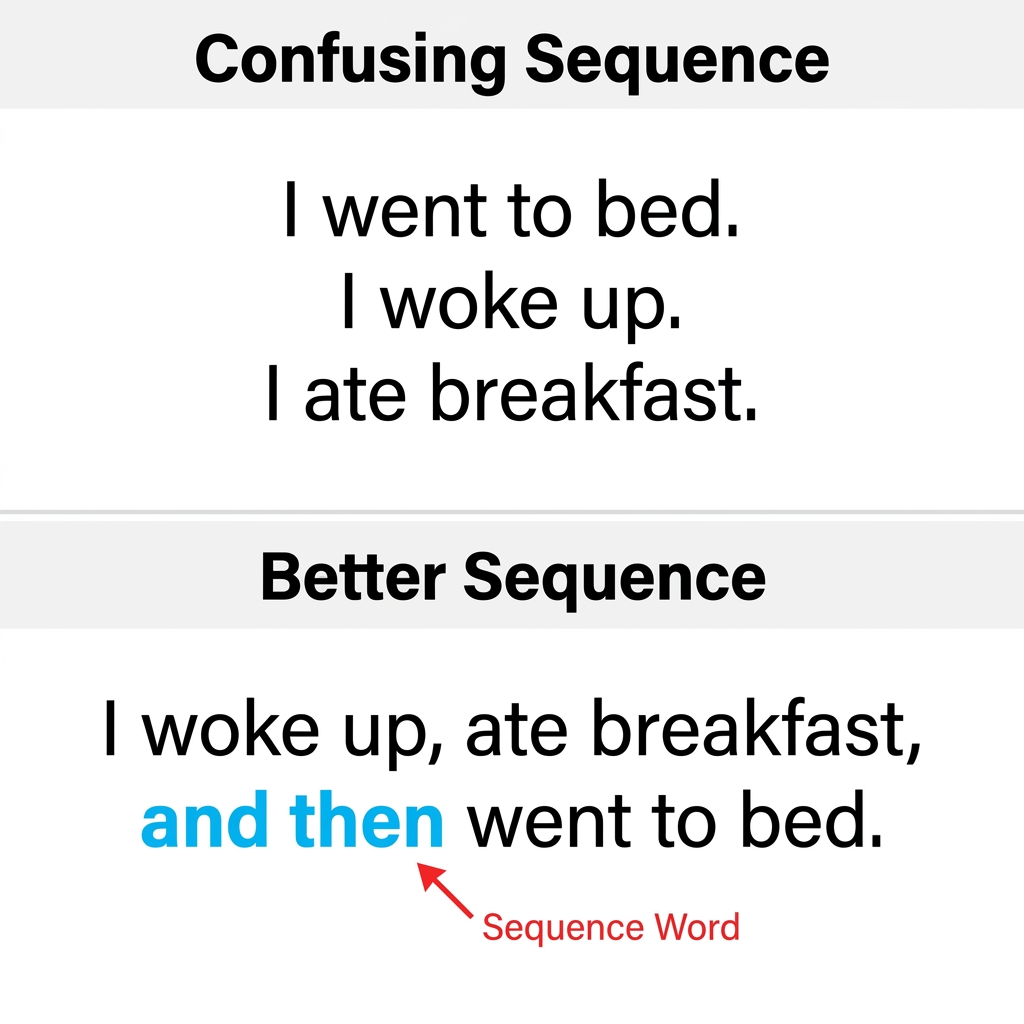
Encourage your students to see this as a way to handle everyday information. The lesson correctly points out that we sort information when we read the news or follow a set of instructions. If they can get the steps in order, they avoid getting confused. This is a practical life skill as much as a writing skill. By the time they finish the practice on ocean tides, they should have a clear list of facts that describe the rise and fall of ocean water. It is a satisfying moment when the structure suddenly clicks for them.
Related lessons
Writing Great Stories, Focuses on crafting narrative arcs for young fiction writers

Writing with Purpose and Structure, Teaches students how to organize paragraphs and main ideas

Becoming a Research Detective, Explores methods for gathering facts from various informational sources