


Educators often search for materials that explain complex political systems to younger students without losing their attention. This post details a structured approach to teaching 6th grade students about the transition from tyranny to democracy in Ancient Greece, ensuring they grasp the core vocabulary and historical significance required by current educational standards.
How this lesson handles the shift to democracy
This 6th grade social studies lesson does not attempt to cover every single nuance of ancient political philosophy in one sitting. Instead, From Tyrants to Citizens: The Story of Greek Democracy focuses on a very specific arc: the transition from rule by force to rule by the people. It is designed to be a tight, 45-minute sprint through the mechanics of government that defined the ancient Mediterranean.

The lesson opens with a reality check for your students. It uses a relatable classroom analogy: imagine a scenario where one student makes every rule for the room without input from anyone else. It is a simple way to define tyranny, setting the stage for why the Athenian shift toward an assembly was so radical for the time. By framing history as a series of choices between different types of power, the material makes a distant concept feel much more immediate to a sixth grader who is just starting to manage their own school governance.
The content and the standards
The core objective here is to trace how ancient Greek government evolved from rule by a few to rule by citizens. It covers specific vocabulary that students need to anchor their understanding: Tyranny, defined as a system where one person takes power by force, and Oligarchy, where a small group of wealthy people hold control. It also introduces the idea of an Assembly, which served as the primary place for citizens to gather and vote on laws, and the definition of a Citizen as someone with the legal right to participate in governance.
This material directly serves CA.HSS-6.4.2, which asks students to trace the transition from tyranny and oligarchy to early democratic forms and back to dictatorship. This is the same standard taught in districts like San Juan Unified, Los Angeles Unified, Washington Unified, and Live Oak Unified. It is a heavy standard, but the lesson breaks it down into clear historical chunks. By studying the CA.HSS-6.4.2 requirements, students see that democracy was not a static invention but a fragile process that collapsed during the Peloponnesian War when the rule of the Thirty Tyrants returned.
Where the lesson fits in your week
The guided practice uses the Peloponnesian War as a case study to show how quickly democratic norms can be eroded. It is a sober moment in the lesson, but it is effective because it moves students away from just memorizing definitions. It forces them to analyze why a system fails, rather than just reciting its components. I find this helpful for students who struggle to see history as an active process.

Because the lesson is structured around clear, bite-sized examples, it works well as a whole-class assignment to introduce the unit on Ancient Greece. If you have students who missed the week, it acts as a strong independent study module because the vocabulary is clearly defined and the scenarios are self-contained. It is also a solid choice for a substitute day because the logic of the lesson is easy for anyone to facilitate without deep prep. One caveat: because it covers so much ground, you might want to spend an extra few minutes on the Pericles’ Funeral Oration concept if you want your students to really grapple with the significance of citizenship beyond the basic definition provided.
The lesson brings it home by connecting ancient Athens to a student council election. When students realize they use these same democratic principles when voting for a class project, the distance between the ancient world and their own lives narrows significantly.
Related lessons

The Aryan Migration and Ancient India, Historical examination of the migration patterns in ancient Indian civilizations
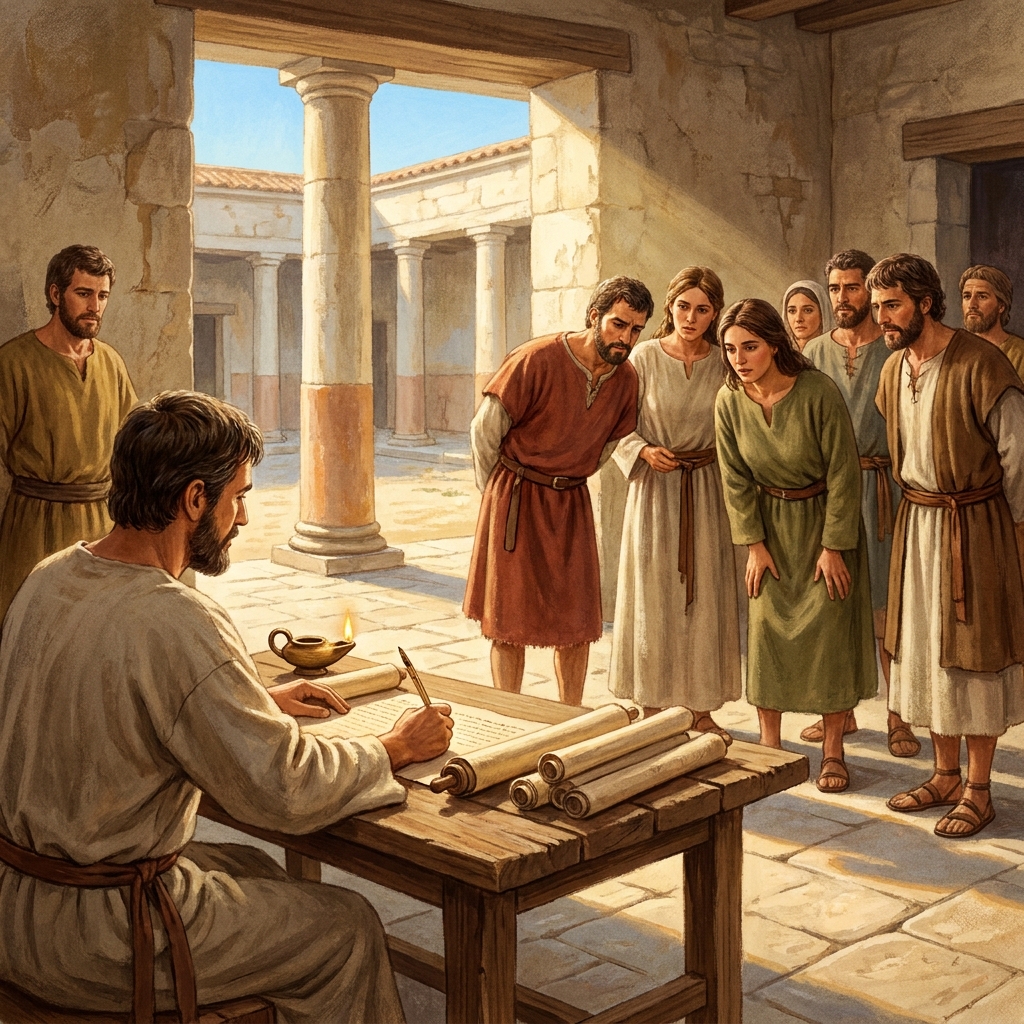
The Roots and Spread of Early Christianity, Exploration of the origins and expansion of early Christian traditions

Ancient Hebrew Civilization: Land and Life, Overview of geography and daily existence in ancient Hebrew society