

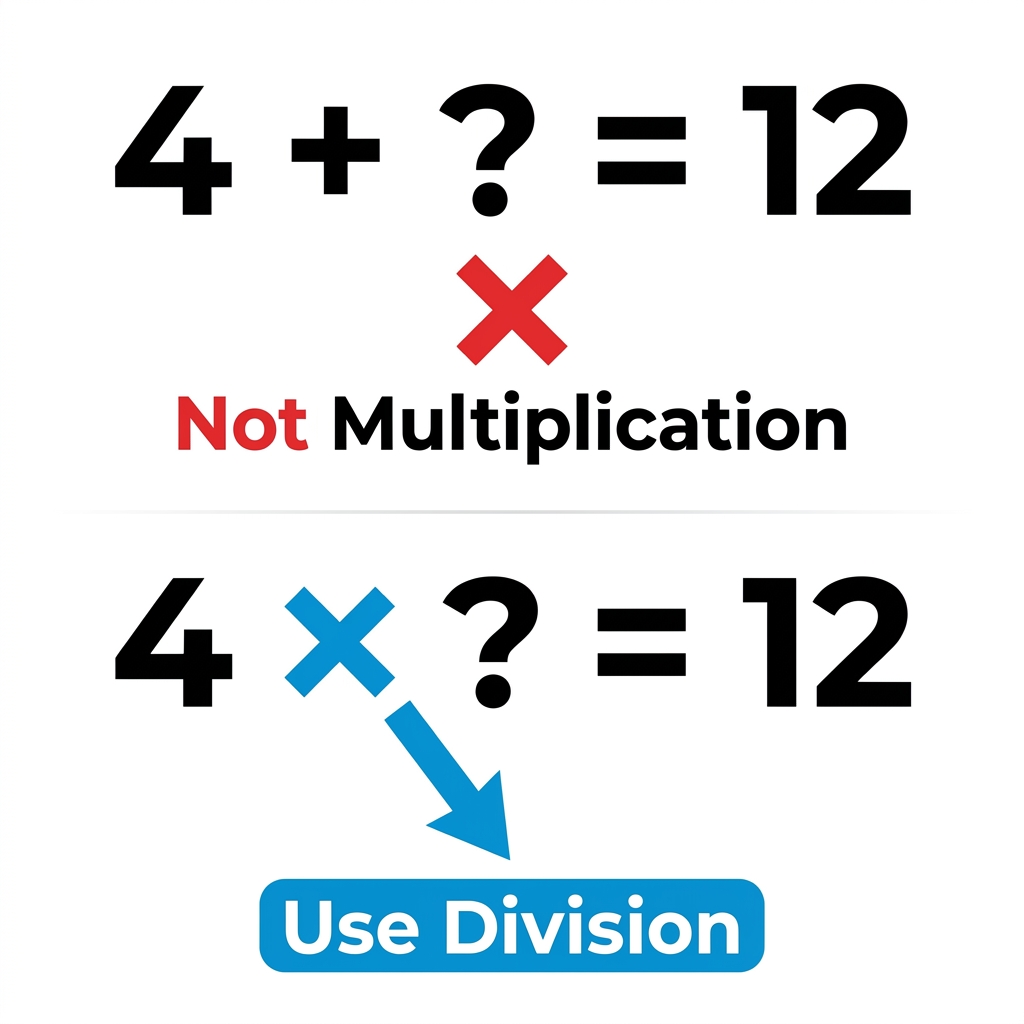
I once had a parent ask me why we spend so much time on equations with missing numbers when calculators are everywhere. It is a fair question, but it misses the point of 3rd grade mathematics. When students see a blank space in an equation, their first instinct is often to panic or just guess a number that looks right. They treat the equals sign like a request to solve for the end of the sentence rather than a balance scale that needs to stay level. If we do not address this early, they struggle to understand how operations relate to each other.
This is where Finding Missing Numbers in Math Equations helps. It is designed to pull students back from guessing and move them toward using inverse operations. The lesson starts with a simple concept: an equation is just a math sentence showing two sides are equal. By teaching students to define an equation this way, the lesson takes the mystery out of the process. Whether your class is in Elk Grove Unified, Long Beach Unified, South Pasadena Unified, or South San Francisco Unified, you are teaching this exact same CA.MATH.3.OA.4 standard to help students build algebraic reasoning.
How the lesson builds algebraic thinking
The lesson does a great job of connecting prior knowledge to the new objective. It begins by reminding students how to use multiplication to find a total using a concrete example of a farmer with rows of apple crates. From there, it introduces two key terms: equation, which it defines as a math sentence that uses an equals sign to show that two sides have the same value, and unknown number, which is the missing value needed to make the sentence true. This vocabulary is exactly what they need to stop guessing and start calculating.

The move from theory to application is quick. It uses a community garden scenario where there are 6 rows of seeds with 7 seeds each, showing how we write this as 6 times 7 equals an unknown number. Since 6 times 7 is 42, the unknown number is 42. It is a clean, simple way to show that they already know how to solve these equations even when the unknown is in a different spot. For the guided practice, students look at a construction site with 45 bricks in 5 equal stacks to find the missing number of bricks per stack. It forces them to think about division as the inverse of multiplication, which is exactly what third grade math missing number lessons aim to do.
Where students slip and how to help
The most common mistake I see is when students try to perform an operation on the total instead of the factors. They see 8 x ? = 48 and try to add 48 to 8 or subtract them, instead of realizing they need to find the missing factor. This is why I appreciate the why-it-matters section in the lesson. It explains that a store manager uses these equations to calculate how many items to order for shelves. When students realize this is a tool for real-life problem solving, they tend to slow down and check their work rather than rushing to fill in the blank.

I find this lesson works best for a whole-class introduction, but it is also a lifesaver for a student who missed the week or needs a quick independent study session to catch up. It is focused enough that a student can complete it in about 45 minutes without feeling overwhelmed. If you have a student who is struggling with the transition from basic facts to algebraic thinking, this is a perfect place to start. It does not try to do too much; it just hits the objective and moves on, which is usually exactly what a teacher needs in a busy week.
Related lessons

Checking Your Math, Reviewing strategies to verify if a mathematical solution is correct
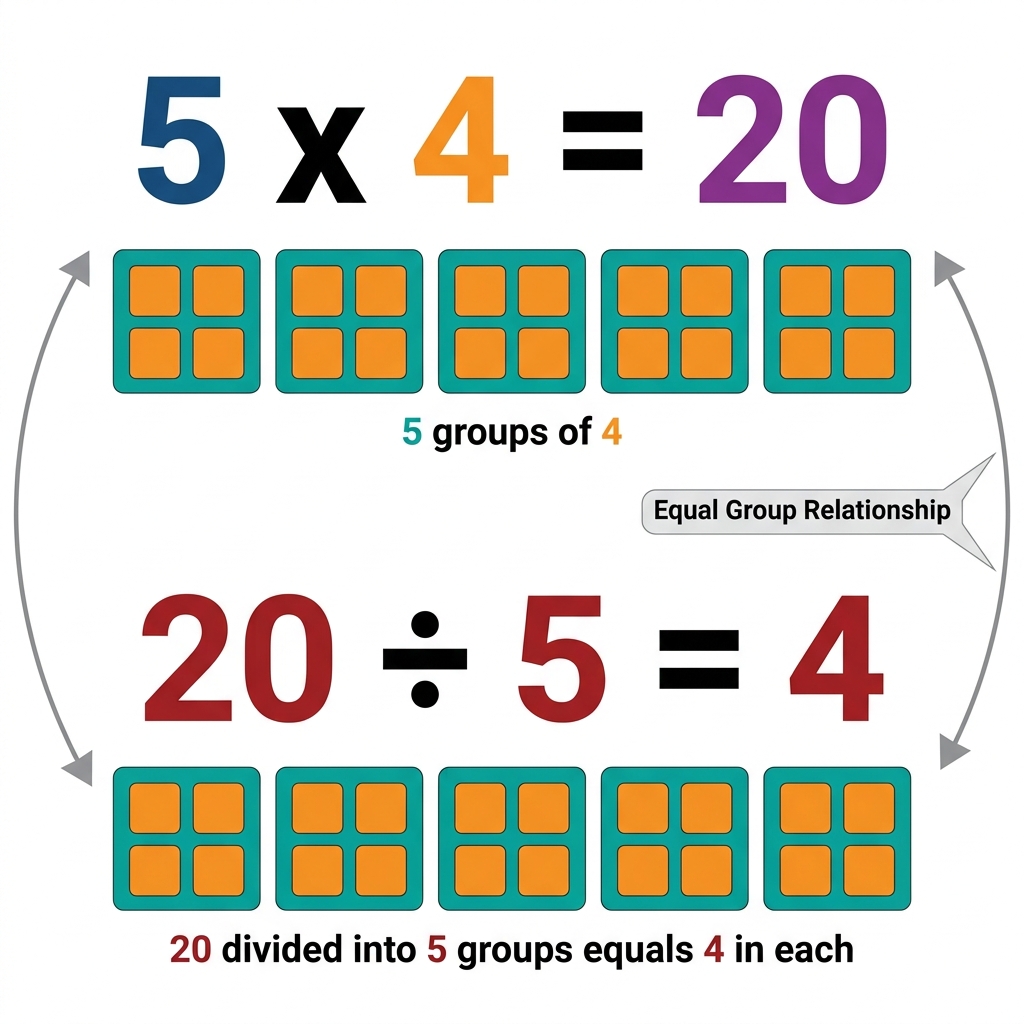
Solving Math Problems with Groups and Arrays, Using visual arrays to solve basic multiplication and division problems

Multiplication Strategies, Exploring different ways to approach and solve multiplication facts