

A parent once asked me how it was possible for their student to sound out every word in a chapter but still fail to explain what the text was about. I explained that reading is not just about decoding individual words. In 5th grade English language arts, our focus shifts significantly toward reading to learn. This is where Finding Main Ideas and Supporting Details becomes essential for every student in the classroom.
This lesson is built to help students move beyond the surface level of a text. By the time students reach fifth grade, they need to do more than just pick out a topic. They need to identify what the author is actually saying about that topic. This particular 5th grade reading main ideas lesson guides them through the process of locating specific, distinct main ideas and verifying them with evidence. It is a vital step toward independent study and reading comprehension.
Understanding the core of the standard
The lesson centers on the California-adopted standard CA.ELA.RI.5.2. This standard asks three specific things of a student. First, they must determine two or more main ideas within a single text. This is often where students struggle, as they tend to gravitate toward one broad, singular point rather than separating out the nuances of an argument or an explanation. Second, they must explain how key details support those ideas. It is not enough to name the idea. They have to point to the specific evidence that proves it.

Finally, the standard requires students to summarize the text. This is a tall order because it requires synthesis. Across California, students in Moreno Valley Unified, Oakland Unified, Conejo Valley Unified, and Cotati-Rohnert Park Unified are working on mastering these exact skills, as the requirement for informational text analysis remains the same statewide. You can see how this standard asks them to turn a full page of information into a compact, accurate representation of what the author really wanted to convey.
How the lesson builds these skills
The material begins with an accessible opener about nature, specifically noting how a monarch butterfly starts as an egg on a milkweed leaf. It is a simple, concrete way to ground the concept. Students are encouraged to use their existing knowledge to find the author’s most important points. This prevents the initial frustration that sometimes happens when the topic feels too dense or unfamiliar.
I appreciate the worked example provided in the lesson regarding solar energy. It presents two sentences: one about the benefits of solar energy and one about the challenges of installing solar panels on homes. It is a perfect way to show that a single text can contain multiple, sometimes conflicting, main ideas. The lesson asks students to identify both, providing a clear path for them to see how evidence works. When a student can distinguish between the clean air benefits and the financial cost, they have moved past skimming.
The importance of vocabulary and structure
To succeed here, students need to be firm in their understanding of three key terms. A main idea is the central message or the most important point the author wants the reader to grasp. A supporting detail is the fact, example, or piece of evidence that explains or proves the main idea. Then there is the act of summarizing, which is the process of briefly restating the core content in their own words. The lesson rightly compares a summary to a highlight reel of the text. This is an effective way to explain the concept to a ten-year-old.

I have found that one of the biggest pitfalls for students is the temptation to include minor, flashy details in their summaries. They might want to talk about a specific shade of color on a butterfly or the exact price of a solar panel. The lesson works to train them to look for the bigger picture instead. If a detail does not directly support the main idea, it is not essential for the summary.
Classroom application
This lesson is flexible enough to fit into a few different teaching scenarios. It is an excellent choice for a whole-class assignment when you are first introducing the mechanics of summarization. It also functions as a great tool for a student who missed the week of instruction and needs to catch up on the fundamentals of informational reading without feeling overwhelmed by the density of a whole textbook chapter. You could also rely on it for a substitute day because the instructions are clear enough for students to work through the provided examples and practice passages with minimal external guidance.
One caveat I would offer is that students often have strong opinions, and they sometimes confuse their own feelings about a topic with the author’s main idea. Keep an eye on them during the guided practice section where they examine the importance of honeybees. If you hear a student say something is important just because they like it, remind them to look back at the text for the actual supporting details. This lesson provides the structure to help them make that shift from opinion to evidence-based analysis.
Related lessons

Supporting Your Points with Evidence, Teaches students how to identify and cite evidence for claims
Understanding How Events and Ideas Connect, Covers how to analyze connections between ideas in informational text
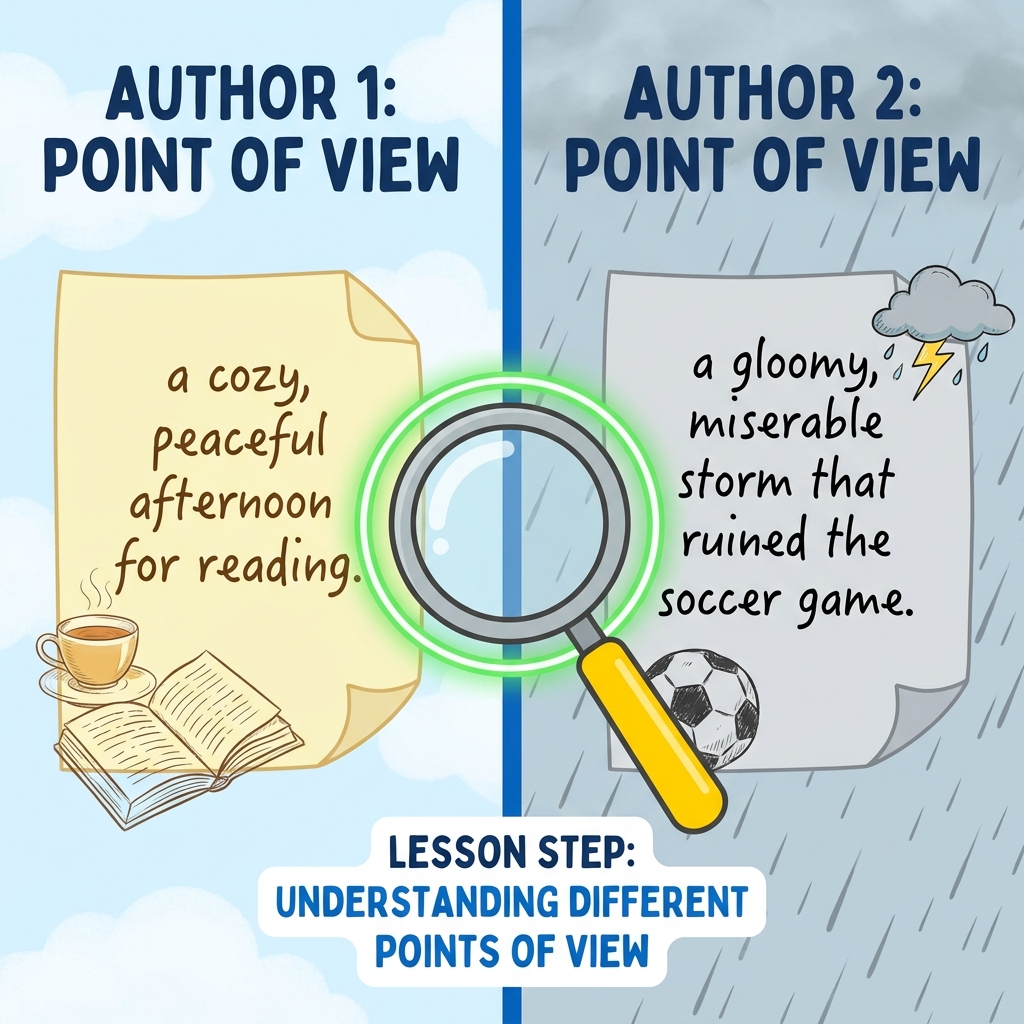
Understanding Different Points of View, Focuses on identifying author perspectives in a variety of texts