

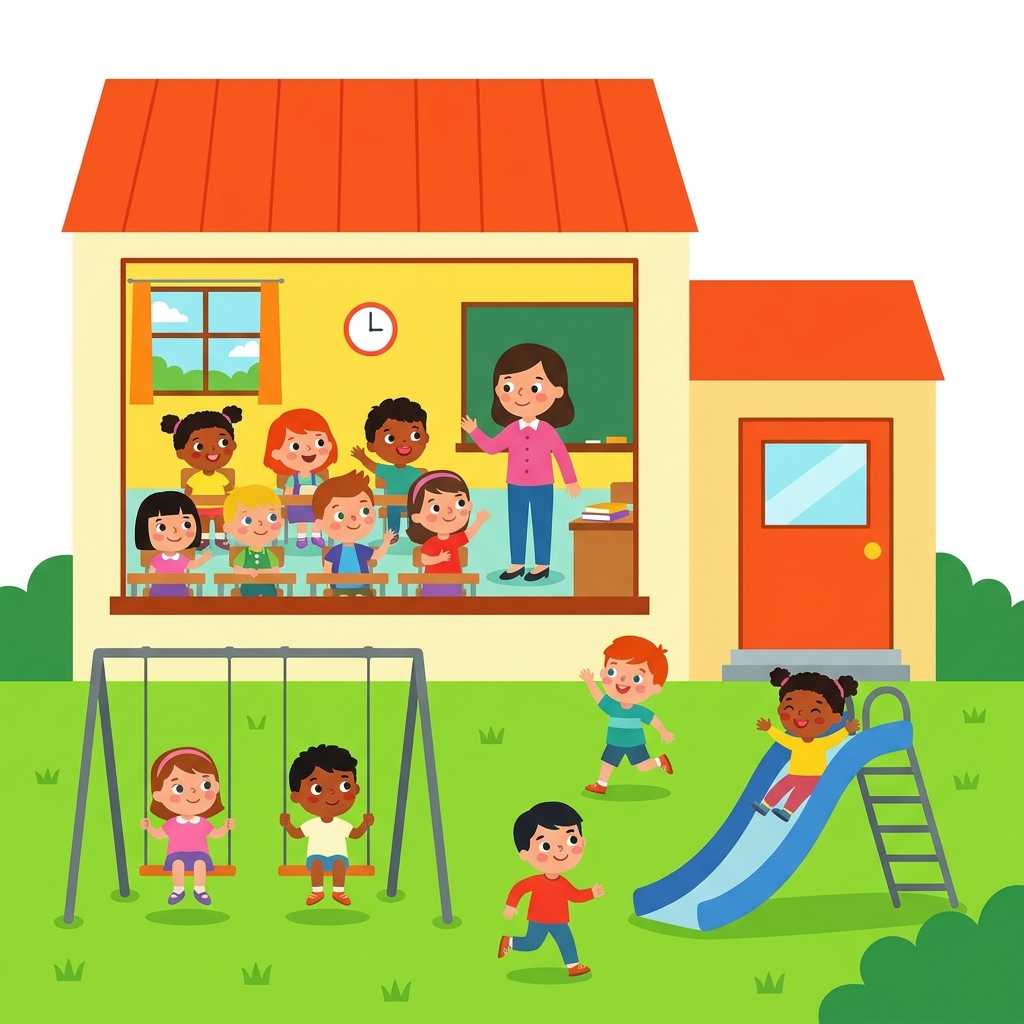
When you start a new year with a fresh group of kindergarteners, the physical size of the school can feel overwhelming for them. Many students are navigating a large campus for the very first time. Exploring Our School provides a simple, structured way to introduce these young learners to their new environment.
Walking through the layout of the campus
The core objective of the lesson is clear and straightforward: I can name places and jobs in my school. By focusing on identifying physical locations and the people who fill specific roles, the lesson helps demystify the campus layout and makes the school feel like a friendly, manageable place instead of a giant maze.

This kindergarten social studies lesson avoids dense text and instead relies on the practical experience of looking at the school surroundings. It asks students to think about the different rooms and areas they walk past every single day. When a student can name the cafeteria, the library, or the playground, they feel a sense of ownership over their school. That confidence is a prerequisite for meaningful learning in other subjects later on. It is the same standard taught in classrooms across districts like Lodi Unified, Palmdale Elementary School District, Davis Joint Unified, and Desert Sands Unified.
Recognizing the staff members
Part of the lesson involves more than just finding the geography of the school. It asks students to connect those spaces to the people who work there. It is not just about where the office is, but who you see when you get there. The materials encourage students to think about the roles of various staff members, such as administrators, custodians, or cafeteria workers. This encourages students to start viewing the school as a community that relies on cooperation between different people.
I find that students respond well to this because it validates their daily observations. They see these people every day, but they might not have a formal framework to understand what those roles involve. This lesson provides that framework. By giving them the vocabulary to describe the school layout and the jobs people do there, you are helping them move from being passive observers to active participants in their school life. It is a subtle shift, but one that helps children settle into the rhythm of the school day much faster.
Meeting the standard requirements
The material covers CA.HSS-K.4.5, which is part of the California-adopted standards for history-social science. This specific code asks students to demonstrate familiarity with the layout of their school, the immediate environs, and the specific jobs that various people perform within those settings. It sits within the broader cluster that asks students to compare and contrast the locations of people, places, and environments. By fulfilling this requirement, students demonstrate they can describe the characteristics of their own school setting.

The lesson does a good job of keeping this high-level standard accessible for five-year-olds. It does not get bogged down in theory. Instead, it sticks to the primary objective of naming places and jobs. My only caveat is that for a student who is particularly shy or new to the language of school, you might need to pair this with a physical walk around the school building. The lesson provides the framework, but the physical movement through the spaces will really lock in the learning for the students who need that extra kinesthetic input.
How to fit this into your day
Because the lesson takes about 15 minutes, it is very easy to plug into your schedule as a whole-class assignment at the start of the year. If you have a student who missed the first week, this works well as an independent study activity that they can complete with a quick guided tour from a peer mentor or a site aide. It also functions perfectly as a brief substitute day task because it requires very little complex setup or preparation.
The straightforward approach allows you to focus on the conversation rather than worrying about managing heavy documentation. You can have the class talk about their favorite parts of the playground or explain who they go to when they need help in the office. These small moments are where the real learning happens. By the end of the 15 minutes, the students should be able to identify their school surroundings with enough clarity to feel safe and secure on campus. That base level of comfort is what allows them to focus on the academics that take up the rest of their school year.
Related lessons
My Town Map, Teaches students how to interpret basic map features and symbols

People and Places Long Ago, Introduces historical comparison of local environments and community roles

Being a Good Citizen, Focuses on rules and responsibilities within a school community setting