

When we teach 10th grade world history, the transition from abstract philosophy to the messy reality of revolutions can leave students feeling lost. I found that Enlightenment Ideas and Democratic Revolutions does a decent job of bridging that gap, offering a structured way to handle complex historical periods.
Connecting philosophy to student life
The lesson starts with a simple premise: a stable society requires clear principles just as a building requires a solid foundation. This opening helps students see that when Locke, Montesquieu, Rousseau, or Bolivar wrote their theories, they were not just daydreaming. They were trying to solve the problem of how people and governments should interact to protect human well-being.

You will find this World History Enlightenment lesson fits well for a whole-class assignment or as a catch-up module for a student who missed the week. Teachers in West Contra Costa Unified, Oxnard Union High School District, Vista Unified, and Rialto Unified use these materials to teach the same standard across our state. It covers the core concepts of natural rights, the social contract, and constitutionalism, which are required for any student to grasp how our modern political systems function.
Translating ideas into government
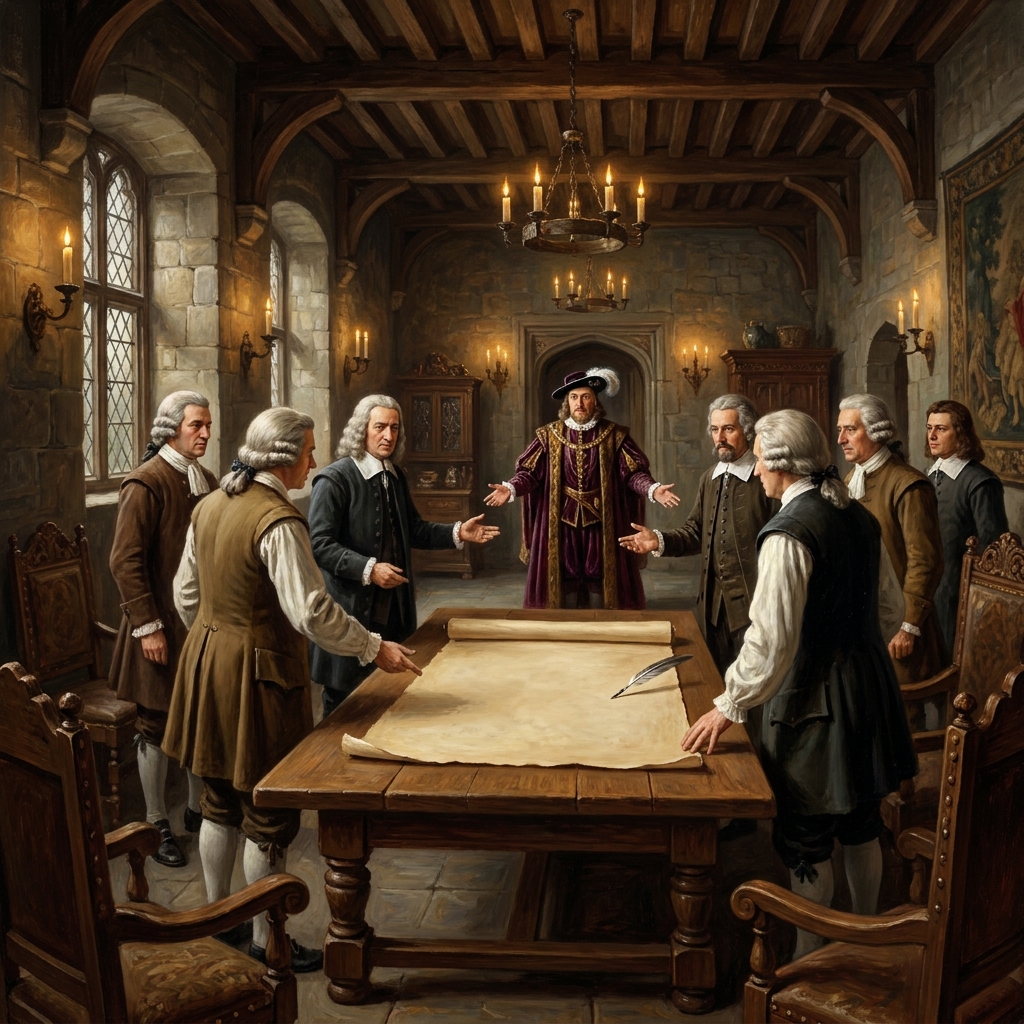
One part of the lesson I find useful is the concrete example of the English Bill of Rights from 1689. The material frames this as a result of the Glorious Revolution. It explains that the document prevented the monarch from suspending laws or levying taxes without the consent of Parliament. Seeing this as a clear application of the social contract is much easier for students than trying to memorize definitions of the same term without context. The text describes it as a way to limit the power of a ruler to protect the rights of the people.
During guided practice, the material shifts to the United States Constitution. It explains how James Madison, as an architect of the Constitution, intentionally applied the theories of Montesquieu to design a system with distinct branches of government. This prevents power from concentrating in one area, which was a specific goal of the philosophers we studied earlier. Connecting Madison to Montesquieu provides the technical evidence students need to understand how political theory becomes constitutional design. Students work through these concepts to master CA.HSS-10.2.1, which asks them to compare the major ideas of philosophers and their effects on the democratic revolutions in England, the United States, France, and Latin America.
Refining the focus on self-government
The lesson does a fair job of emphasizing why this material matters to a high schooler today. When students vote or participate in their government, they are acting on ideas that these thinkers fought to establish as a right. Making the link between history and their own current power to hold leaders accountable is a good way to get them to pay attention. I appreciate that the lesson does not try to overcomplicate the history. It sticks to the primary figures and the direct effects on democratic governance.

If you have a student in independent study or need a plan for a substitute day, this content is easy to assign because it requires little setup. The primary standard, CA.HSS-10.2.1, is part of a broader cluster where students examine the Glorious Revolution, the American Revolution, and the French Revolution. The lesson encourages students to compare these events and their enduring effects worldwide on the political expectations for self-government and individual liberty. It is a straightforward way to address these requirements without needing a stack of supplemental books.
One caveat: the lesson is dense with terminology. If your students are not already familiar with words like constitutionalism, you should plan to spend a few minutes previewing the vocabulary before they work through the exercises. Once they have a handle on the definitions, the logic of the lesson flows naturally from the philosophy to the actual revolutions that changed the modern world.
Related lessons
The Collapse of Trust: Post-WWI Europe and the Rise of Totalitarianism, Discusses the decline of trust and the rise of totalitarianism

Regional Significance and Global Power, Analyzes how regional actions impact global power structures

Embracing Emotion: The Rise of Romanticism, Explores the movement of romanticism in European history