

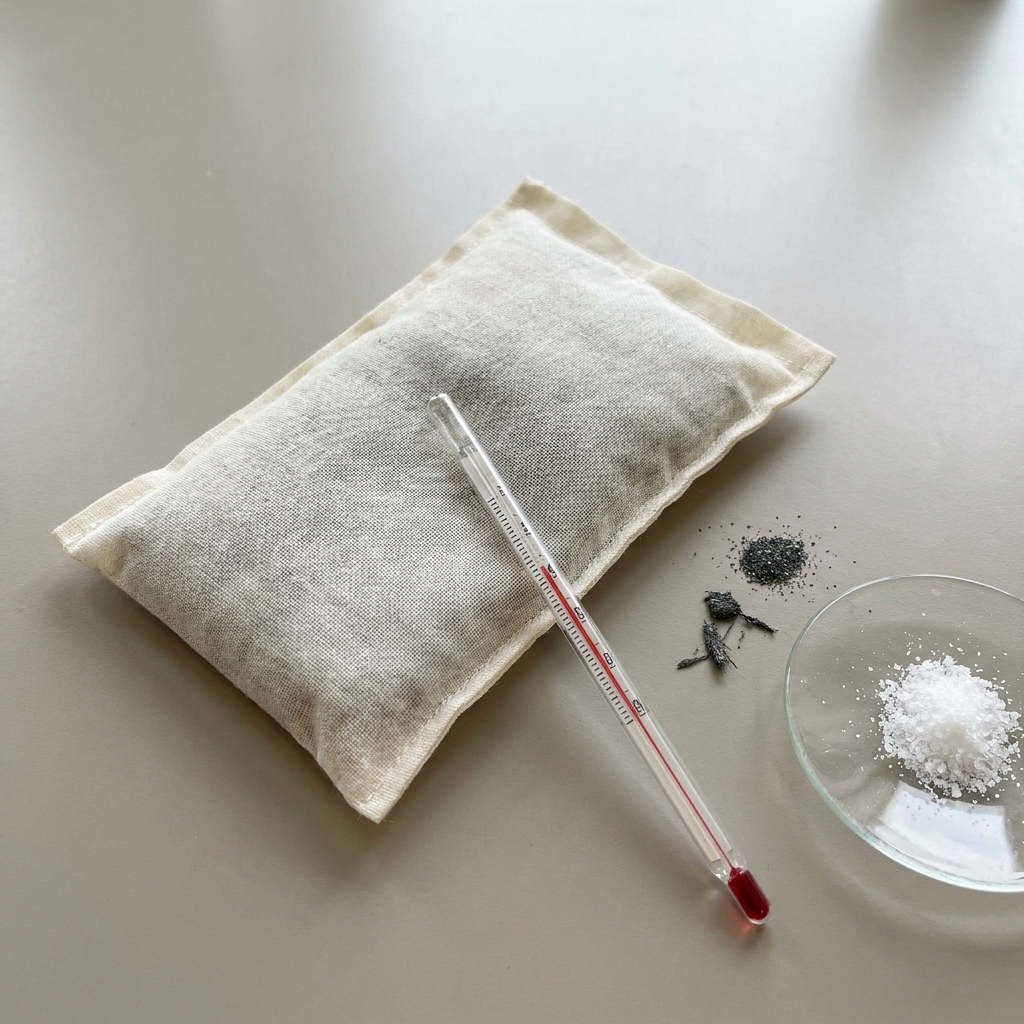
Middle school science instruction benefits when teachers find activities that bridge the gap between abstract chemical principles and tangible engineering outcomes. By focusing on practical design projects, educators can help students master complex physical science standards while keeping engagement high throughout the school year. This approach transforms standard classroom assignments into meaningful applications of scientific thought.
Designing for thermal control
As we move through our middle school physical science units, finding activities that force students to bridge the gap between abstract chemical principles and tangible engineering outcomes is always the goal. Designing Thermal Energy Devices fits right into the middle of the school year when students have enough conceptual knowledge to start building, but still need the scaffolding to execute a design project correctly. If you are teaching 8th grade science, this lesson offers a clean way to move students past just memorizing vocabulary and into the reality of application.

This lesson centers on the core concept of chemical thermal energy control. Students work with the idea that chemical reactions are either exothermic, meaning they release thermal energy to make the surroundings warmer, or endothermic, which absorb thermal energy to make the surroundings cooler. The lesson is straightforward, lasting about 45 minutes, making it a reliable choice for a whole-class assignment or a day when a student who missed the week needs to catch up on lab experience.
What the work looks like in class
The lesson begins with a practical, common example that students already understand: the chemical hand warmer. By explaining that iron powder, salt, and water react with oxygen to release heat, the material gives students a clear, relatable scenario. Once they grasp that concept, they move into the physical science energy design lab. The students are tasked with testing a cooling pack, challenging them to imagine they are engineers modifying that pack to last through a summer heatwave.
I find the specific constraints in the lesson quite clever. Students have to consider the safety of California’s diverse ecosystems, which are the various communities of living organisms and their physical environment. They are asked to think about whether chemical components are biodegradable or how they should be contained to prevent contamination if a leak occurs in a sensitive habitat. This isn’t just about the science of the reaction; it is about the ethics of engineering. Whether this is being taught in West Contra Costa Unified, Montebello Unified, El Centro Elementary School District, or Glendale Unified, these students are all mastering the same state standards through the same applied science lens.
Connecting to the bigger picture
The standard at play here is MS-PS1-6. This CA NGSS standard asks students to undertake a design project to construct, test, and modify a device that either releases or absorbs thermal energy by chemical processes. It is a solid, practical requirement that forces kids to actually document their modifications and iterate on their designs. Keep in mind that California teaches middle school science using an integrated model that weaves physical, life, and Earth sciences together rather than as separate disciplines. This lesson keeps the focus tight on the physical science side while using California phenomena like environmental protection and energy policy as the context.

The why-it-matters section at the end of the lesson is particularly good for those students who always ask, “When will we actually use this?” It explains that chemical thermal storage is a legitimate strategy for sustainable buildings. By using materials that absorb heat during the day and release it at night, architects can keep buildings comfortable without draining the grid. It connects the lab work directly to state energy policy, which is the set of laws and guidelines designed to manage how energy is produced and consumed. It turns the lab from a one-off experiment into a real-world problem-solving session. If you have a few students struggling to keep up with the engineering notebook aspect, have them focus on the temperature measurements first before they try to write out their design modifications. It is often the recording of data that trips them up more than the chemical concepts themselves.
Related lessons

Powering California: Transitioning to Renewable Energy, Covers shift toward sustainable and renewable energy production methods

Detecting Chemical Reactions, Identifies indicators of chemical changes in physical science experiments
Invisible Forces and Fields, Explains magnetic and electric field interactions in space