

Many second grade students struggle to move past word-by-word reading when they encounter complex vocabulary. By teaching students to look for the structural parts of a word, teachers can provide them with the tools they need to read with greater independence and confidence.
Breaking down complex words for your readers
We all have that student who stalls at the sight of a long word. They stare, they guess, or they just skip over it entirely. I saw this happen recently with a student struggling to get through a simple text about a librarian. They were tripping over the word because they saw the whole block of letters instead of the parts they already know. This is where Decoding Words with Prefixes, Suffixes, and Tricky Sounds really changes the game in a second grade classroom.

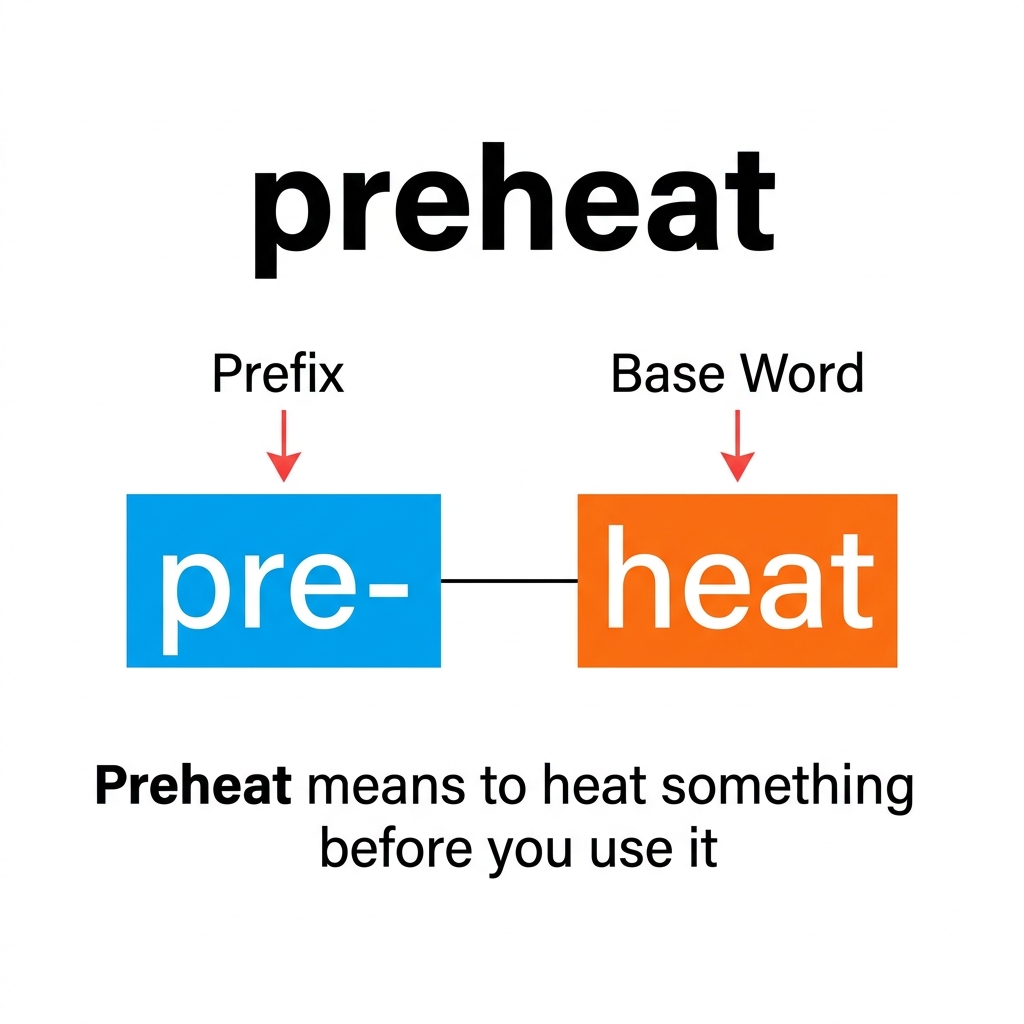
Instead of hoping they eventually memorize every word in the dictionary, this lesson forces them to slow down and hunt for the base word. The lesson explains that a base word is the simplest form of a word before any prefixes or suffixes are added. By showing students how to break a word like preheat into the prefix pre- and the base word heat, it gives them a logical, repeatable tool to handle longer, unfamiliar words. This strategy is exactly what they need to master second grade shared research writing lesson skills, which teachers in Palmdale Elementary School District, Lodi Unified, Parlier Unified, and Palm Springs Unified prioritize alongside their foundational reading goals.
Aligning with standards for word recognition
This lesson directly addresses the core requirement of CA.ELA.RF.2.3. This standard asks students to apply grade-level phonics and word analysis skills in decoding words. In the context of the California-adopted standards, this means students should be able to decode words with common prefixes and suffixes, while also identifying those tricky words that do not follow standard spelling-sound patterns. While we see this listed as CCSS.ELA-LITERACY.RF.2.3 in various places, the goal remains the same: we are teaching them to look under the hood of a word rather than just memorizing it by shape.
The lesson covers a few specific vocabulary terms that are essential for this kind of work. They define a prefix as a group of letters added to the beginning of a word that changes its meaning, and a suffix as a group of letters added to the end of a word that changes how the word is used. Getting these terms locked in early saves so much time during independent reading when you can just ask a student to find the base instead of pointing to the whole mess of letters.
Where students typically struggle
I find that my students often understand the concept of a prefix or suffix, but they really stumble when the base word itself undergoes a small spelling change or when they encounter inconsistent spelling-sound correspondences. If the lesson feels a bit too fast for a student, I suggest pulling them aside for some extra work on just the suffixes. The way the lesson moves from a base word like heat to a more functional word like Librarian is smart, but for some learners, identifying that the suffix is -an and the root is library is a leap that requires a few more examples than what is provided in the slide deck.

Be ready to pause during the guided practice section. The lesson asks the class to decode a passage about a helper, and that is where you will see which students are still guessing and which ones are actually applying the decoding strategies. If you see a student staring blankly at a word, don’t just tell them what it is. Ask them if they see a chunk they recognize, or if there is a prefix they can cover up to find the base word. That little bit of prompting can be the difference between a student giving up and a student feeling that burst of confidence that comes from sounding out a word they thought was too hard.
Fitting this into your weekly schedule
This lesson fits nicely into about 45 minutes, making it a solid choice for a whole-class assignment when you are first introducing structural analysis. I have also used this for a student who missed the week, as it is self-contained enough for them to work through with a peer or during a small-group rotation. If you find yourself in a situation where you need an emergency substitute day plan, this is one of those lessons that is clear enough that even a non-specialist can facilitate the activity without much prep. It is practical, it hits a high-impact skill, and it keeps the focus exactly where it belongs: on the mechanics of reading.
Related lessons

Reading with Accuracy and Fluency, Developing speed and precision while reading grade-level texts aloud