

…and that is exactly why I find that my students often struggle when they shift from the page to the screen. They assume a movie is just a book with pictures, but the two formats do completely different work. If you are teaching 6th grade English Language Arts, Comparing Stories and Media is a great way to force them to slow down and notice the specific choices directors make compared to authors.
Understanding the core shift in media
The core of this 6th grade media analysis lesson is built around CA.ELA.RL.6.7. This standard asks students to compare and contrast the experience of reading a story, drama, or poem to listening to or viewing an audio, video, or live version of the text. It forces students to look at what they see or hear in their own minds while reading, versus what is explicitly presented to them in a performance. The California-adopted standard, which is also taught in San Ramon Valley Unified, Garden Grove Unified, Vista Unified, and Redondo Beach Unified, further requires students to evaluate the purpose of each medium and analyze how specific techniques contribute to meaning. In the same vein, the lesson incorporates CCSS.ELA-LITERACY.RL.6.7, which anchors the comparative work of contrasting perception across different formats.

The mechanics of the standard
The standard asks students to distinguish between the mental imagery generated by descriptive text and the sensory input provided by a video or audio clip. I find that when we start here, students realize that a book’s reliance on descriptive language to create a storm scene, like the sound of wind howling against a roof, is a fundamentally different strategy than a director using a Foley sound effect or a booming musical score in a film. The lesson uses clear definitions to ground the discussion: a medium is the form or format used to tell a story, while a technique is a specific method an author or director uses to create a certain effect. It is a simple distinction, but once students label these choices, their critiques of the media they consume become much sharper.
How the lesson builds these skills
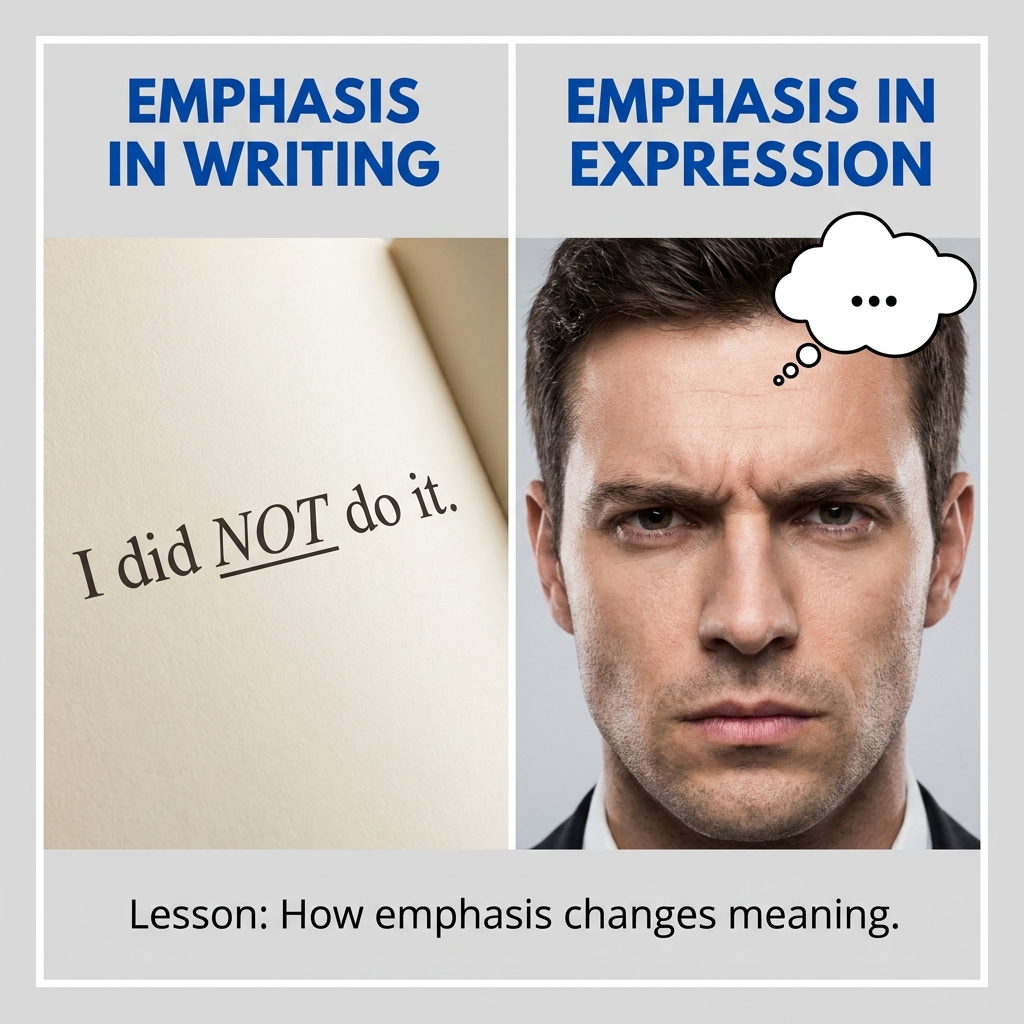
The lesson includes a worked example that really helps with the harder parts of CA.ELA.RL.6.7. It shows how an author might use italics to provide emphasis in a line of dialogue, such as saying ‘I did NOT do it,’ whereas a director might opt for a tight close-up shot on an actor’s face to convey that same intensity. Moving from this to guided practice, students analyze a mystery story excerpt. This is where you see the lightbulbs go off. They have to decide how the author builds suspense through text and then hypothesize how a filmmaker would manipulate camera angles or music to achieve that same sense of unease. It is a solid exercise for independent study or as a focused task for a student who missed the week, as it clearly lays out the cause-and-effect relationship between artistic choice and audience reaction.

Why this matters for your students
We need to be honest about why this is tough. Students are passive viewers most of the time. They watch, but they do not analyze. This lesson pushes them to look at the ‘why’ behind a scene. When they understand that marketers, journalists, and filmmakers are all using deliberate techniques to influence them, they move from being passive consumers to active, critical thinkers. I have found this works best as a whole-class assignment, but I have also handed it to a substitute teacher when I knew the class needed something grounded and predictable that still hit the standards hard. It is a reliable, coherent piece of curriculum that respects the students’ intelligence while keeping the focus firmly on the text and the craft of storytelling.
Related lessons

Understanding Narrator Perspective and Reader Knowledge, Explores how narrative point of view influences reader understanding of stories
Finding Themes and Summarizing Stories, Practices identifying central themes and summarizing narrative plots in literature

Analyzing Word Choice and Sound in Literature, Examines how specific language and auditory elements build meaning